
International Day of Women and Girls in Science: Interview with Nancy Poole, CHILD-BRIGHT’s Sex & Gender Champion

Français

February 11, 2021 marks the sixth annual United Nations International Day of Women and Girls in Science. This day is an opportunity to promote full and equal access to—and participation in—science for women and girls.

At CHILD-BRIGHT, a majority of our patient-partners and researchers are women or girls. We’re proud that these members are contributing towards our mandate to improve life outcomes for children with brain-based developmental disabilities and their families.

As part of their mandate, our research project teams collect information relating to the sex and gender of participants, to explore whether interventions have different effects on males/females and boys/girls. They’re guided in their work by our Sex and Gender Champion, a role defined by the CIHR as a researcher who possesses or acquires expertise in the study of sex as a biological variable and/or gender as a social determinant of health.
nancy5.jpeg

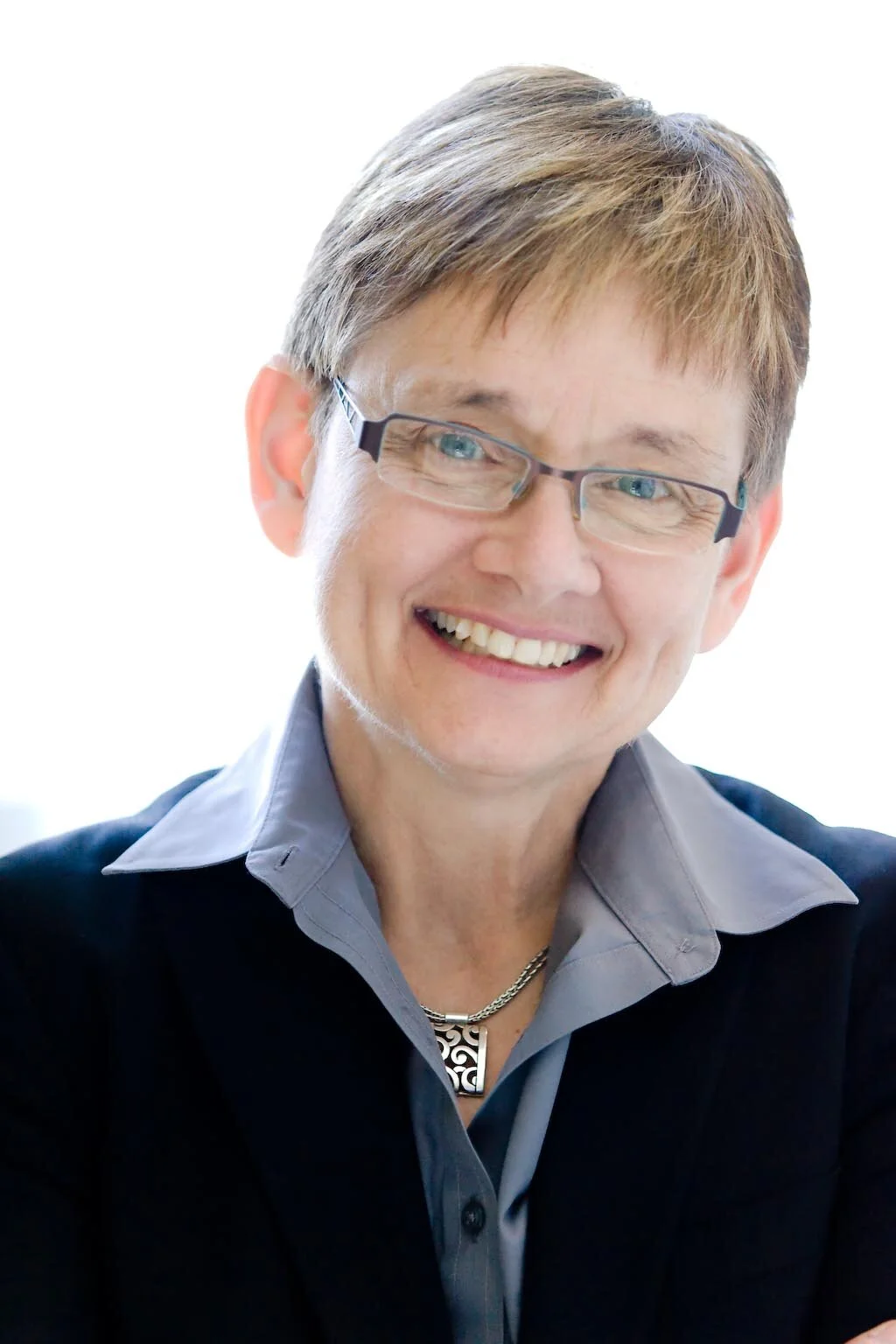
CHILD-BRIGHT is lucky to have Nancy Poole as our network’s Sex and Gender Champion. Nancy is the Director of the Centre of Excellence for Women’s Health, a research and knowledge exchange centre hosted by BC Women’s Hospital & Health Centre in Vancouver. In that role she leads network development, research and knowledge exchange related to improving policy and service provision in girls’ and women’s health and to advancing sex and gender science overall.  She is also the Prevention Lead for the CanFASD Research Network. Nancy has worked with governments and organizations across Canada and internationally, offering creative thinking on complex issues such as the interconnections between substance use problems and the experience of trauma and intimate partner violence. Dedicated to connecting across distance, cultures, genders and sectors, Nancy is a catalyst for bringing knowledge to practice and policy, to promote equity.

In honour of the International Day of Women and Girls in Science, we asked Nancy to tell us more about her role at CHILD-BRIGHT, her perspective on the most pressing issues relating to women and girls in research, and how sex- and/or gender- based analysis can potentially improve our understanding of brain-based developmental disabilities in children and youth.
 

CHILD-BRIGHT: How would you describe your role at CHILD-BRIGHT? 

Nancy Poole: The Sex and Gender Champion helps the research team achieve valid research findings that consider sex and gender issues throughout the research process.  In addition to helping the CHILD-BRIGHT team, I facilitate an online community of all Sex and Gender Champions working with research teams in Canada, where all champions help each other in their roles as mentors and consultants on sex and gender issues with their teams.

C-B: In addition to being CHILD-BRIGHT’s Sex and Gender Champion, you’re also the Director of the Centre of Excellence for Women’s Health in Vancouver, Canada, and the Prevention Lead for the CanFASD Research Network. What first inspired you to undertake research in the areas of women’s health and on FASD, respectively? 

NP: When working in a shelter for women fleeing violence, I noticed that many women were being prescribed tranquillizers (benzodiazepines) more for social injustice issues than for diagnosed mental health concerns.  Their ability to think clearly and to make change in their lives was hampered by these drugs.  It started me on a path working with a famous researcher who was studying the over prescription of these medications, Dr. Ruth Cooperstock, and some knowledge exchange experts at Health Canada.  We made a kit of information (It’s Just Your Nerves) about the links between the experience of violence, alcohol and tranquillizer use, which I then shared with primary care providers and women’s community groups across Ontario. This work inspired me to see the importance of research as an underpinning of health promotion with women.

C-B: In what way(s) has your experience as a woman in research changed in the span of your career? 

NP: My experience as a woman in research has changed in two ways. Firstly, I have been fortunate to have many opportunities opened to me by brilliant mentors. I am now in a position to help other researchers working for the Centre of Excellence for Women’s Health. Secondly, over time I have increasingly appreciated the importance of taking sex and gender into account in health research, given how inadequately that has been done in the past.  

C-B: In your view, what are the most pressing issues relating to women and girls in research today? 

NP: To me it is important that we advance sex and gender science overall, and we integrate gender transformative approaches in all we do.  By gender transformative, I mean approaches that focus on improving gender equity as a route to improving health.

C-B: How can a sex- and/or gender-based analysis potentially improve our understanding of brain-based developmental disabilities in children and youth?

NP: On the sex side, there are many ways in which physical and mental health issues associated with these disabilities are affected by genetics, anatomy, physiology, neurobiology, etc. so that analysis of sex differences is important in order to understand the mechanisms, pathways, risk/protective factors, progression, treatments and outcomes for people with these disabilities. On the gender side, there are many gendered influences determined by family, society and culture on people’s experience of disability, and their ability to access education and other health, social and vocational opportunities, such as gender roles, gendered decision-making power, and gendered institutional regulations such as birth alerts. ​

Thank you to Nancy for taking the time to share her perspective with us, and for her guidance within our network and research teams! Read more about our 13 research study teams here.  

Now accepting applications for the  2021 KT Innovation Incubator Grant Competition!

Français

Now accepting applications for the
2021 KT Innovation Incubator Grant Competition!

Line.jpg

Up to $12,000 in funding available

CHILD-BRIGHT is proud to launch its 2021 KT Innovation Incubator grant competition!

The KT Innovation Incubator grant competition will award up to $12,000 to each of two (2) winning knowledge translation research projects that aim to answer a research question related to knowledge translation and patient-oriented research.

Applications are due by March 12, 2021. 

Visit our website for full grant competition details, eligibility requirements, and to learn more about the application procedure. Good luck!

Eligibility requirements & application procedure

Updated rapid review shows that children with brain-based developmental disabilities at greater risk of severe COVID-19

Français

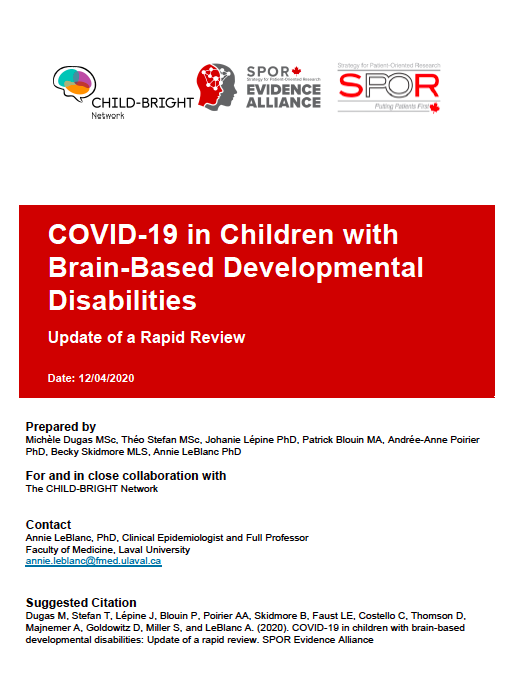
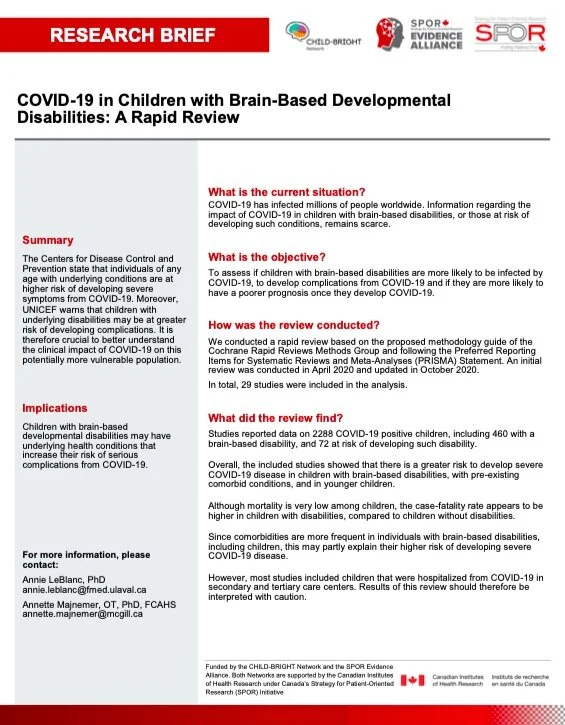
Concerned with the potential impact of COVID-19 on children with brain-based developmental disabilities, our network conducted a rapid review with the SPOR Evidence Alliance earlier this year to better assess the risk to children with brain-based developmental disabilities, or those at-risk of developing such diseases.

Today, we are sharing an update to this review.

As a reminder, our review aimed to answer the following three research questions:

  1. Are children with brain-based developmental disabilities more likely to develop COVID-19?

  2. Are children with brain-based developmental disabilities more likely to develop complications due to COVID-19? And,

  3. Are children with brain-based developmental disabilities more likely to have a poorer prognosis once they develop COVID-19?

Back in May 2020, we concluded that data regarding this population was insufficient to properly inform policy makers, decision makers, as well as families. Read the May 2020 report.

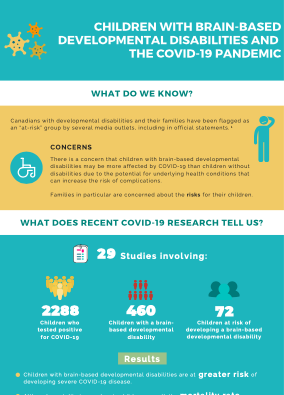
In our updated review, shared today and linked below, we now see that children with brain-based developmental disabilities are at greater risk of developing severe COVID-19 disease. The mortality is very low in children overall, but the mortality rate appears to be higher in children with disabilities compared to children without disabilities.

This is in line with what we are also noting in studies comparing person with disabilities who were hospitalized or living in care homes, compared to others living in the same conditions. There is a significant increased risk of death or severe complications for persons with disabilities.

What next steps do we recommend?

Based on these results, we are putting forward two key recommendations:

  1. We must engage Canadian brain-based development disability organizations and families to both design methods for ongoing reporting about the occurrence and impact of COVID-19, and to ensure that health, education, social programs and supports take into account the specific needs of children with brain-based developmental disabilities and their families as the pandemic evolves.

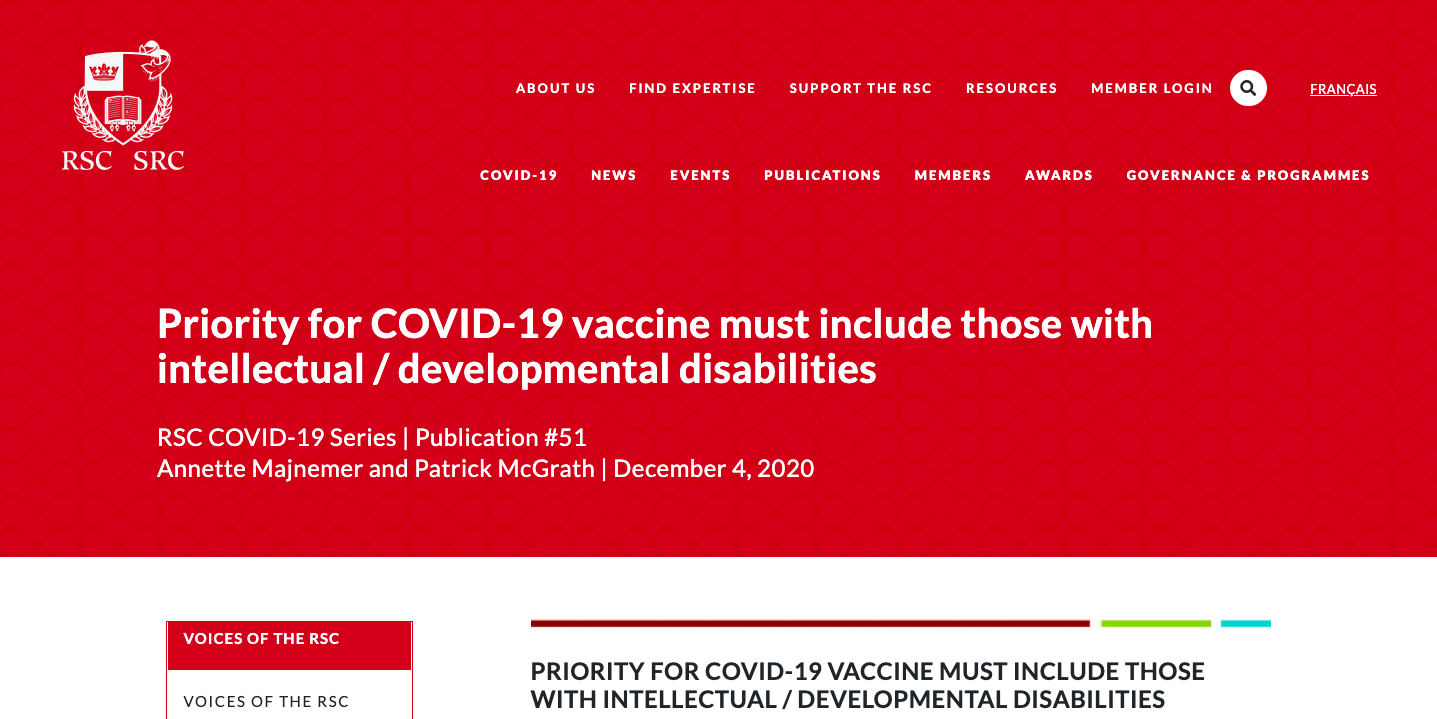
  2. On the policy front, we recently asked Canadian policy makers to prioritize vaccinations in children with brain-based developmental disabilities, given their greater risk for severe complications. Read our opinion piece below:

This review was funded by the CHILD-BRIGHT Network and the SPOR Evidence Alliance. Both networks are supported by the Canadian Institutes of Health Research under Canada’s Strategy for Patient-Oriented Research (SPOR) Initiative.

We wish to acknowledge and thank the panel of knowledge users from our network who contributed to this study including patient-partners, caregivers, clinicians, decision makers and researchers. They contributed to all steps of the project including developing the questions, doing literature searches, interpreting and drafting the results, and working to disseminate the findings.

Read about other CHILD-BRIGHT COVID-19 Initiatives:
My COVID Disability Q. , an online Q&A hub in partnership with CanChild and Kids Brain Health Network
and
CHILD-BRIGHT COVID-19 list of resources

CHILD-BRIGHT Sustainability Report Now Available!

Français

In 2016, under Canada's Strategy for Patient-Oriented Research mandate, we embarked on a journey to improve life outcomes for children with brain-based developmental disabilities and their families.

Over the past four years, we have seen our community-building efforts come to fruition. We launched an ambitious patient-oriented research program, we developed multiple patient-oriented training initiatives, we advanced a knowledge translation program, and most importantly, we engaged patients, families, and other citizens in our governance and all our activities. We are proud that our work has been built on priorities identified by patients, families, and citizens, and that these stakeholders continue to steer and guide CHILD-BRIGHT's efforts.

As we move ahead in our mandate and work, we are increasingly turning our attention to planning how to sustain this work and build upon our successes to reach new goals in the years to come.

We are happy to share this strategy with you in our CHILD-BRIGHT Sustainability Report, now available in English and French.

This sustainability report describes how we, at CHILD-BRIGHT, plan to continue our mission, meet the needs of our citizens and members, grow to meet future needs, and realize our vision. It also highlights how we have involved our members and citizens in this strategic planning.

Download the CHILD-BRIGHT Sustainability Report

We wish to thank our financial partners for their commitment to this work. As you will see in our report, partnerships are the cornerstone of our success, now and in years to come, and we hope to continue building upon these important ties as we move ahead together.

Learning with Youth and Other Patient-Partners: Engagement, Partnerships, and Ethical Considerations in Patient-Oriented Research

Français
Gillian Backlin.png

by Gillian Backlin

In honour of International Day of Persons with Disabilities, I would like to share my thoughts around the wonderful contributions that children and youth with brain-based developmental disabilities and their families are making at CHILD-BRIGHT and in its research.

CHILD-BRIGHT operates on the principle that true and meaningful youth engagement is central to conducting impactful patient-oriented research. As a result, the network strives to promote youth involvement in many ways, including holding training events such as webinars. Youth engagement is also a central preoccupation of the CHILD-BRIGHT National Youth Advisory Panel (NYAP), of which I am a member.

What does youth engagement look like, exactly, and what are some of its benefits? These are the questions several members of NYAP and members of CanChild’s Sibling Youth Advisory Council (SibYAC) sought to address in a recent webinar, “Learning from Youth: Engagement Strategies for Patient-Oriented Research Projects, Committees, and Councils.” The webinar was a collaborative effort with both the NYAP and the SibYAC; the NYAP members are youth with brain-based developmental disabilities (visit our page to learn more), whereas the SibYAC members are siblings of youth with brain-based developmental disabilities.

I was thrilled to represent NYAP for this webinar. It was the perfect opportunity to demonstrate the impact youth and patient engagement can have on research.

CHILD-BRIGHT Webinar about Youth Engagement Strategies - October 15, 2020_CL.jpg

Each webinar facilitator was able to use their own experience and expertise and present on topics such as highlighting types of research where youth involvement is crucial, general engagement strategies and accessibility, considerations, and accommodations. Something that stood out to me was how each webinar facilitator expressed the importance of considering the youth partner’s individuality and preferences when it comes to participation and accommodations; this can include everything from scheduling to using different methods of communication to gather feedback. Since the webinar was well received by participants, the NYAP and CHILD-BRIGHT have ongoing plans to provide more youth and patient engagement-focused content and events. As a youth with a brain-based developmental disability, I could not be more excited about the direction in which we are headed!

In fact, we are continuing the discussion around the ethical aspects of engagement in the next CHILD-BRIGHT virtual event. The upcoming webinar, “Roles and Relationships: Ethical Considerations Related to Involving Children and Parents in Patient-oriented Research”, will be held on December 10. It is open to all and free, so we hope that many people will register!

It is well established at CHILD-BRIGHT that patient and family partners (such as children with a brain-based developmental disability and their parents or caregivers) play an important role in the research process, but what specific ethical considerations need to be taken into account when collaborating with patient-partners? The goal of this webinar is to provide a place for conversation around this topic. We will also highlight some of the unique challenges that are present when implementing patient-oriented research specifically related to patient and family partnership since, unlike research subjects, patient-partners are key collaborators engaged throughout the research process. They help align research to patient and family priorities.

I will be taking part in this conversation as an NYAP member. It is open to all and free, so I hope that you will attend, too!