

National Youth Advisory Panel Elects Logan Wong as 2020-2022 Chair

Français
Logan Wong is the newly elected chair for CHILD-BRIGHT’s National Youth Advisory Panel.

Logan Wong is the newly elected chair for CHILD-BRIGHT’s National Youth Advisory Panel.

The CHILD-BRIGHT National Youth Advisory Panel (NYAP) is pleased to announce the election of Logan Wong as its new chairperson for the 2020-2022 term!

Logan has been a dedicated member of our NYAP since 2018. Having recently completed a Bachelor of Social Work degree, Logan will be continuing his studies in the Master of Social Work program at Ryerson University in Toronto, focussing on community health and mental health in a case management role.

Mathias Castaldo, outgoing NYAP chair, played an integral role in the early years of the panel’s existence.

Mathias Castaldo, outgoing NYAP chair, played an integral role in the early years of the panel’s existence.

As a NYAP member for the past two years, Logan has been working to foster collaboration to increase the accessibility of research: “I want to help bring youth voices to conversations about research! By working as a team, the NYAP can make research proposals more accessible to the youth population.”

He will continue to do so in his new role as chair and will also guide the NYAP as it prepares to offer a new consultation service to researchers outside of CHILD-BRIGHT starting in the fall of 2020.
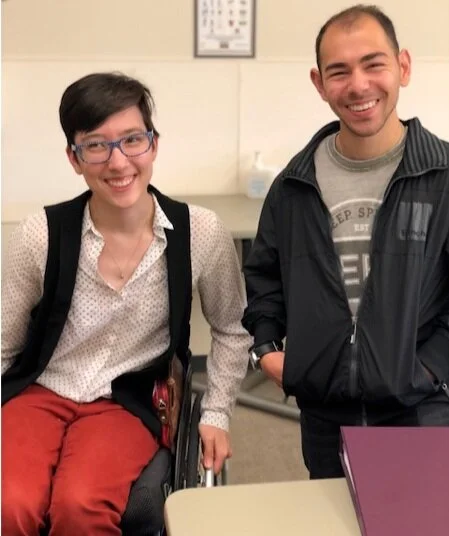
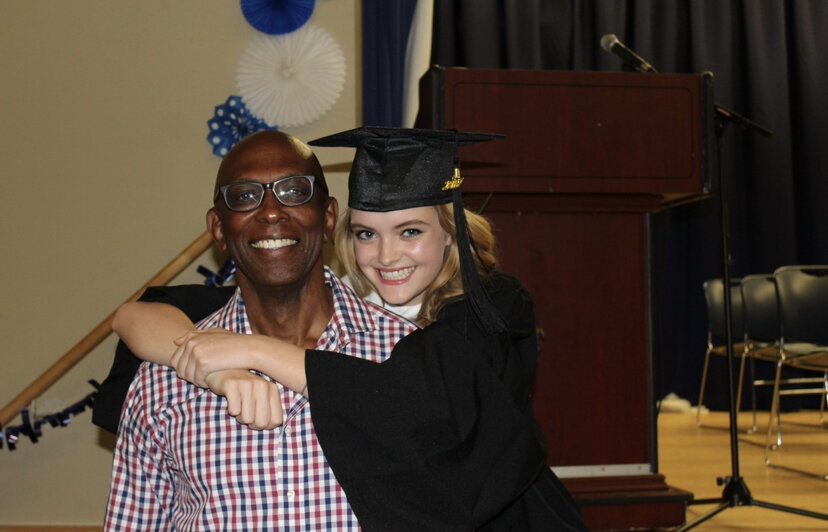
Logan Wong (left) and Mathias Castaldo meet as part of a gathering of NYAP members in 2018.

Logan Wong (left) and Mathias Castaldo meet as part of a gathering of NYAP members in 2018.

As part of his new functions, Logan will also represent the NYAP panel on the CHILD-BRIGHT Citizen Engagement Council (CEC). "Drawing on his background in social work, Logan consistently brings his skills, enthusiasm and insightful suggestions to NYAP meetings. We’re sure he will make a great CEC representative for the NYAP,” shared current NYAP members.  

On behalf of NYAP members and all of us at CHILD-BRIGHT, we would also like to sincerely thank Mathias Castaldo who completed his two-year term as chairperson in June 2020. Mathias was an integral part in the formation and development of the panel, its membership and activities. His work was instrumental in helping us build this novel youth council for our network. We are grateful for his time and dedication and are pleased that he will continue to contribute to the panel as a member of the NYAP.

You can read more about the NYAP and its mandate here. And stay tuned for our launch of the new consultation service, which will begin operations in the fall of 2020.

Summer Studentship Program Features New Patient-Partner-Led Training Session

Français
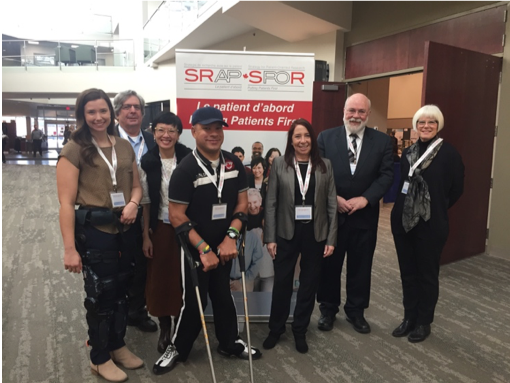
Kent Cadogan Loftsgard, fourth from left, representing CHILD-BRIGHT patient-partners at the 2018 CIHR-SPOR Summit

Kent Cadogan Loftsgard, fourth from left, representing CHILD-BRIGHT patient-partners at the 2018 CIHR-SPOR Summit

We are thrilled to welcome 14 new trainees to CHILD-BRIGHT for the 2020 CHILD-BRIGHT Summer Studentship Program!

Every year, CHILD-BRIGHT helps train a new cohort of students in patient-oriented research (POR) by helping our project and program teams hire trainees for the summer. For the 2020 edition, we earmarked over $45,000 to support these trainees, who will be working with nine CHILD-BRIGHT research projects.

As part of the onboarding, trainees follow a five-part introductory training series to learn about the concept of patient-oriented research. This year, we are especially excited to acknowledge CHILD-BRIGHT patient-partner Kent Cadogan Loftsgard’s involvement in the 2020 CHILD-BRIGHT Summer Studentship Program.

Kent has a diverse background ranging from health communication to clinical education. He is heavily involved in the SPOR community and CHILD-BRIGHT, where his perspective and wealth of knowledge inform a variety of POR initiatives.

In addition to his participation in the program, Kent will introduce and facilitate a new webinar this year where he will share some of his insights into research with trainees, from his perspective as a patient-partner.

For the past three years, the practical experience and the learning activities provided through the 2020 CHILD-BRIGHT Summer Studentship Program have equipped trainees with the knowledge and skills to better engage patients as partners in the research process as they work towards becoming tomorrow’s leaders. We hope the 2020 edition does the same for this summer’s trainees.

Subscribe to our newsletter to receive quarterly updates about our network, including about our trainees’ experiences in the 2020 CHILD-BRIGHT Summer Studentship Program!

Meet Claire Dawe-McCord, National Youth Advisory Panel Member

Français

We are thrilled to introduce the newest member of our National Youth Advisory Panel. To read more about this panel and its mandate, click here.

Claire Dawe-McCord, 21

Line.png

WHAT ARE YOU STUDYING AND/OR WHAT ARE YOUR PROFESSIONAL AMBITIONS?

I am going into my third year of the Bachelor of Health Sciences program at McMaster and I am currently co-chairing the Kids Come First Ontario Health Team.

WHAT ARE YOUR PASSIONS, INTERESTS, AND HOBBIES?

I have been modelling on and off since I was 14, which has been an incredible opportunity for me. I have so far been to Singapore, Tokyo, and New York City for work and hopefully I can get back into it when I am done school because I love to travel. When I am at home, I like to go for bike rides with my friends and take care of my rapidly expanding garden.

CAN YOU TELL US ABOUT YOUR EXPERIENCE WITH BRAIN-BASED DEVELOPMENTAL DISABILITIES?

I was diagnosed with ADHD and multiple rare musculoskeletal disorders when I was in high school. Learning how to control my symptoms was quite the learning curve for me and I hope that through this work I can make that process a little bit easier for other children and youth.

How did you hear about CHILD-BRIGHT?

I heard about CHILD-BRIGHT through Jan Willem Gorter who is a professor at McMaster and a Principal Investigator of the CHILD-BRIGHT READYorNot™ Brain-Based Disabilities Project.

WHAT ARE YOUR HOPES FOR THE NATIONAL YOUTH ADVISORY PANEL?

I hope that one day we can have representation from all of Canada's populations and that together our work can improve the quality of life for all youth with disabilities.

Learn more about the NYAP and its mandate

Announcing the Winners of our 2020 Knowledge Translation Innovation Incubator Grant Competition!

Français

We are pleased to announce the two winning teams of our 2020 CHILD-BRIGHT KT Innovation Incubator competition: the WeeWheel team and the Perspectives of Mental Health team. Read more about each team below. 

Team 1.png

What is WeeWheel? 

logo_CR-CHUSJ_EN_bleu.png

The WeeWheel team will use the KT Innovation Incubator grant to address the evidence-practice gap in wheelchair skills training among pediatric manual wheelchair users at the Marie Enfant Rehabilitation Centre (CRME) and two affiliated specialized schools: École Joseph-Charbonneau (ÉJC) and École Victor-Doré (ÉVD).

More specifically, the team will: 

  • Develop and adapt Wheelchair Skills Training Program (WSTP) educational resources for children, for example, through the creation of a training workbook, instructional posters, and a storybook. These resources will be complementary to one another, for example, by using the same characters. They will be engaging and geared to the needs and preferences of the children who use them. 

  • Share these resources, most particularly with local ‘knowledge users’ which in this case are the occupational therapists at all three sites and the wheelchair users they work with.

The main messages that are communicated are:

  1. Paediatric wheelchair users can learn new wheelchair skills

  2. Wheelchair training using the new educational resources can be both effective and fun for children

By developing and sharing these resources, the team aims to generate awareness and interest in the training program, share knowledge with a broader range of people,  and facilitate practice change in order to inform future efforts to implement the training program in appropriate settings. 

Meet the team: 

The WeeWheel project is led by Paula Rushton (Associate Professor, Université de Montréal), Krista Best (Assistant Professor, Université Laval), Lee Kirby (Physiatrist and Professor, Dalhousie University) and François Routhier (Associate Professor, Université Laval). 

The team also includes:

  • Decision-maker and knowledge users Claude Nadeau (Manager of the Seating and Mobility Program at CRME) and Dominique Héroux (Manager of School-Based Rehabilitation at the specialized schools affiliated with CRME); 

  • Practitioner and knowledge users  Cindy Rice (Occupational Therapist and Clinical Coordinator of the Seating and Mobility Program at CRME) and Tatiana Dib (Occupational Therapist at CRME and WSTP expert); 

  • A Knowledge Translation expert, Melanie Barwick (Senior Scientist, SickKids Research Institute and Professor, University of Toronto) and an expert in pediatric rehabilitation and wheelchair user, Maxime Robert, (Assistant Professor, Université Laval). The team will also integrate four professional master’s students of occupational therapy: Emma Lafleur, Andrée-Anne Côté, Laurence Fortin-Haines and Isabelle Paré, for whom this project will serve as their research project requirement for their occupational therapy degree.

Team+2.0+%281%29.jpg

What is the Perspectives of Mental Health project? 

The Perspectives of Mental Health team will use the KT Innovation Incubator grant to include the voices of youth with neurodevelopmental disorders in mental health discussions and to create strategies and materials that can facilitate more dialogue between youth and healthcare providers. 

More specifically, the team will: 

POND.png
HB.png
CAMH_MHIH_logo_RGB2000_105713.jpg
  • Work with youth with neurodevelopmental disorders to create digital stories to share their thoughts on how they would like healthcare providers to talk to them about their mental health. Digital stories will be shared with researchers and healthcare providers across, and beyond the POND Network.

  • Evaluate the impact of these stories.

This project aims to develop a KT product that includes youth voices from a range of neurodevelopmental disorders including youth with autism, ADHD, OCD, and intellectual disability, which has the potential for short-term and long-term impact. Including youth with neurodevelopmental disorders in the design of resources for healthcare providers moves this project beyond traditional KT efforts often led by healthcare providers to inform youth. The digital stories created by youth with neurodevelopmental disorders will feature voices that have not always been included in research, and for that reason, have a better chance of changing healthcare practice. This study will also develop insights on how digital storytelling can potentially be used as a novel KT tool among youth with neurodevelopmental disorders. Building on the team’s previous experience using digital storytelling, this project has the potential of also making an innovative methodological contribution to the field of qualitative methodology. 

Meet the team here: 

The Perspectives of Mental Health project is led by Patrick Jachyra (post-doctoral fellow at the Centre for Addiction and Mental Health), Yona Lunsky (psychologist and member of the POND Network which is a research network focused on improving care and long-term outcomes for children with neurodevelopmental disorders), Windemere Jarvis (knowledge broker for POND), Cathy Gaboury (parent and POND participant advisors), Sheldon Gaboury (youth and POND participant advisors), Noah Barnett (Director of the POND Youth Council and POND participant advisors), Austin Cosgrove (youth and POND participant advisors), Claudine Evangelista (parent, teacher, librarian, and POND participant advisors), Evdokia Anagnostou (Principal Investigator of the POND Network and pediatric neurologist).

Congratulations to both winning teams! 

We would also like to thank all the applicants of our third CHILD-BRIGHT KT Innovation Incubator grant competition as well as our review panel, which was composed of parents, researchers, clinicians, educators, trainees, and youth with expertise in KT research, childhood disability research, occupational therapy, mental health services, communications, and advocacy. 

Learning About Research Data: Part 1 - Reuse of Research Data

Français

Welcome to our new Learning About Research Data blog series! Through these blog posts, authored by our new partners at PolicyWise for Children & Families, we aim to demystify data sharing and data management in research. Headquartered in Alberta, where our national CHILD-BRIGHT Data Coordinating Centre is also based, PolicyWise is a not-for-profit organization that mobilizes and integrates evidence to inform policies and service delivery with the goal of improving the well-being of children and families. PolicyWise also manages an online platform that allows researchers to easily store and share research data about study participants while maintaining privacy and confidentiality. 

Part 1 - Reuse of Research Data

Understanding the term ‘data’

The collection of data is always part of a well-planned research study. Data can come in many forms.

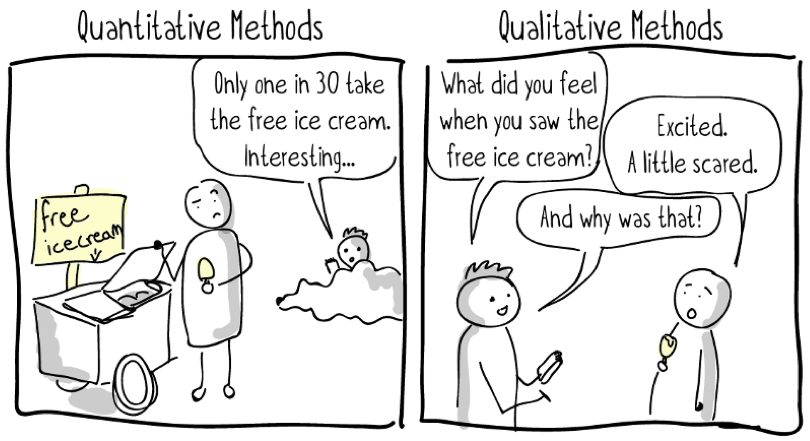
Numerical data such as weight, age, and blood sugar are considered quantitative data and can be used to measure characteristics that vary between people. Such data can be obtained through conducting direct measurements in a clinic setting (weight), asking participants questions using surveys (age), or analysing samples in a lab (blood sugar levels). Statistical methods are often used to ‘test’ this data to tell if there is a difference in response to procedures conducted during a study. For example, the success of a new treatment for diabetes can be measured by analyzing blood samples to test whether there is a difference between people who used the conventional treatment and people who used a new one.

Other types of data include written responses to  survey questions in a study or information gathered at an interview. This is considered qualitative data and can complement quantitative data through gathering and analyzing things that are harder to put into numbers, such as the feelings and experiences of participants. Researchers then combine the data from each individual participant in the study to create a dataset.

Cartoon comparison of qualitative and quantitative methodology. Digital image. Baianat. May 29, 2020. https://www.baianat.com/books/the-ux-map/research.
Cartoon comparison of qualitative and quantitative methodology. Digital image. Baianat. May 29, 2020. https://www.baianat.com/books/the-ux-map/research.

Research collaborations using data

It takes substantial time, effort, and resources to conduct research, collect data, and draw conclusions from the data that might have a meaningful impact on society. It may take many years for researchers to discover all that can be learned from the data collected during a large study. Research is also a creative process and different researchers, especially those in different disciplines, may be able to ask different questions using the same dataset. A researcher who conducted a study and collected data about mothers seeking to understand the relationship between the living conditions and well-being of children may present their findings at an international conference. They may meet a researcher with expertise in exercise and nutrition, who asks to initiate a collaboration to reuse this data to expand their understanding of the relationship between nutrition and well-being in this population. This is how a culture around the sharing and reuse of data develops.

Benefits of data reuse

There are many benefits to such reuses of data:

puzzle_piece.png
  • Two brains are better than one: No single researcher can be an expert in all subject matters, and most social issues are multi-faceted. Collaborations allow different, expert perspectives to be brought together and make the knowledge gained from research  broader and more useful to society. It may also lead to insights that would not be apparent to any single researcher.

  • More efficient use of research dollars: Research is resource-intensive. Much of it is funded from tax sources. Competition for such scarce money in science is fierce. Therefore, it is important to maximize the value of data that have been collected by reusing it to extract new insights.

  • Openness and transparency: Allowing access to and reuse of data allows other researchers to confirm findings and increase certainty of results.

  • Obligation to research participants: Human research usually requires the willing participation of volunteers who have chosen to take on personal risk (in some studies) so that new knowledge can be generated for the greater good. Making the most that we can from a research study by collaborating with new researchers who will reuse the data demonstrates ethical responsibility to research volunteers. The reuse of data may also allow research questions to be answered without engaging with a new set of volunteers. For studies where research data may be shared or reused afterwards, researchers should explain this possibility to participants during the consent process. However, specific guidelines on consent for data reuse vary depending on the ethics board, institution, and the relevant provincial/territorial regulations. Working with data from First Nations requires familiarity with and adherence to the First Nations principles of OCAP® (Ownership, Control, Access, and Possession). More information about OCAP principles can be found here.

Current landscape

There are many supports in place within the research ecosystem to support the reuse of datasets. Reusing data as described is an underutilized approach, but momentum behind reusing data has grown and support now exists within the research ecosystem. Many research funders and journals are supporting data sharing and reuse as a matter of policy. Funders, universities, and research ethics boards are encouraging researchers to share data. There are data repositories dedicated to sharing data among researchers. Even Google has gotten on board by creating Google Dataset Search, a tool that anyone can use to search millions of publicly available datasets! The sharing and reuse of research data represent an important cultural shift in the research community towards better collaboration, efficiency, transparency, and leveraging the contributions from research volunteers.

Read Part 2 of this series, about the different stakeholders involved in research, here.