
2026 CHILD-BRIGHT Conference
Feb
2
to Feb 3

2026 CHILD-BRIGHT Conference
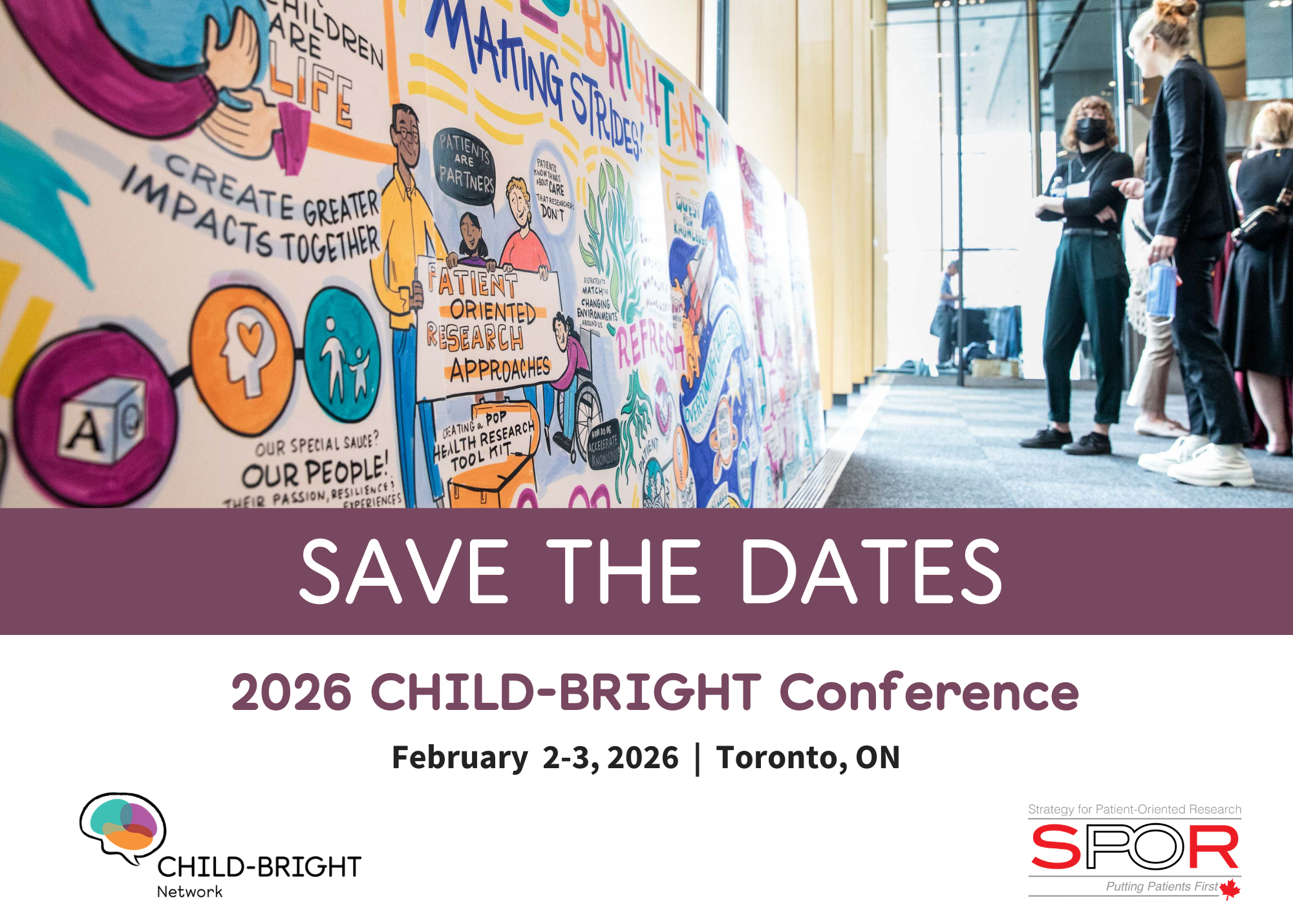
Conference attendees admire a colourful CHILD-BRIGHT graphic recorder poster. Text reads: Save the Dates. 2026 CHILD-BRIGHT Conference. February 2-3, 2026. Toronto, ON.

Join us in Toronto on Feb. 2 and 3, 2026 for a unique opportunity to connect with the child disability research community in Canada.

The 2026 CHILD-BRIGHT conference will offer a unique opportunity to:

  • Celebrate, and learn from, CHILD-BRIGHT's implementation science and knowledge mobilization activities from 2022-2026,

  • Come together to collectively move brain-based disability research forward,

  • Get to know the movers and shakers, emerging stars, and trailblazers of our patient-oriented research community,

  • And more!

Don’t miss out – sign up to be in the know as soon as registration launches:
Sign up to stay in the know
View Event →

CHILD-BRIGHT Coffee Chats
Nov
27
4:30 PM16:30

CHILD-BRIGHT Coffee Chats

CHILD-BRIGHT Coffee ChatS

Looking to connect with fellow CHILD-BRIGHT members in a casual, welcoming space?

Join us for CHILD-BRIGHT Coffee Chats, a monthly 30-minute virtual drop-in designed to spark collaboration, build relationships, and exchange ideas across our vibrant community. 

With no set agenda, each chat is an open invitation to: 

  • connect with peers

  • ask questions

  • share insights and lived experiences

  • explore new ideas and possibilities

Whether you are a youth research partner, clinician, caregiver, trainee, or team member, this is your space to listen, learn, and grow together.

Upcoming themed chats (save the dates):

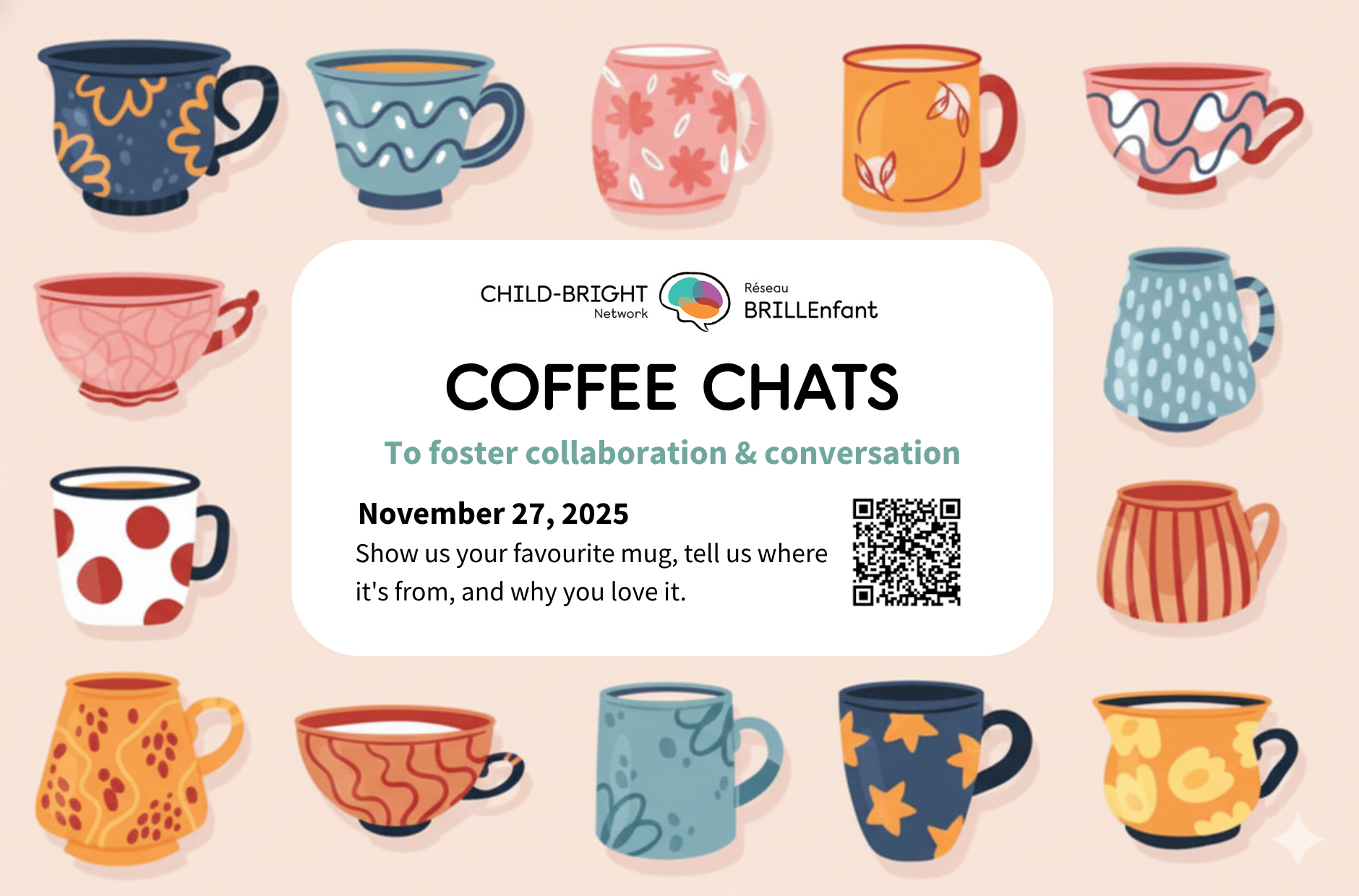
  • November 27, 2025 (1:30 pm PT | 4:30 pm ET)  Bring-your-favourite-mug edition: Show us your favourite mug, tell us where it's from, and why you love it.

  • December 18, 2025 (9:00 am PT | 12:00 pm ET)  Holiday hat edition: Show off your most festive headwear.

  • January 22, 2026 (1:30 pm PT | 4:30 pm ET)  Pre-conference edition: Get to know fellow members before the 2026 CHILD-BRIGHT event.

  • February 26, 2026 (9:00 am PT | 12:00 pm ET)  Chocolate edition: Bring your favourite chocolate and share what makes it special.

  • March 26, 2026 (1:00 pm PT | 4:00 pm ET) ️ Zoom background beach party : Choose your favourite beachy background and take a virtual break with us.

 
View Event →
Implementing Together: Lived experience is data too
Nov
27
2:00 PM14:00

Implementing Together: Lived experience is data too

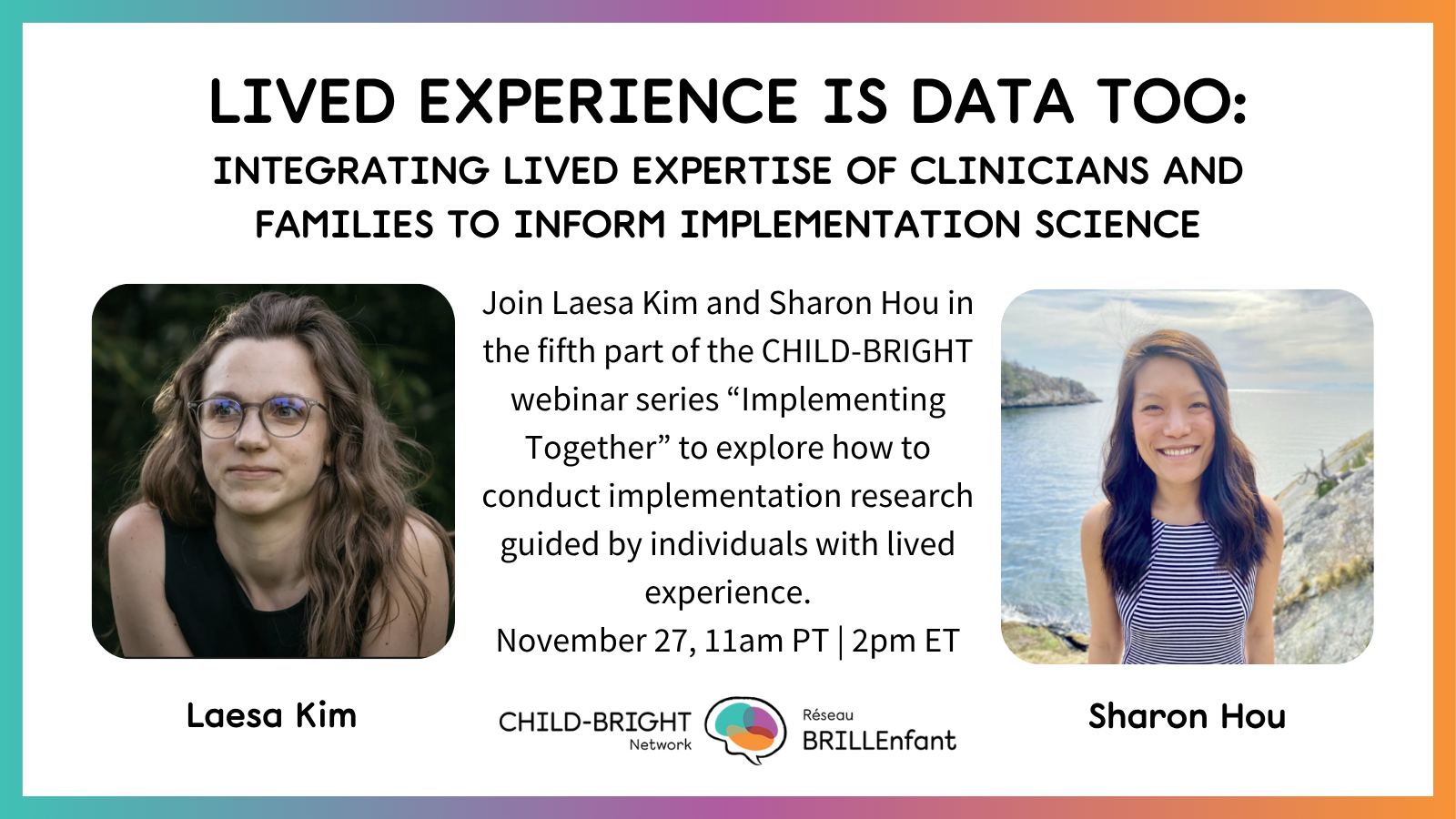
Integrating lived experience of clinicians and families to inform implementation science

The CHILD-BRIGHT Network has been focused on Implementation Science as one of it’s program areas for the past 3 years. This series aims to highlight the work of some of our graduate trainees, postdoctoral fellows, and early career researchers, while providing a more detailed look at some of the implementation science projects and tools that are being used across the Network.

Join us as we learn together about how implementation science can be used to support real-word impact as we work to create brighter futures for children and youth with brain-based developmental disabilities and their families. 

SPEAKERS

Laesa Kim, Family Liaison, CHILD-BRIGHT Pain Pathways research project. 

Sharon Hou, Postdoctoral Fellow, CHILD-BRIGHT Pain Pathways research project. 

Register
View Event →
50th Preston Robb Neuroscience Day
Nov
12
12:00 PM12:00

50th Preston Robb Neuroscience Day

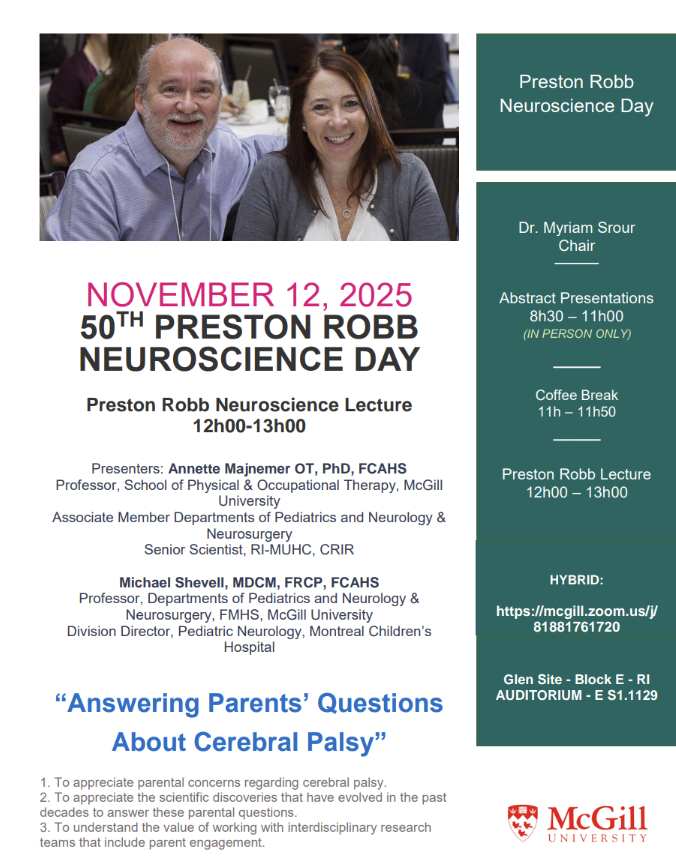
Answering Parents’ Questions About Cerebral Palsy

Date: Thursday,  November 12, 2025
Time: 9:00-10:00am PT | 12:00-1:00pm ET
Speakers: Annette Majnemer and Michael Shevell
Where: Hybrid (online and in-person)

What:
1. To appreciate parental concerns regarding cerebral palsy.

2. To appreciate the scientific discoveries that have evolved in the past decades to answer these parental questions.

3. To understand the value of working with interdisciplinary research teams that include parent engagement.

Zoom link
View Event →
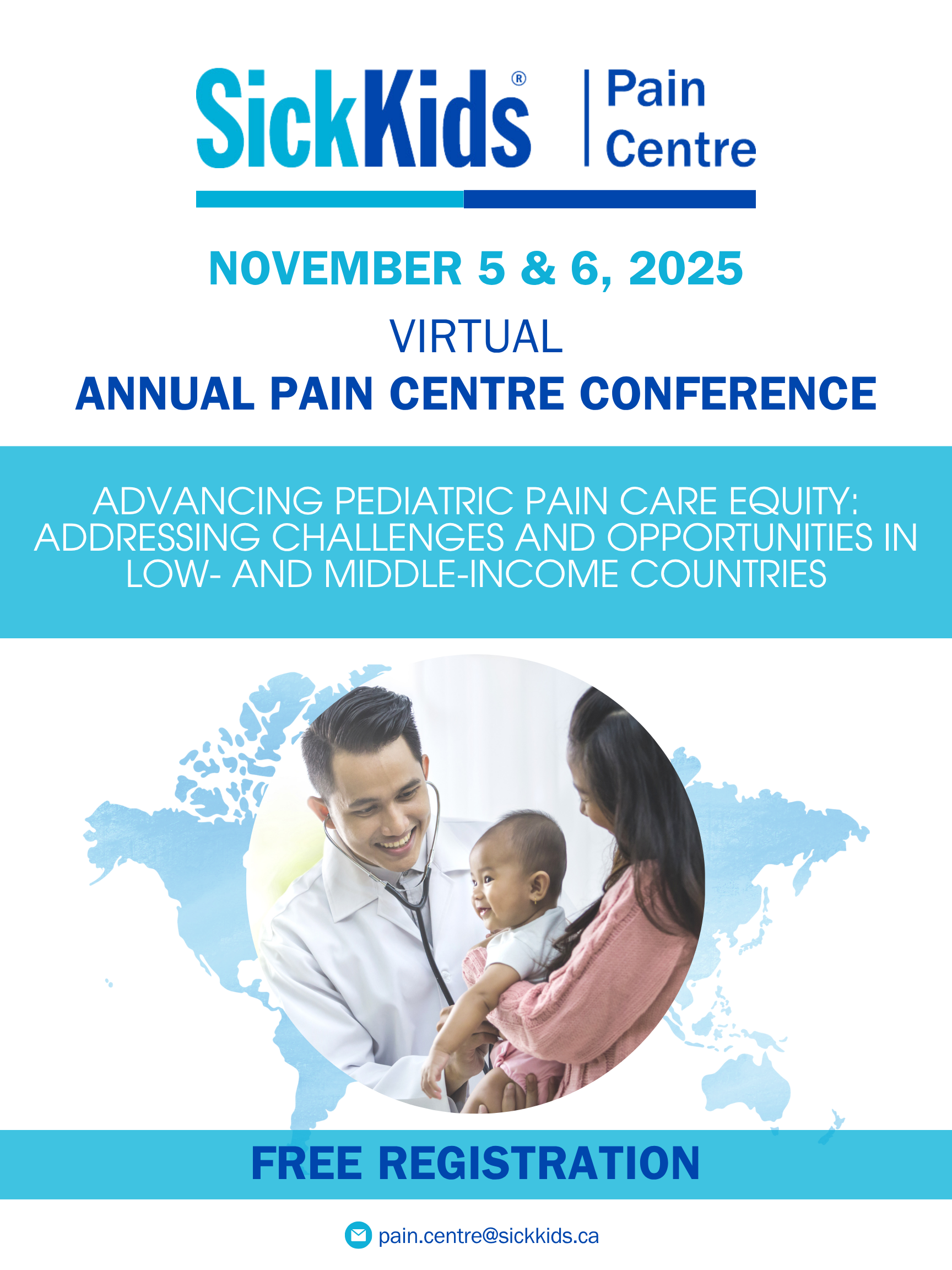
2025 Annual Pain Centre Conference
Nov
5
to Nov 6

2025 Annual Pain Centre Conference

Join global experts for this year's virtual Annual Pain Centre Conference to explore practical, culturally informed, and equity-driven strategies to improve children pain care in low- and middle-income countries. The conference will feature speakers from various parts of the world.

Learn more
View Event →
CHILD-BRIGHT Coffee Chats
Oct
30
12:00 PM12:00

CHILD-BRIGHT Coffee Chats

CHILD-BRIGHT Coffee Chats held the last Thursday of every month, to foster collaboration and conversation.

CHILD-BRIGHT Coffee ChatS

Looking to connect with fellow CHILD-BRIGHT members in a casual, welcoming space?

Join us for CHILD-BRIGHT Coffee Chats, a monthly 30-minute virtual drop-in designed to spark collaboration, build relationships, and exchange ideas across our vibrant community. 

With no set agenda, each chat is an open invitation to: 

  • connect with peers

  • ask questions

  • share insights and lived experiences

  • explore new ideas and possibilities

Whether you are a youth research partner, clinician, caregiver, trainee, or team member, this is your space to listen, learn, and grow together.

Upcoming themed chats (save the dates):

  • October 30, 2025 (9:00 am PT | 12:00 pm ET)  Halloween edition: Share your favourite costumes, traditions and spooky treats. 

  • November 27, 2025 (1:30 pm PT | 4:30 pm ET)  Bring-your-favourite-mug edition: Show us your favourite mug, tell us where it's from, and why you love it.

  • December 18, 2025 (9:00 am PT | 12:00 pm ET)  Holiday hat edition: Show off your most festive headwear.

  • January 22, 2026 (1:30 pm PT | 4:30 pm ET)  Pre-conference edition: Get to know fellow members before the 2026 CHILD-BRIGHT event.

  • February 26, 2026 (9:00 am PT | 12:00 pm ET)  Chocolate edition: Bring your favourite chocolate and share what makes it special.

  • March 26, 2026 (1:00 pm PT | 4:00 pm ET) ️ Zoom background beach party : Choose your favourite beachy background and take a virtual break with us.

 
View Event →
The Our Kids’ Health Story: Leveraging Social Media to Engage with Families from Diverse Cultural-Linguistic Communities
Oct
29
1:00 PM13:00

The Our Kids’ Health Story: Leveraging Social Media to Engage with Families from Diverse Cultural-Linguistic Communities


Leveraging Social Media to Engage with Families from Diverse Cultural-Linguistic Communities

Our Kids' Health Network (kidshealthnetwork.org) provides evidence‑based health information tailored for families, translated and adapted across multiple cultural and linguistic communities.It features a “Learning Hub” with resources in more than ten languages and covers topics ranging from parenting and child development to disease, safety, and emotional well‑being.

At the end of this session, participants will be able to:

  • Describe the key components of Cultural and Linguistic Responsiveness and the profound impact of health misinformation and disinformation in online spaces.

  • Identify key features of the Our Kids' Health (OKH) platform that contribute to cultural inclusivity and community engagement on social media.

  • Recognize strategies for integrating culturally and linguistically responsive methods in online initiatives for BIPOC parents.


SPEAKERS

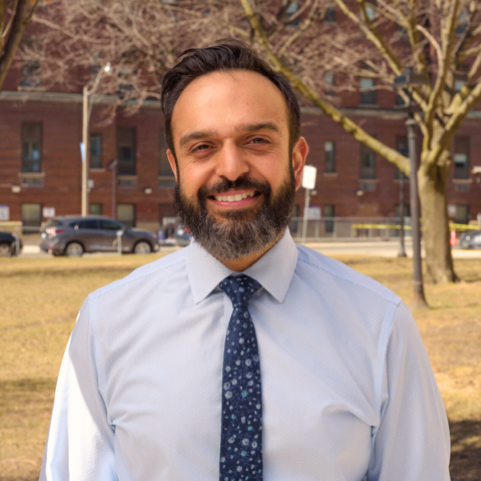
Dr. Ripudaman Singh Minhas, MD, MPH, FRCPC, FAA, is a Developmental Paediatrician with the Women’s and Children’s Health Program at St Michael’s Hospital and an Associate Professor in the Department of Pediatrics, University of Toronto. His current focus is in supporting parenting in communities experiencing marginalization. This includes the Maple Circle program which aims to support the parenting journey of families of refugee background, and “Our Kids' Health“, a social media-based health literacy program to support families.

Dr. Iryna Dvoretska, MD, is the Research and Community Coordinator for Our Kids' Health at St. Michael’s Hospital, where she supports the Ukrainian community through tailored health education and outreach. With a background in pediatric medicine and specialized training in clinical research, Iryna is dedicated to translating complex health information into accessible resources for families.

View Event →
Easing Pain, Advancing Care: A New Pathway for Children with Severe Neurological Impairments
Oct
29
11:00 AM11:00

Easing Pain, Advancing Care: A New Pathway for Children with Severe Neurological Impairments

Easing Pain, Advancing Care

Provided by the CHILD-BRIGHT Network in collaboration with Children’s Healthcare Canada.

Children with severe neurological impairments often experience persistent, unexplained pain and irritability, compounded by limited ability to verbally communicate their distress. The CHILD-BRIGHT Pain Pathway team developed the Pain Pathway, a systematic clinical tool designed to support clinicians in assessing and managing pain while improving care for families.  

This webinar will provide an overview of the multi-phased project, from clinical trial to implementation. It will highlight the clinical complexity of assessing pain and irritability; the project’s relevance and impact for clinicians, children with health complexity, and their families; as well as key lessons for patient-oriented research and implementation science. 


SPEAKERS

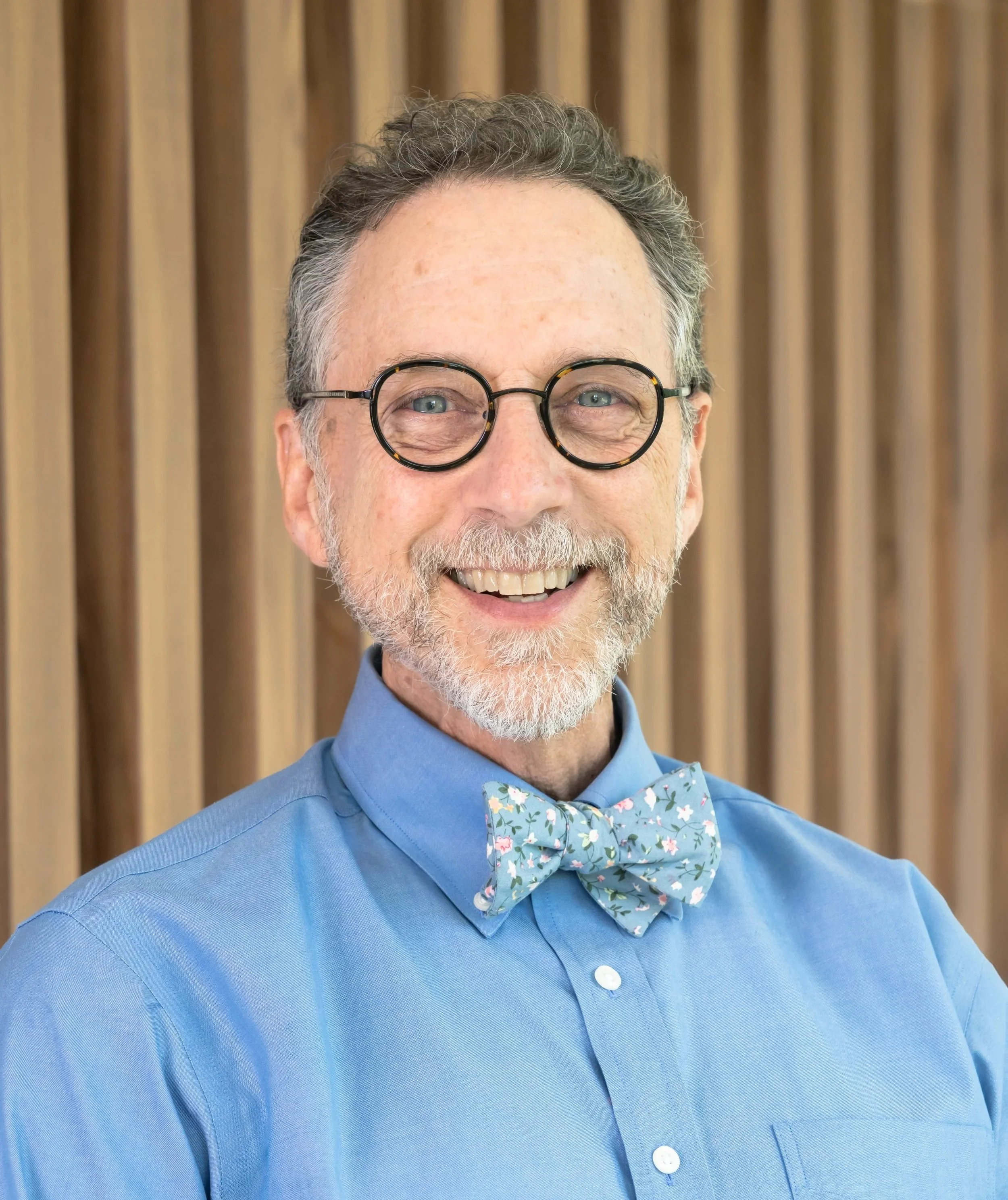
Hal Siden is a Clinical Professor at the University of British Columbia and an Investigator at BC Children’s Hospital Research Institute. He is a specialist in pediatric palliative care, and his clinical and research interests include pediatric pain, complex care, and palliative medicine. Dr. Siden is a passionate educator and advocate, and he continues to shape the future of pediatric palliative care through compassionate clinical work and innovative research. 

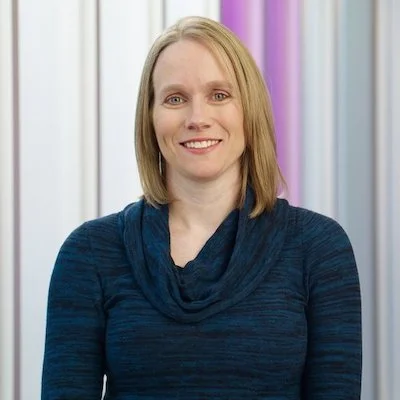
Stephanie Glegg is an Assistant Professor at the University of British Columbia and an Investigator at BC Children’s Hospital Research Institute. Dr. Glegg is an implementation scientist who studies the most effective ways to move knowledge into action to improve health, health services delivery, and health systems. Her work supports pediatric and adult populations, and spans individual, organizational, community and policy contexts.

Sharon Hou is an Assistant Professor at Simon Fraser University and a Psychologist and Investigator at BC Children’s Hospital Research Institute. Her clinical and research interests focus on diversity and health equity in child health and wellness, with particular attention to the role of culture in shaping health outcomes. Dr. Hou’s work aims to inform the creation and delivery of culturally responsive interventions to underserved and underrepresented communities of children and families. 

View Event →
Youth advocates putting skills into practice
Oct
20
6:30 PM18:30

Youth advocates putting skills into practice

YOuth advocates putting skills into practice

Curious about being part of a national youth advocacy council? Wondering how it can help with school, work, and/or community leadership?

Join us this October 20 for a free, youth-led online session with current and former members of the National Youth Advocacy Council (NYAC) from the CHILD-BRIGHT Network in partnership with Kids Brain Health Network (KBHN).

Panelists will share the real-world skills they’ve gained, like:
•️ Navigating power dynamics
•️ Leading with confidence
• Collaborating across teams
• Thinking critically and creatively

You’ll have a chance to ask questions and share your experience too!

 
View Event →
Introduction to Hybrid Effectiveness-Implementation Approaches
Sep
25
12:00 PM12:00

Introduction to Hybrid Effectiveness-Implementation Approaches

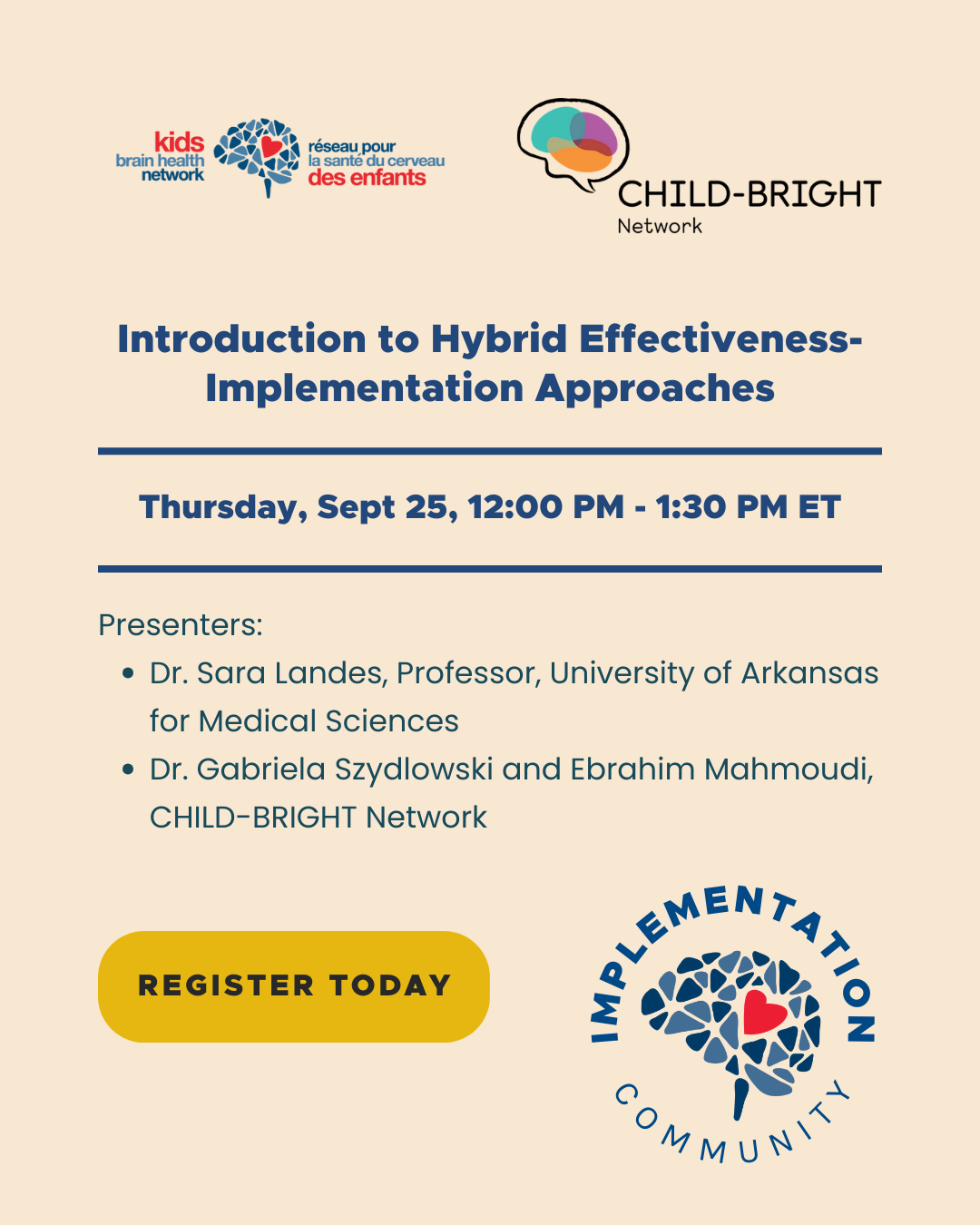
Co-hosted by Kids Brain Health Network (KBHN) and CHILD-BRIGHT Network, this session will explore how hybrid effectiveness-implementation studies can bridge the gap between research and real-world practice. Join Dr. Sara Landes, along with Dr. Gabriela Szydlowski and Ebrahim Mahmoudi (sharing a CHILD-BRIGHT case example) to dive into the three distinct types of hybrid studies—what sets them apart, how they work, and when to use each to maximize impact.

Register now
View Event →
Let's Talk KM: How art can bring your research to life!
Aug
28
2:00 PM14:00

Let's Talk KM: How art can bring your research to life!

How art CAN bring your research to life!

From visual storytelling, photography to zine-making, researchers can utilize creative ways of expression to make research findings more accessible to families, clinicians, policymakers, and other end-users of evidence. Arts-based knowledge mobilization (KM) can be an innovative way to communicate with your audience and meaningfully engage partners on your research project.  

This webinar was held on August 28 from 2-3 pm E.T. | 11am-12pm P.T. and covered the following topics:

1. Why arts-based approaches matter in youth-led and patient-oriented research 
2. How the Youth Engagement in Mental Health Policymaking guide came to life 
3. Practical arts-based tools, templates and tips 

Enjoy the webinar recording!

 
View Event →
Planning for sustainability
Jul
9
3:00 PM15:00

Planning for sustainability

Since 2022, CHILD-BRIGHT has been focused on moving evidence into action through implementation science, the study how an intervention will interact with “real-world” settings. Our 12 research project teams are working to better understand how evidence generated in Phase 1 of the network can be applied in routine practice to improve quality and effectiveness of health services for children and youth with brain-based developmental disabilities and their families.   

In our 2025 webinar series, Implementing Together, CHILD-BRIGHT’s graduate trainees, postdoctoral fellows, and early career researchers will serve as guides to the implementation science projects and tools that are being used across the network.  

Join us as we learn together about how implementation science can be used to support real-world impact as we work to create brighter futures for children and youth with brain-based developmental disabilities and their families. 


Thinking about the future of your research project? This session can help! Join us on Wednesday, July 9 from 3 p.m. to 4 p.m. ET / 12 p.m. to 1 p.m. PT for an introduction to sustainability planning for research and using a tool called the Program Sustainability Assessment Tool (PSAT), that can be used to help you plan for the future of your project.  

We’ll also be sharing updated results about how the overall CHILD-BRIGHT Network is using the PSAT to help plan for the future of the Network.  

Register

SPEAKERS

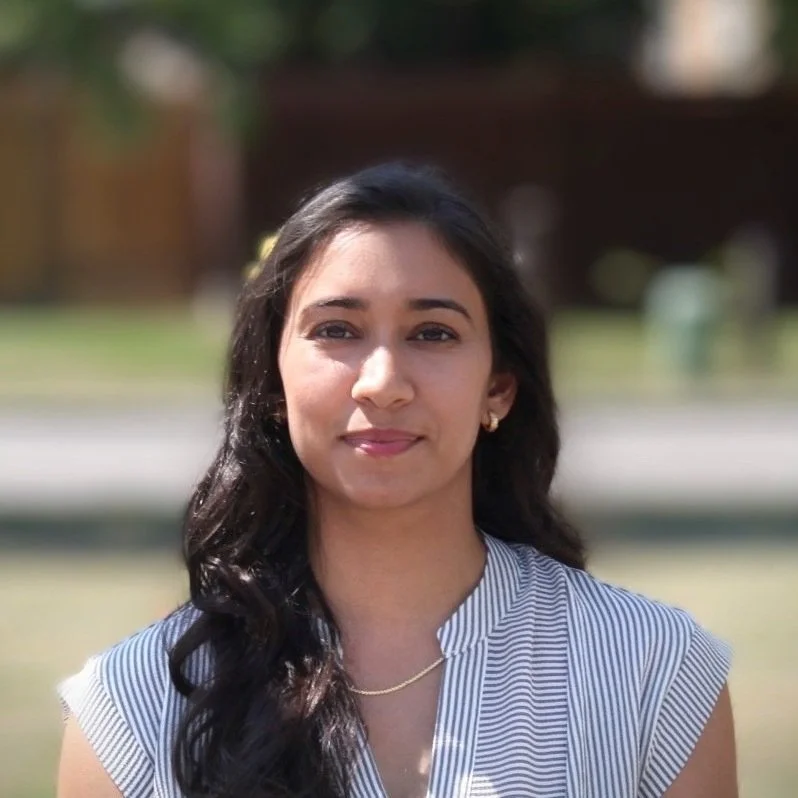
Zeenat Ladak

CHILD-BRIGHT Graduate Fellow

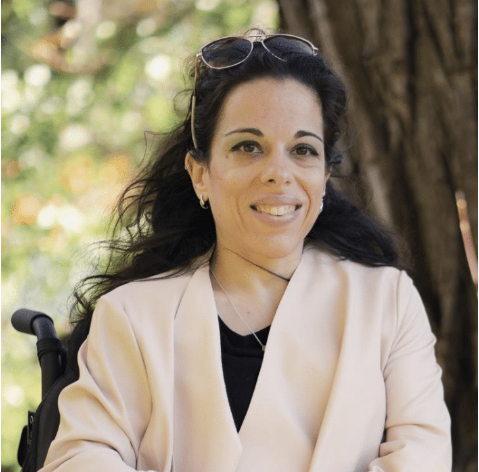
Jessica Silver

CHILD-BRIGHT partner with lived and living experience

View Event →
Beyond Education & Training: Identifying and applying implementation strategies
Jun
19
12:00 PM12:00

Beyond Education & Training: Identifying and applying implementation strategies

This event has passed. Watch the recording below:


Since 2022, CHILD-BRIGHT has been focused on moving evidence into action through implementation science, the study how an intervention will interact with “real-world” settings. Our 12 research project teams are working to better understand how evidence generated in Phase 1 of the network can be applied in routine practice to improve quality and effectiveness of health services for children and youth with brain-based developmental disabilities and their families.   

In our 2025 webinar series, Implementing Together, CHILD-BRIGHT’s graduate trainees, postdoctoral fellows, and early career researchers will serve as guides to the implementation science projects and tools that are being used across the network.  

Join us as we learn together about how implementation science can be used to support real-world impact as we work to create brighter futures for children and youth with brain-based developmental disabilities and their families. 


Implementation strategies are the specific methods or actions used to get people to use evidence-based programs in real-world settings. This session will explain what are implementation strategies and introduce you to a list of (many!) potential strategies that can help you think about ways to implement your research program beyond just education and training.   


SPEAKER


Alicia Hilderley
Department of Pediatrics, University of Calgary

 
View Event →
Supporting parents of high-risk infants from hospital to home: The CCENT study
May
27
12:00 PM12:00

Supporting parents of high-risk infants from hospital to home: The CCENT study

This event has passed. Watch the recording below:


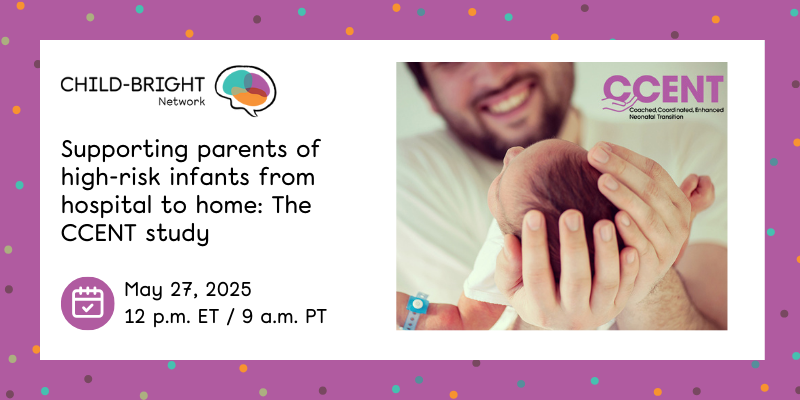
Parents of medically complex infants in the NICU experience elevated stress, anxiety, and depression, particularly during the transition from hospital to home. Although health care is often well-coordinated, psychosocial support for families remains insufficient. Join us on May 27 to hear from the Coached, Coordinated, Enhanced Neonatal Transition (CCENT), a study that evaluated a nurse navigator (NN)-led intervention to support parents during this transition.
Participants will:

  • Gain insight into the emotional and psychological challenges faced by parents of medically complex infants during the NICU-to-home transition.

  • Learn how integrated care models, particularly the CCENT approach, address both medical and psychosocial needs of families, supporting mental health outcomes for parents and high-risk infants.

  • Explore strategies for enhancing parental support during the NICU-to-home transition by incorporating a navigator role.


SPEAKERS

Kayla Esser is a clinical research manager at SickKids Hospital in Toronto. Her research aims to improve care for children with medical complexity and their caregivers.

Natasha Bruno is a PhD student in Health Systems Research at the University of Toronto and a Research Manager in the Orkin Lab at SickKids Research Institute. She is passionate about optimizing health services for children with medical complexity and their families.

Angie Lim is a Clinical Nurse Specialist in Professional Practice, a Research Associate, and a Post-doctoral Fellow in Child Health and Evaluative Sciences at SickKids. With almost 20 years of nursing experience, Angie is dedicated to collaboration within complex healthcare environments to advance care.

Fabiana Bacchini is the Executive Director of the Canadian Premature Babies Foundation (CPBF) and a passionate advocate for preemies and their families. Fabiana champions parental involvement in NICU care and research through the Family Integrated Care (FICare) model.

View Event →
Building Bridges: Making Science Accessible for All Through Collaboration
May
26
4:30 PM16:30

Building Bridges: Making Science Accessible for All Through Collaboration
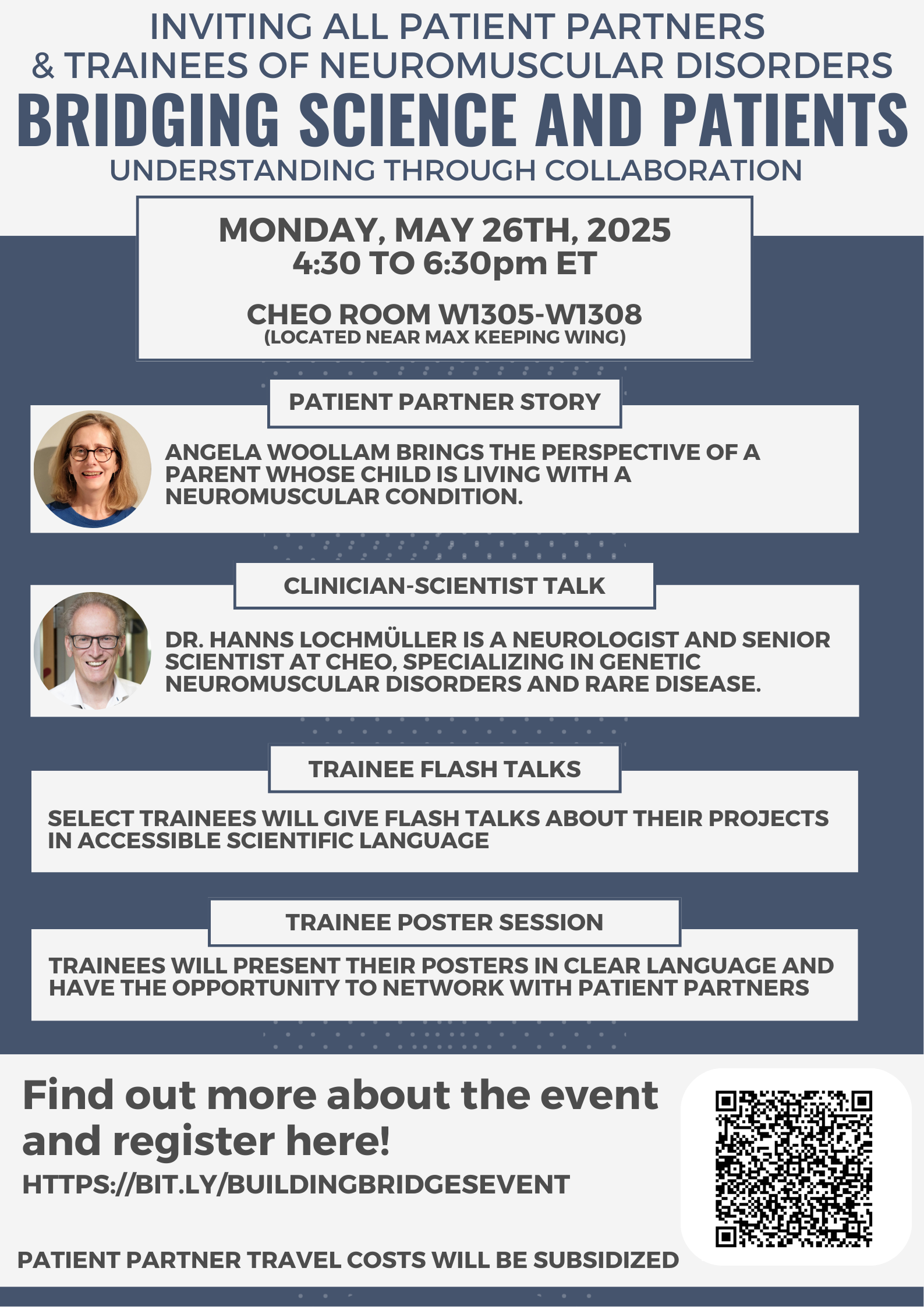
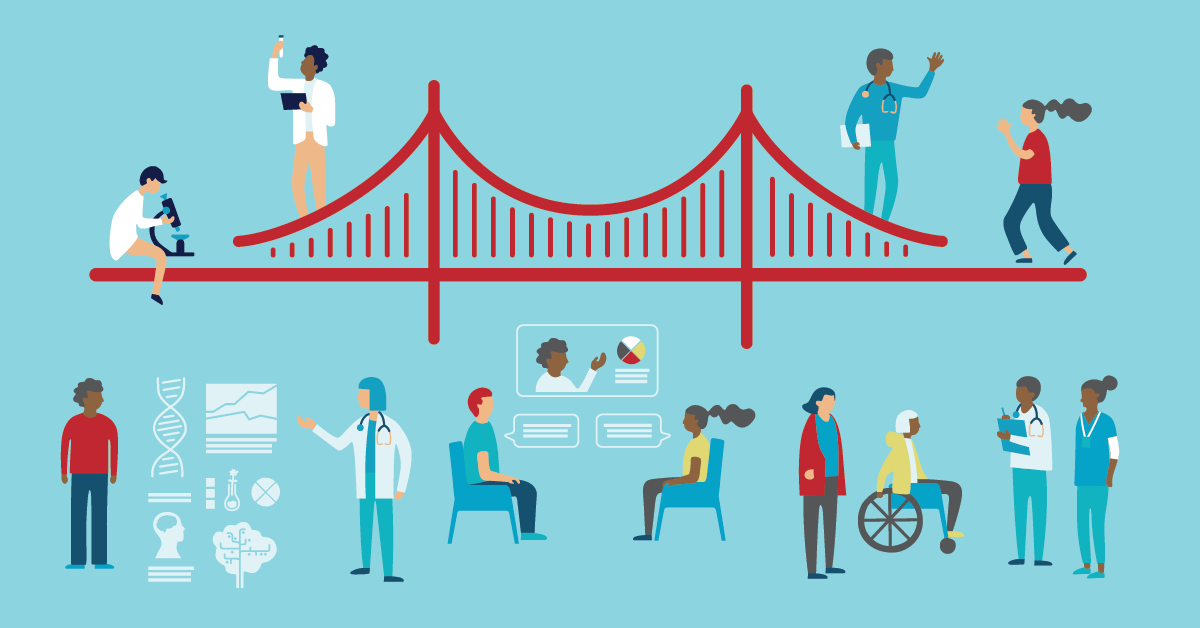
“Building Bridges: Bridging Science and Patients" is an event series that will connect emerging researchers and the patient partner communities in the neuromuscular fields. The event’s mission is to foster meaningful collaboration between patient partners and researchers to ensure that scientific communication is accessible, empowering, and inclusive.
Learn more
View Event →
UBC: Bridging Research and Action
May
15
to May 16

UBC: Bridging Research and Action

Building on the calls to action established through UBC Health-hosted dialogue events (2021-2024), Bridging Research and Action will connect partners from across BC’s health system to explore how research insights can be translated through dialogue into actionable strategies to improve health across the province. This event will bring together diverse perspectives and sectors to catalyze the integration of research and innovation into practice and develop shared aims for implementation.

Learn more
View Event →
"Barriers and Facilitators": Why does CHILD-BRIGHT keep talking about them?
May
14
1:30 PM13:30

"Barriers and Facilitators": Why does CHILD-BRIGHT keep talking about them?

This event has passed. Watch the recording below:


Since 2022, CHILD-BRIGHT has been focused on moving evidence into action through implementation science, the study how an intervention will interact with “real-world” settings. Our 12 research project teams are working to better understand how evidence generated in Phase 1 of the network can be applied in routine practice to improve quality and effectiveness of health services for children and youth with brain-based developmental disabilities and their families.   

In our 2025 webinar series, Implementing Together, CHILD-BRIGHT’s graduate trainees, postdoctoral fellows, and early career researchers will serve as guides to the implementation science projects and tools that are being used across the network.  

Join us as we learn together about how implementation science can be used to support real-world impact as we work to create brighter futures for children and youth with brain-based developmental disabilities and their families. 


Why does the CHILD-BRIGHT Network keep talking about “barriers and facilitators”? On May 14 at 10:30 a.m. PT/1:30 p.m. ET, we’ll explain what are barriers and facilitators in implementation science, why they matter, and how to identify them. We’ll also introduce the Consolidated Framework for Implementation Research 2.0 (CFIR 2.0), a common implementation framework being used by several CHILD-BRIGHT projects.

Register

SPEAKERS

Catherine Demers

Catherine Demers

Azrieli CHILD-BRIGHT Postdoctoral Fellow
Assistant professor, Université du Québec à Trois-Rivières

Carrie Costello

CHILD-BRIGHT Parent Liaison

View Event →
10th Annual Conference on Patient-Oriented Research
May
12
to May 14

10th Annual Conference on Patient-Oriented Research

Alberta SPOR SUPPORT Unit logo


Programming for the 2025 Northwest Collaborative Forum highlights 10 years of collaboration, patient-oriented research, and impact, through innovative sessions, workshops, lightning talks, and more, including:

and much, much more.

Learn more
View Event →
KBHN: A perfect pairing: engagement science and implementation science
Apr
24
12:00 PM12:00

KBHN: A perfect pairing: engagement science and implementation science

Engagement science and implementation science share common goals—bridging research and practice to create meaningful change. But how do they intersect, and how can we leverage their synergy for greater impact?

Join an expert panel as it explores engagement strategies in implementation initiatives and discuss ways to advance engagement efforts in implementation research and practice.

Learn more
View Event →
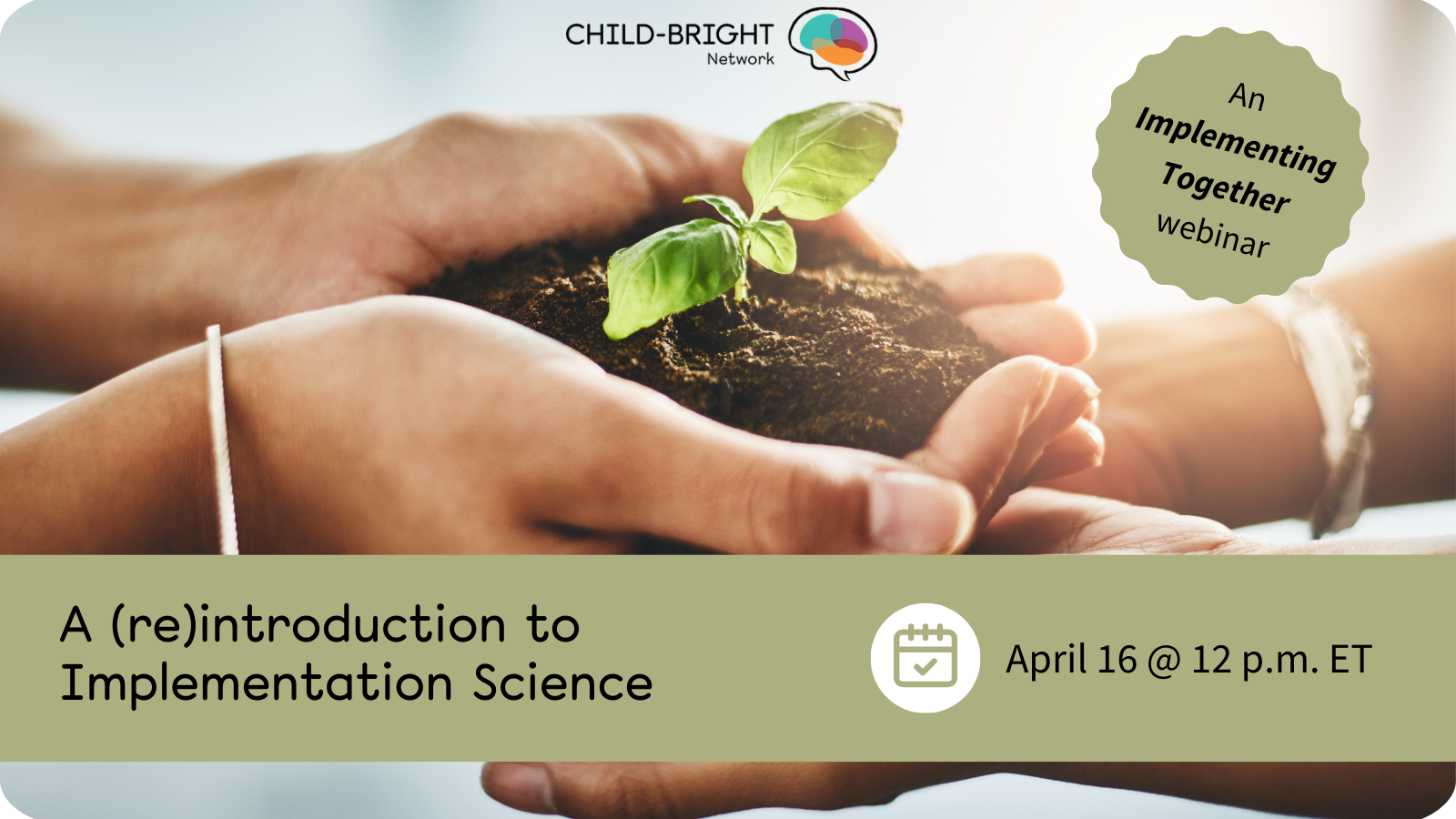
A (re)introduction to Implementation Science
Apr
16
12:00 PM12:00

A (re)introduction to Implementation Science

This event has passed. Watch the recording:


Since 2022, CHILD-BRIGHT has been focused on moving evidence into action through implementation science, the study how an intervention will interact with “real-world” settings. Our 12 research project teams are working to better understand how evidence generated in Phase 1 of the network can be applied in routine practice to improve quality and effectiveness of health services for children and youth with brain-based developmental disabilities and their families.   

In our 2025 webinar series, Implementing Together, CHILD-BRIGHT’s graduate trainees, postdoctoral fellows, and early career researchers will serve as guides to the implementation science projects and tools that are being used across the network.  

Join us as we learn together about how implementation science can be used to support real-world impact as we work to create brighter futures for children and youth with brain-based developmental disabilities and their families. 


On April 16, join us for a (re)introduction to implementation science — what it is, why it matters, and what we are learning about this burgeoning field. We’ll explore how implementation science helps bridge the gap between evidence and practice, and share some early findings about how implementation science theories, models, and frameworks are being used across the CHILD-BRIGHT Network to improve outcomes for children and youth with brain-based developmental disabilities and their families.  

Register

SPEAKERS

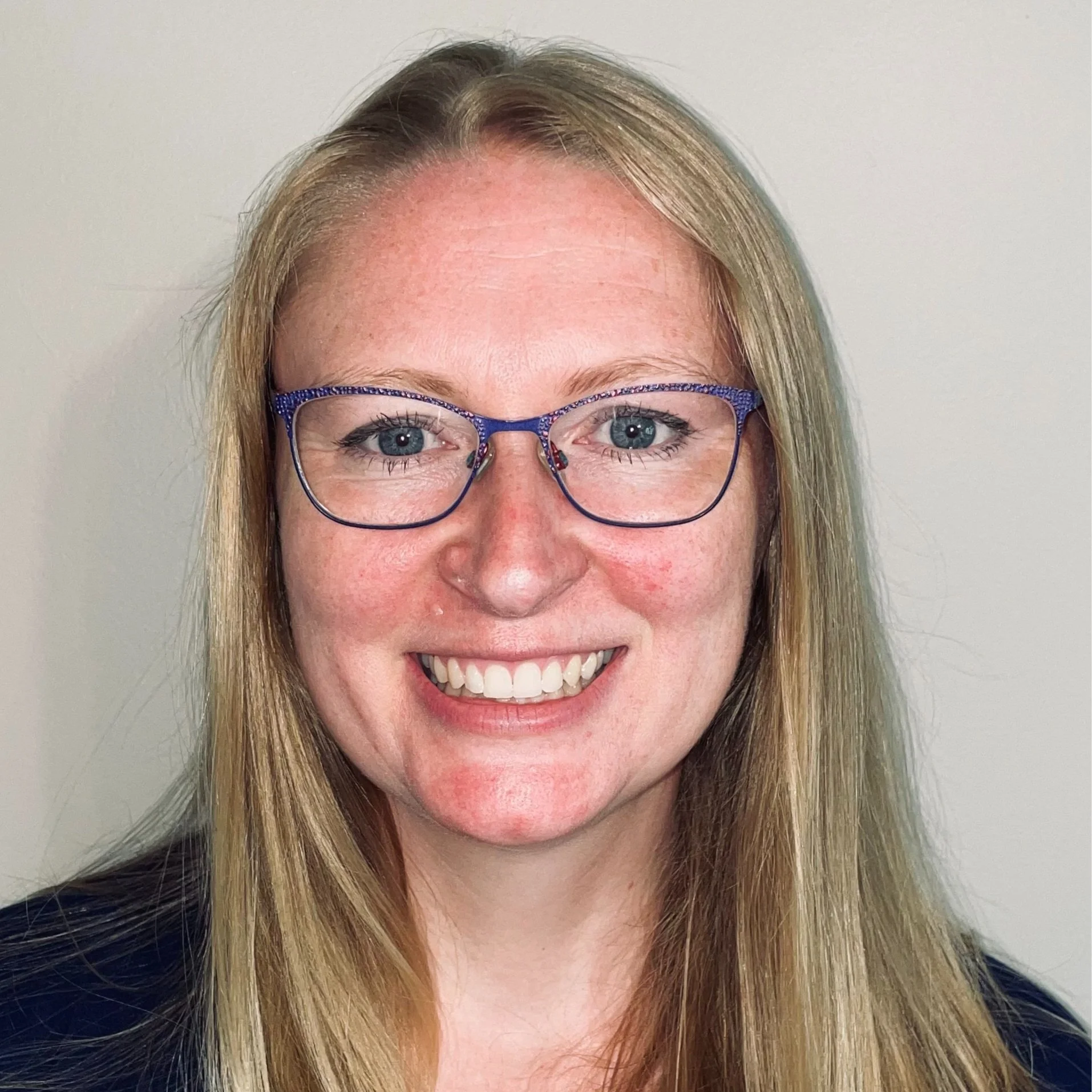
Celia Laur

Celia Laur 

CHILD-BRIGHT Training & Capacity Building Program Co-Lead                                
Scientific Lead, Office of Spread and Scale  
Women’s College Hospital Institute for Health System Solutions and Virtual Care (WIHV)  
Assistant Professor (Status), Institute for Health Policy, Management, and Evaluation; University of Toronto 

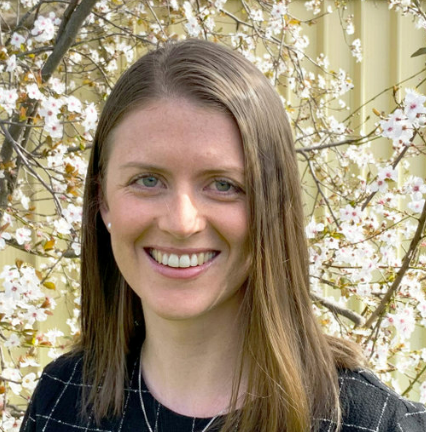
Simonne Collins

Simonne Collins

Postdoctoral fellow, STIC Lab
IWK Health, Halifax, Nova Scotia

View Event →
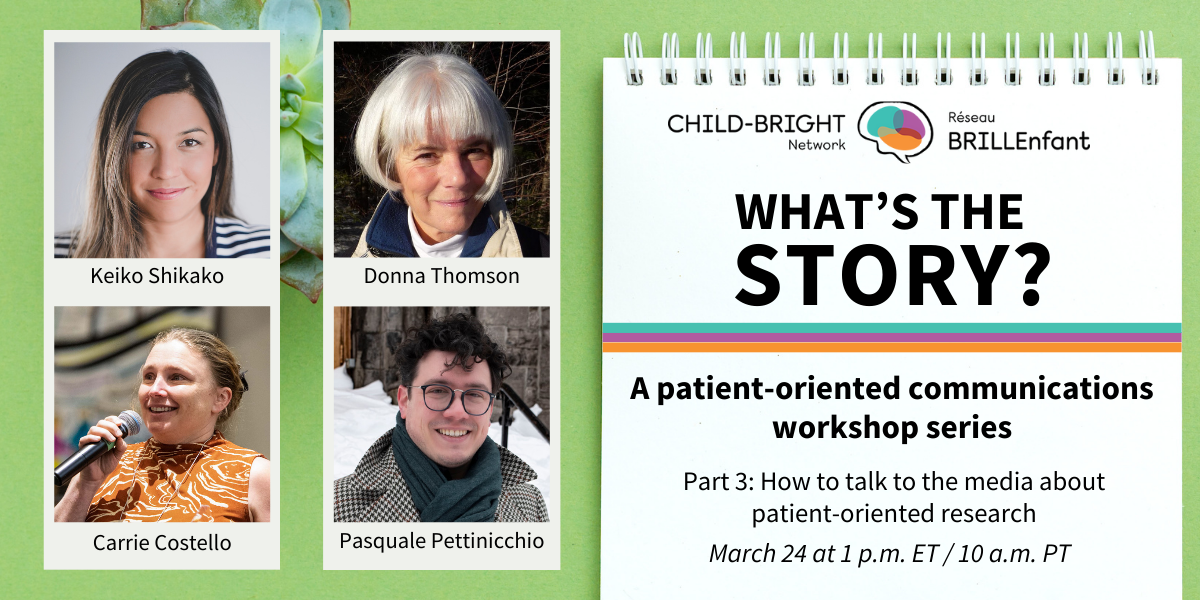
What’s the Story? Part 3: How to talk to the media about patient-oriented research
Mar
24
1:00 PM13:00

What’s the Story? Part 3: How to talk to the media about patient-oriented research

This event has passed. Watch the recording below:


Patient-oriented research (POR) is an approach that involves partners with lived and living experience (PWLEs) at each step of a research study or project. To do POR successfully, it’s important to communicate in a way that is understandable and accessible to all research partners, no matter their perspectives, experiences, expertise, or background. Patient-oriented researchers also are interested in putting research into action by sharing research findings outside of ‘traditional’ academic publications and venues.  

To do any of these things, you need to be able to write accessibly. If you’re looking to improve your ability to communicate with a range of audiences and increase your impact as a public scholar, please join us for What’s the Story?, a three-part introduction to POR communications! 

Part 3: How to talk to the media about patient-oriented research will focus on essential skills for sharing your patient-oriented research with the media. Join us for a panel discussion to hear from experts on how to effectively communicate scientific stories to a lay audience and increase your presence as a public scholar. 

You will learn:  

  • What journalists are looking for in a scientific story 

  • How to place a story in a major outlet 

  • How to communicate effectively with non-specialists 

  • And more! 

SPEAKERS

MODERATOR

View Event →
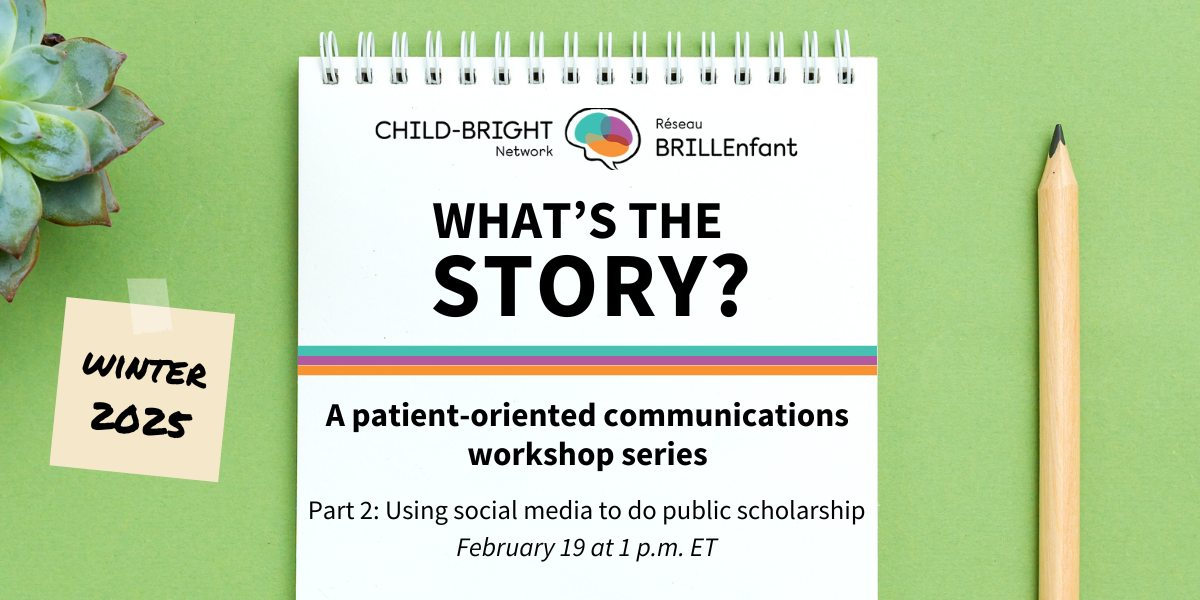
What’s the Story? Part 2: How to use social media to do public scholarship
Feb
19
1:00 PM13:00

What’s the Story? Part 2: How to use social media to do public scholarship

This event has passed. If you missed it, you can watch the recording below:


Patient-oriented research (POR) is an approach that involves partners with lived and living experience (PWLEs) at each step of a research study or project. To do POR successfully, it’s important to communicate in a way that is understandable and accessible to all research partners, no matter their perspectives, experiences, expertise, or background. Patient-oriented researchers also are interested in putting research into action by sharing research findings outside of ‘traditional’ academic publications and venues.  

To do any of these things, you need to be able to write accessibly. If you’re looking to improve your ability to communicate with a range of audiences and increase your impact as a public scholar, please join us for What’s the Story?, a three-part introduction to POR communications! 

Part 2: How to use social media to do public scholarship will focus on using social media to increase the reach and impact of patient-oriented research. Hear from CHILD-BRIGHT members about how they’ve leveraged social media platforms to reach potential research participants, engage the public, create community, disseminate findings, and more. 

You will learn:  

  • The latest social media trends in health care research

  • How to craft effective messaging for impact

  • How to keep a public engaged 

  • How to grow your audience over time

  • And more! 

Register

SPEAKERS

MODERATOR

View Event →
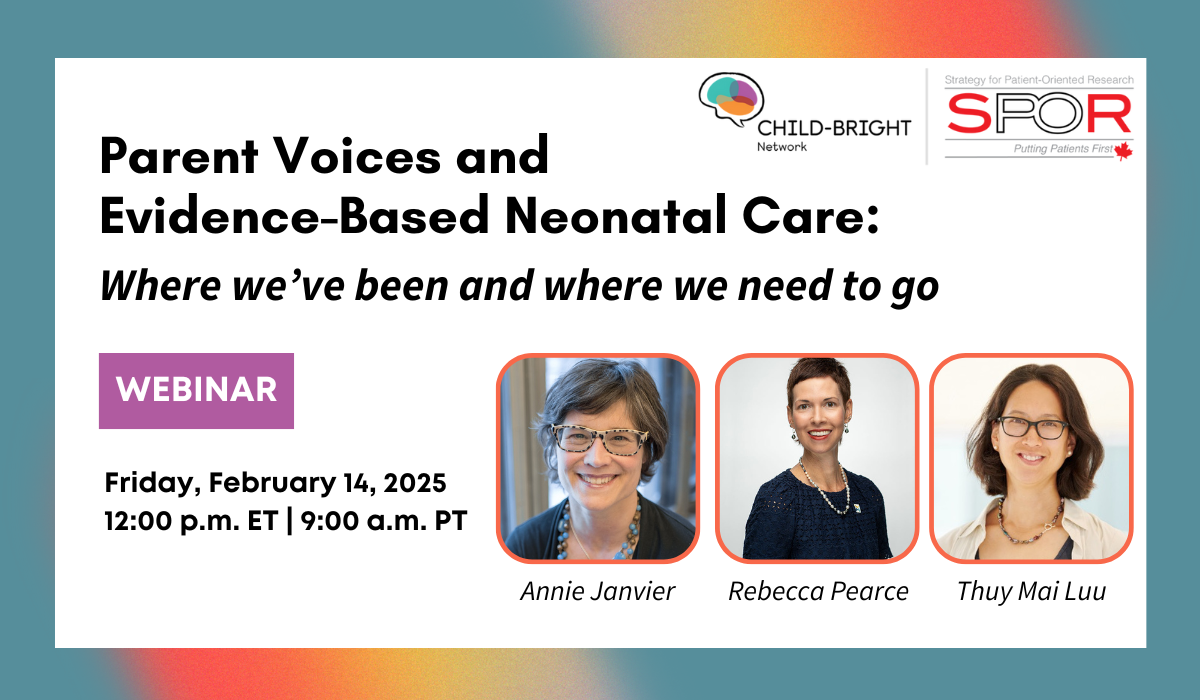
Parent Voices and Evidence-Based Neonatal Care: Where we’ve been and where we need to go
Feb
14
12:00 PM12:00

Parent Voices and Evidence-Based Neonatal Care: Where we’ve been and where we need to go

This event has passed. If you missed it, you can watch the recording below:


Join neonatologist Annie Janvier, parent research partner Rebecca Pearce, and co-principal investigator Thuy Mai Luu for an eye-opening webinar highlighting the contrast between preterm birth outcomes that are traditionally measured in neonatology and those that really matter to parents.

The speakers will:

  • Explore why and when preterm birth outcomes are measured

  • Examine the limitations of traditional outcome measures

  • Present the outcomes that are important to families

  • Explain how outcome measures could be optimized to better reflect the family experience

Register

SPEAKERS

Annie Janvier is a professor of pediatrics and clinical ethics at Université de Montréal. She is also a neonatologist and clinical ethicist at CHU Sainte-Justine. Her main research interests in bioethics are patient/family/parental perspectives on health outcomes, decision-making for fragile patients, and family-integrated care in pediatrics. Patients and parents are collaborators in the majority of her clinical, research, and teaching projects.


Rebecca Pearce is a high school vice-principal who lives in Montreal. She is the mother of a surviving twin who was born at 25 weeks, 5 days gestational age in 2009. Over the years, Rebecca has been a co-author on a number of papers discussing parental views of prematurity and has become an advocate for improving outcomes of prematurity by including parent voices and perspectives in research. She is also the chair of the Canadian Premature Babies Foundation Family Advisory Committee.


Thuy Mai Luu is a pediatrician and the medical director of CHU Sainte-Justine’s Neonatal Follow-Up Program in Montreal. She is also the director of the Canadian Neonatal Follow-Up Network, a research network including the 26 neonatal follow-up programs across Canada. She is currently a senior clinical research scholar from the Quebec Health Research Funds. Her research focuses on long-term neurodevelopmental and physical health outcomes following preterm birth, from infancy to adulthood.

View Event →
What’s the Story? Part 1: How to make your writing more accessible
Feb
11
1:00 PM13:00

What’s the Story? Part 1: How to make your writing more accessible

This event has passed. If you missed it, you can watch the recording below:


Patient-oriented research (POR) is an approach that involves partners with lived and living experience (PWLEs) at each step of a research study or project. To do POR successfully, it’s important to communicate in a way that is understandable and accessible to all research partners, no matter their perspectives, experiences, expertise, or background. Patient-oriented researchers also are interested in putting research into action by sharing research findings outside of ‘traditional’ academic publications and venues.  

To do any of these things, you need to be able to write accessibly. If you’re looking to improve your ability to communicate with a range of audiences and increase your impact as a public scholar, please join us for What’s the Story?, a three-part introduction to POR communications! 

Part 1: How to make your writing more accessible is a workshop on how to write about health care research for a range of audiences, including partners with lived and living experience of a disability. 

You will learn:  

  • What accessible writing is and why it’s important 

  • How to identify (and write for) your audience 

  • Recognizing and rephrasing commonly used jargon 

  • Tips for quickly making your writing easier to read

  • Basic accessibility considerations: writing alt-text, image descriptions, and use of text in graphics

Register

SPEAKERS

View Event →
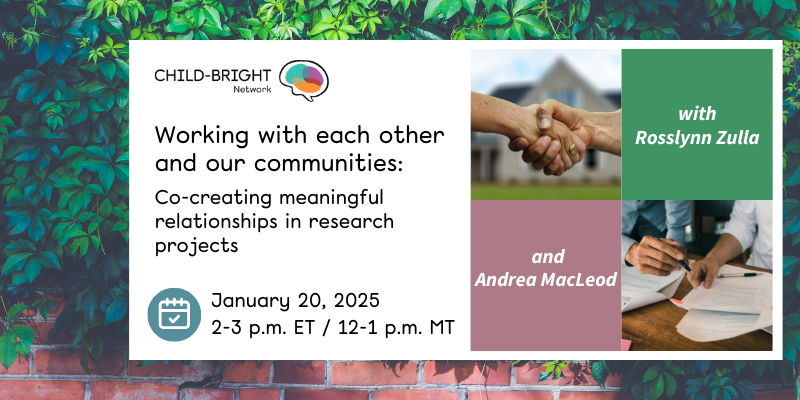
Working with each other and our communities: Co-creating meaningful relationships in research projects
Jan
20
2:00 PM14:00

Working with each other and our communities: Co-creating meaningful relationships in research projects

This event has passed. Watch the recording below:


Join 2022 Training Innovation Fund awardees Rosslynn Zulla (University of Calgary) and Andrea MacLeod (University of Alberta) on January 20 from 2 p.m.-3 p.m. ET / 12 p.m.-1 p.m. MT for an interactive webinar on building meaningful research partnerships with immigrant and refugee families who have neurodivergent children, as well as with the organizations that support them. 

This CHILD-BRIGHT event aims to provide practical tools and key information to researchers hoping to forge relationships with these communities, whose members often face multiple barriers preventing their participation in research projects. Rosslyn and Andrea will discuss case studies and present a guide specially developed to support researchers wishing to improve the health and well-being of immigrant and refugee families with neurodivergent children. They will also outline key processes to help researchers align with the principles of equity, diversity and inclusion, as well as examples of meaningful research processes and products.

SPEAKERS

Dr. Rosslynn Zulla, Assistant Professor, University of Calgary, Faculty of Social Work

Dr. Andrea MacLeod, Professor, University of Alberta, Faculty of Rehabilitation Medicine, Communication Sciences & Disorders

REGISTER TODAY
View Event →
Sacred Knowledge: Protecting Indigenous Data Sovereignty
Nov
14
1:00 PM13:00

Sacred Knowledge: Protecting Indigenous Data Sovereignty

This event has passed. Watch the recording below:


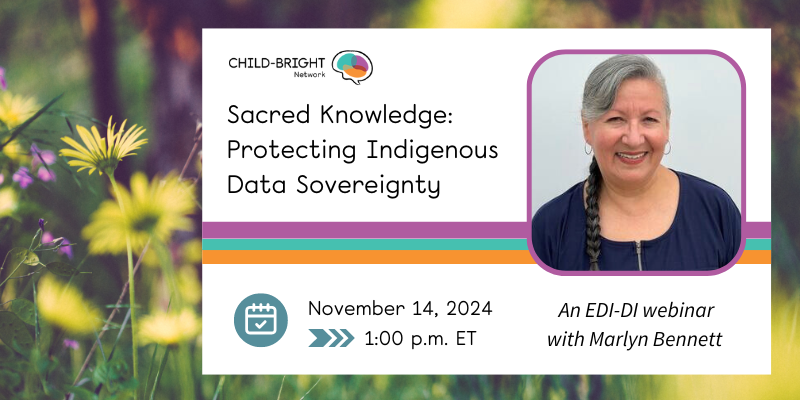
Promotional graphic for the Sacred Knowledge: Protecting Indigenous Data Sovereignty webinar with Marlyn Bennett

In an era where data is the new gold, the importance of protecting Indigenous data sovereignty has never been more critical. Join Marlyn Bennett, an Anishinaabe interdisciplinary researcher and Co-Lead of CHILD-BRIGHT’s Equity, Diversity, Inclusion, Indigenization and Decolonization (EDI-DI) Program on November 14 at 1 p.m. ET/10 a.m. PT as she delves into the profound significance of safeguarding Indigenous knowledge and data in health research.

This talk will explore the historical and cultural contexts that underscore the need for Indigenous control over data, the challenges faced in the fight for sovereignty, and the ways in which Indigenous communities are reclaiming their narratives through data governance. 

Marlyn Bennett will share insights into the ethical considerations, best practices, and collaborative efforts essential for protecting sacred Indigenous knowledge. Attendees will gain a deeper understanding of the pivotal role that data sovereignty plays in empowering Indigenous communities, preserving cultural heritage, and ensuring that data is used in ways that respect Indigenous values and traditions. 

This talk is a call to action for researchers, policymakers, and community members to support and advocate for Indigenous data sovereignty, recognizing it as a vital component of Indigenous rights and self-determination.

View Event →
2024 AACPDM Community Forum
Oct
26
9:00 AM09:00

2024 AACPDM Community Forum

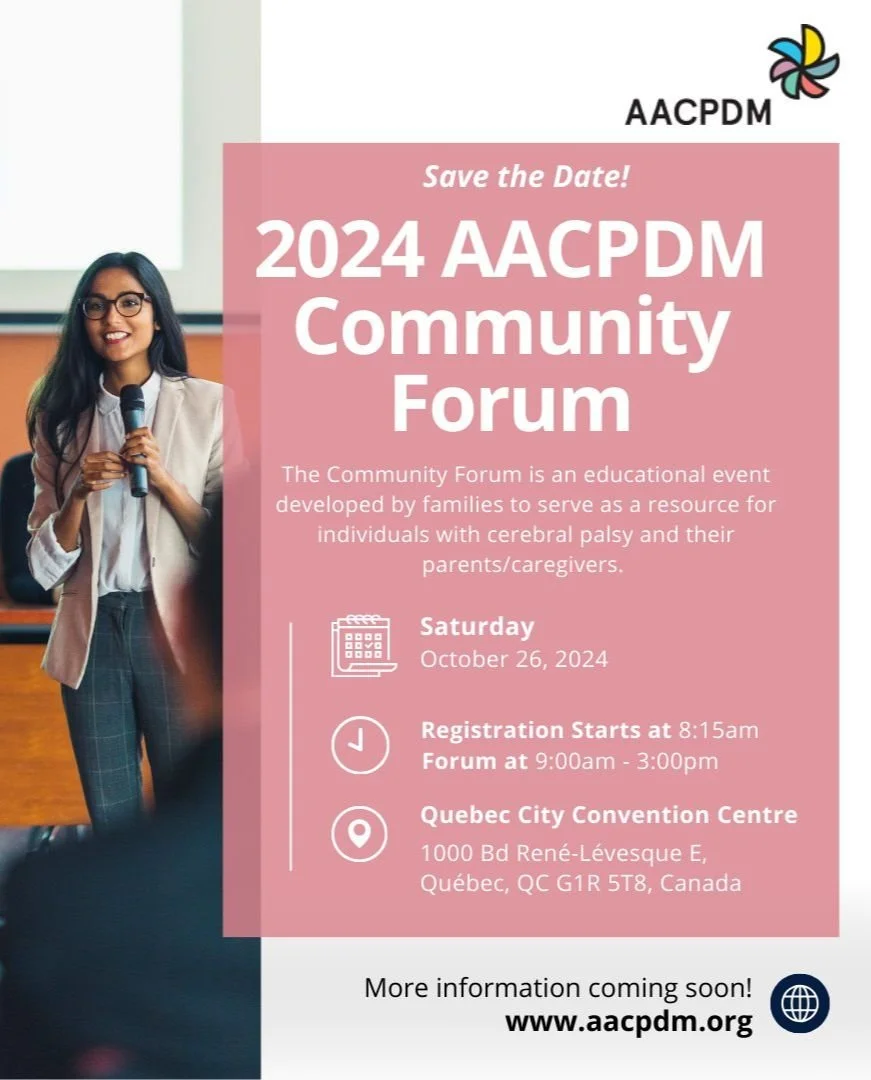
The AACPDM Community Forum is an annual in-person educational event developed by families to serve as a resource for individuals with cerebral palsy and their parents/caregivers. The Forum provides an opportunity to hear experts discuss issues affecting children and adults, and to learn about new research, medical advances, and topics that promote inclusion, participation, and impact the quality of life for those with cerebral palsy.

Learn more and register
View Event →
2024 CHILD-BRIGHT Virtual Symposium:  Shifting from Discovery to Implementation Science Research
Oct
18
1:00 PM13:00

2024 CHILD-BRIGHT Virtual Symposium: Shifting from Discovery to Implementation Science Research

This event has passed. If you missed it, you can watch a recording below:


Network members learned a lot in the move from Phase 1, which was focused on producing research and outcomes, to Phase 2, which is all about implementation in the real world. On Oct. 18 from 1 p.m. - 2:30 pm EDT / 10 a.m. – 11:30 a.m. PDT, join the discussion about how we moved forward and shifted our focus to having an impact on practice and policy.

Moderators: 

  • Janet Curran, CHILD-BRIGHT Implementation Science Research Program Co-Lead

  • Simonne Collins, Postdoctoral Fellow, CHILD-BRIGHT Implementation Science Research Program

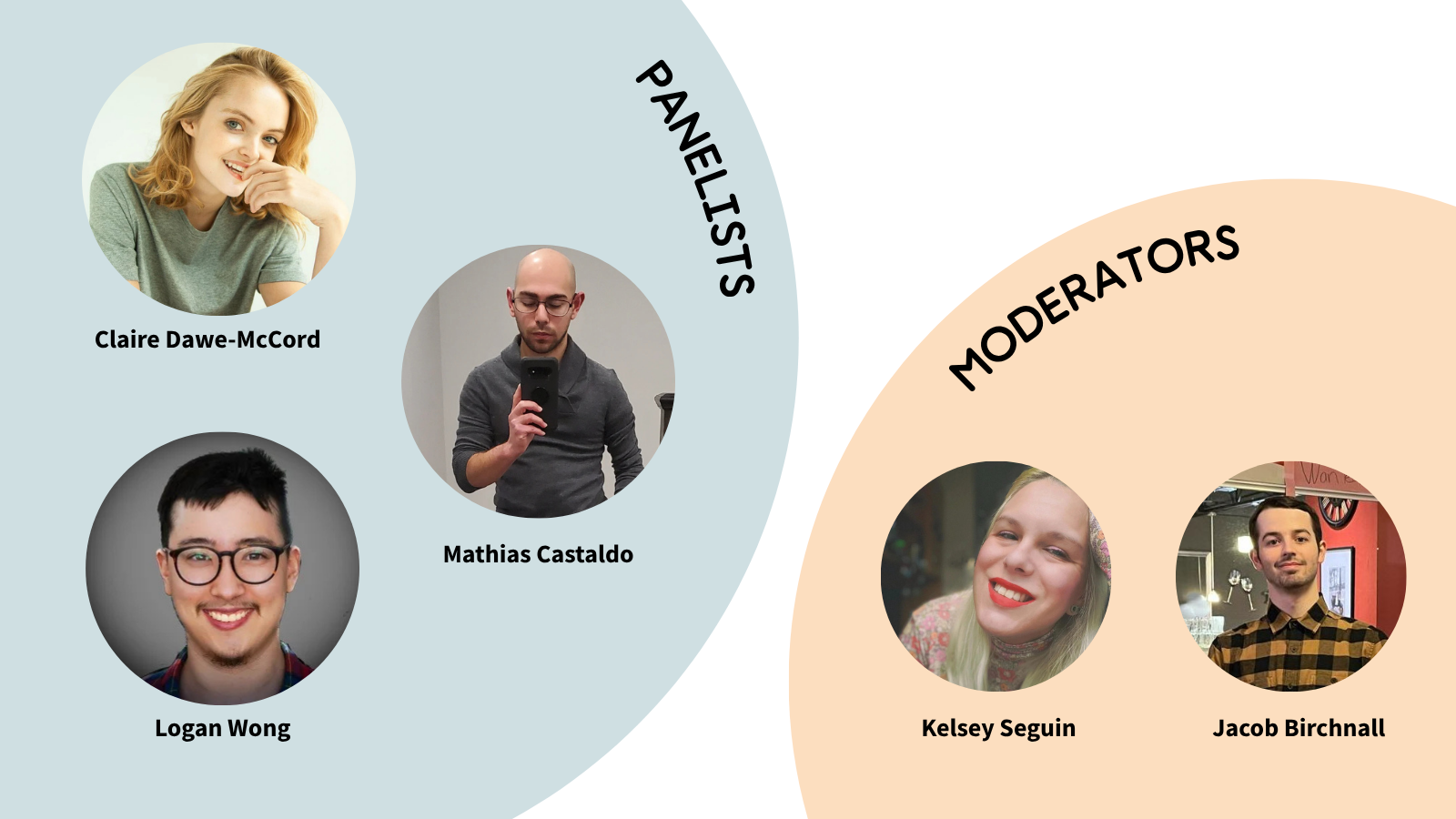
Panelists:

  • Lucy Lach, Co-Principal Investigator, CHILD-BRIGHT Bridging the Gap from Science to Uptake research project

  • Sharon McCarry, Partner with Lived and Living Experience, CHILD-BRIGHT Bridging the Gap from Science to Uptake research project

  • Marie-Ève Bolduc, Postdoctoral Fellow, CHILD-BRIGHT Care Pathways for CHD research project

  • Kelvin Lee, Trainee, CHILD-BRIGHT Care Pathways for CHD research project

  • Jamie-Lynn Hunt, Partner with Lived and Living Experience, CHILD-BRIGHT Care Pathways for CHD research project

  • Sharon Hou, Postdoctoral Fellow, CHILD-BRIGHT Pain Pathways research project

  • Laesa Kim, Family Liaison, CHILD-BRIGHT Pain Pathways research project

  • Jennifer Crosbie, Principal Investigator, CHILD-BRIGHT VR-EF research project

  • Gunjan Seth, Partner with Lived and Living Experience, CHILD-BRIGHT VR-EF research project

View Event →
2024 CHILD-BRIGHT Virtual Symposium:  Knowledge Mobilization and Engagement
Oct
9
11:00 AM11:00

2024 CHILD-BRIGHT Virtual Symposium: Knowledge Mobilization and Engagement

This event has passed. If you missed it, you can watch a recording below:


Curious to hear about the different roles partners with lived and living experience (PWLEs) have in our Phase 2 Projects? On Oct. 9 from 11 a.m.- 12:30 pm EDT / 8 a.m. – 9:30 a.m. PDT, join us to learn how PWLE engagement has evolved at CHILD-BRIGHT while continuing to enhance patient-oriented approaches to child health research and knowledge mobilization practices.

View Event →
2024 CHILD-BRIGHT Virtual Symposium: Planning for Sustainability
Sep
20
1:00 PM13:00

2024 CHILD-BRIGHT Virtual Symposium: Planning for Sustainability

This event has passed. If you missed it, you can watch a recording below:


On Sept. 20 from 1 p.m. - 2:30 pm EDT / 10 – 11:30 a.m. PDT, join us to learn more about CHILD-BRIGHT’s plans for the future, including activities led by the network’s executive committee, and how projects and programs are thinking of their own longevity. This panel will highlight training initiatives in patient-oriented research, strategies to scale up operations, and relationship building that promotes our network’s long-term success.

Speaker:

  • Annette Majnemer, CHILD-BRIGHT Nominated Principal Investigator and Scientific Co-Director

Panelists:

  • Mathias Castaldo, CHILD-BRIGHT National Youth Advocacy Council member

  • Steven Miller, CHILD-BRIGHT Scientific Co-Director,  Principal Investigator & Implementation Science Research Program Co-Lead

  • Linda Nguyen, CHILD-BRIGHT Training and Capacity Building Committee Member and Knowledge Mobilization Committee Member

View Event →
Prioritizing Disability Inclusion in Health Research
Aug
19
1:00 PM13:00

Prioritizing Disability Inclusion in Health Research

This event has passed. If you missed it, you can watch a recording below:


Join members of the CHILD-BRIGHT National Youth Advocacy Council on Aug. 19 at 1 p.m. ET/10 a.m. PT as they explore the crucial importance of including people with disabilities in health research focused on equity, diversity, inclusion, decolonizatio, and Indigenization (EDI-DI). They will define key concepts such as tokenism, infantilization, and non-inclusive environments, leading to a discussion of why inclusion is essential and an overview of elements of inclusive research practice.

LEARNING OBJECTIVES

  • Understanding the principles and benefits of inclusive research practices.

  • Learning how to design research projects that include people with disabilities as critical partners.

  • Defining key concepts of EDI-DI in health research.

  • Exploring the ethical, social, and practical importance of inclusion for people with disabilities in the context of health research.

  • Examining why the concept of inclusion is often an afterthought for people with disabilities in EDI-DI-focused health research.

This session aims to create an understanding of inclusive research practices and foster a more equitable and respectful approach to health research. Join us to learn how to make your research more inclusive and impactful!

FACILITATORS

  • Tommy Akinnawonu, CHILD-BRIGHT National Youth Advocacy Council member

  • Kelsey Seguin, CHILD-BRIGHT National Youth Advocacy Council member

  • Logan Wong, CHILD-BRIGHT National Youth Advocacy Council member

Register
View Event →