
Lived & Living Experience Leaders: Meet Sierra Lynne Vanderdeen

FRANÇAIS

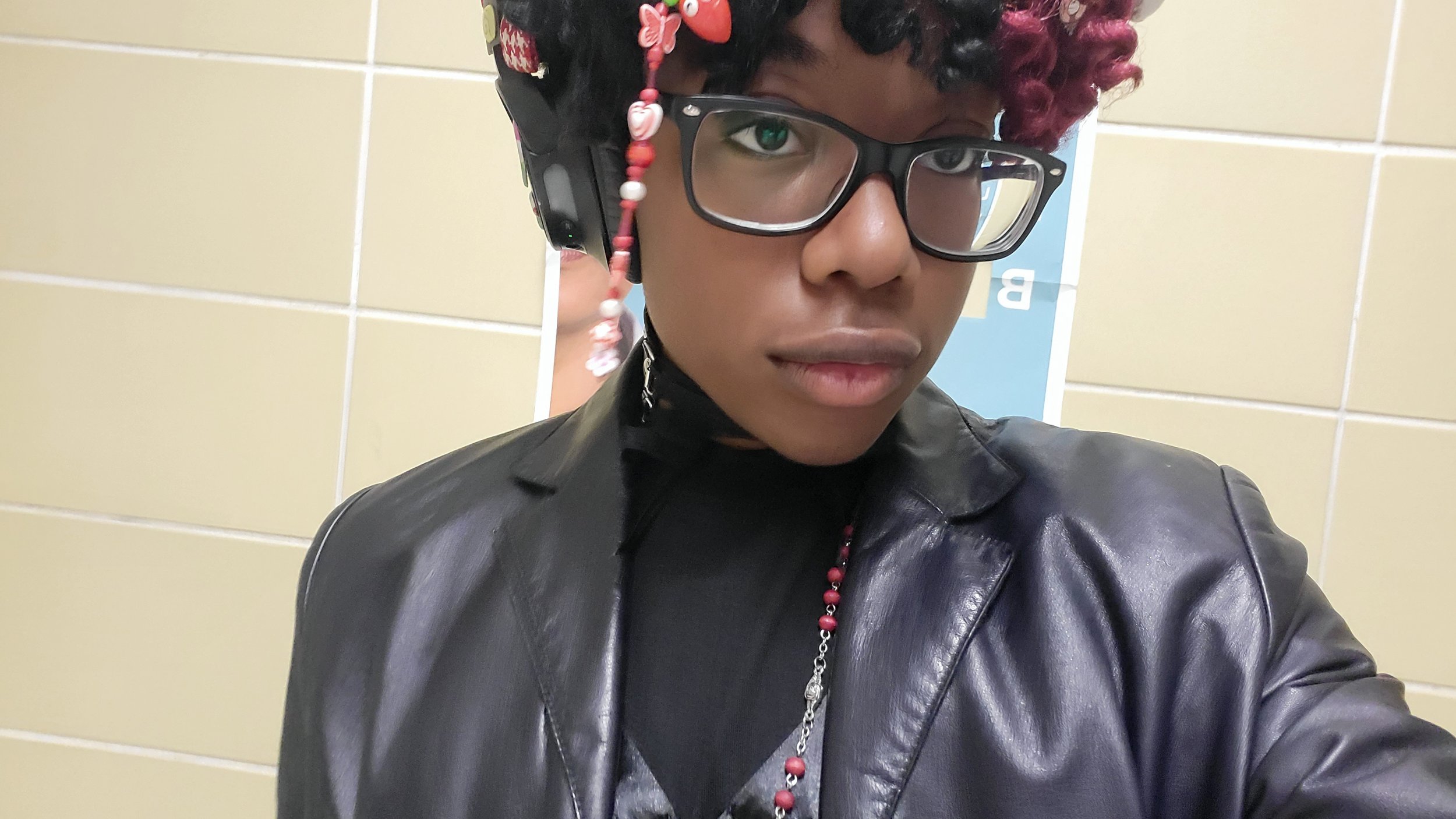
Sierra has been a member of the NYAC since September 2022. He believes that, when it comes to health research, listening to the testimonies of those with lived and living experience is essential.
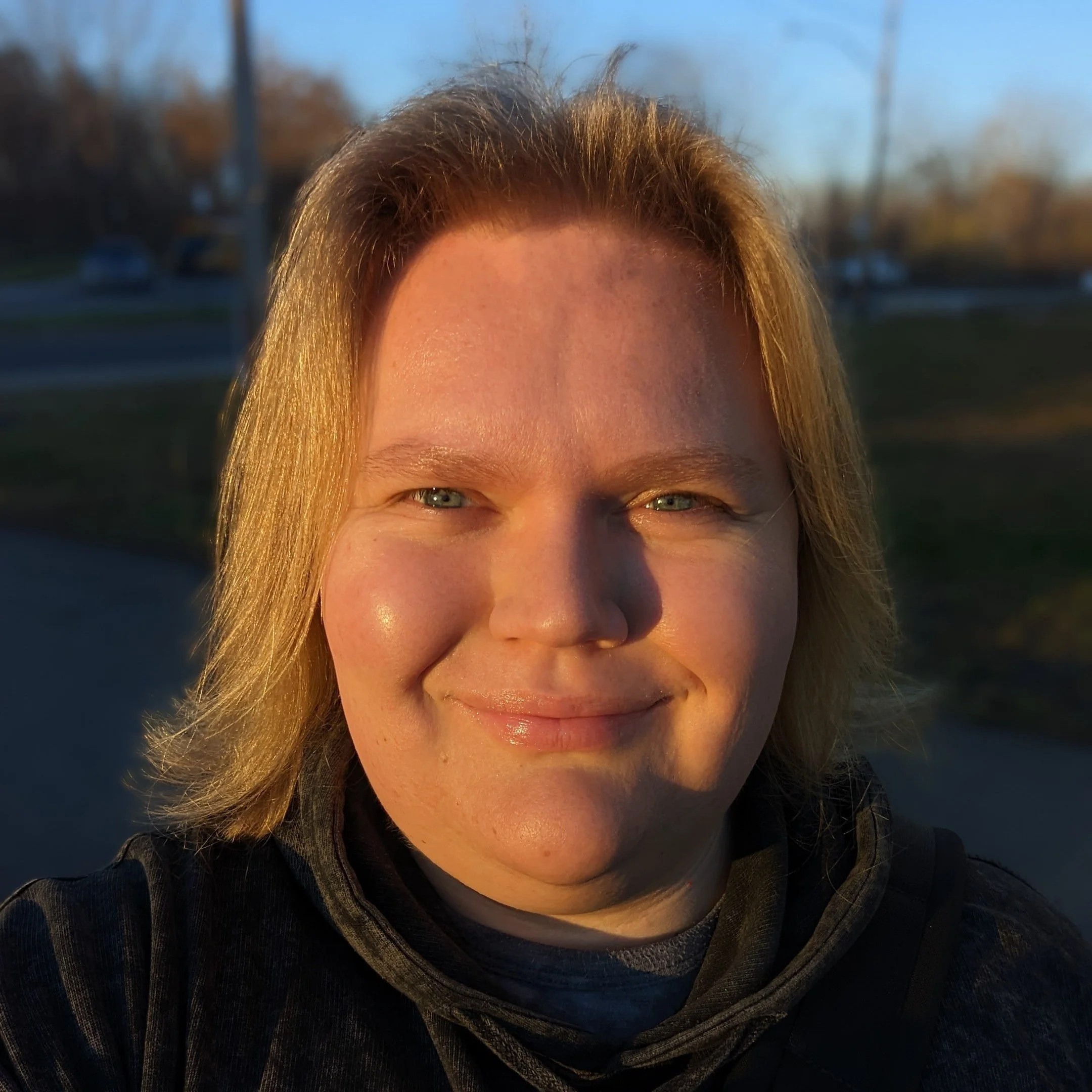
Sierra Lynne Vanderdeen, NYAC member

“For me, self-advocacy is about sharing my perspective,” he says. “I try to explain my situation in a way that can be understood and applied by researchers.” 

Sierra, like several other NYAC members, has autism. Receiving the proper diagnosis for his disability was a challenge, he says: “I was obviously neurodivergent, but it was a matter of finding the box that I fit into.”

Thanks to his parents’ persistence, he was finally diagnosed at age 15. After moving to Montreal for a new job, he began to meet other people his age who also had autism. One of his new friends was none other than the son of Sharon McCarry, former Director of the Engagement Program at CHILD-BRIGHT. “I call Sharon my Montreal mom,” laughs Sierra. “She introduced me to CHILD-BRIGHT and said the NYAC would be a great spot for me.” 

Since joining the team, Sierra has been a consultant for a variety of organizations and non-profits. He’s also helping to plan a new NYAC media series, which will aim to answer researchers’ questions on youth living with brain-based developmental disabilities. A journalism and communications graduate, Sierra is excited to explore the possibilities of audiovisual communications. “It’s a more accessible format,” he says, pointing out that some people with brain-based developmental disabilities struggle with text media. 

Today, Sierra is proud to talk about his disability. “I've embraced my autistic traits,” he says with a smile. “In embracing them, I'm able to be a better self-advocate. I realized I'm able to see things in a way that a neurotypical person wouldn't—and that’s valuable.” 
Meet the other NYAC members

Lived & Living Experience Leaders: Meet Gillian Backlin

FRANÇAIS

For Public Health student Gillian, self-advocacy is about making positive change: “I want to speak up for people in similar situations as mine.” 

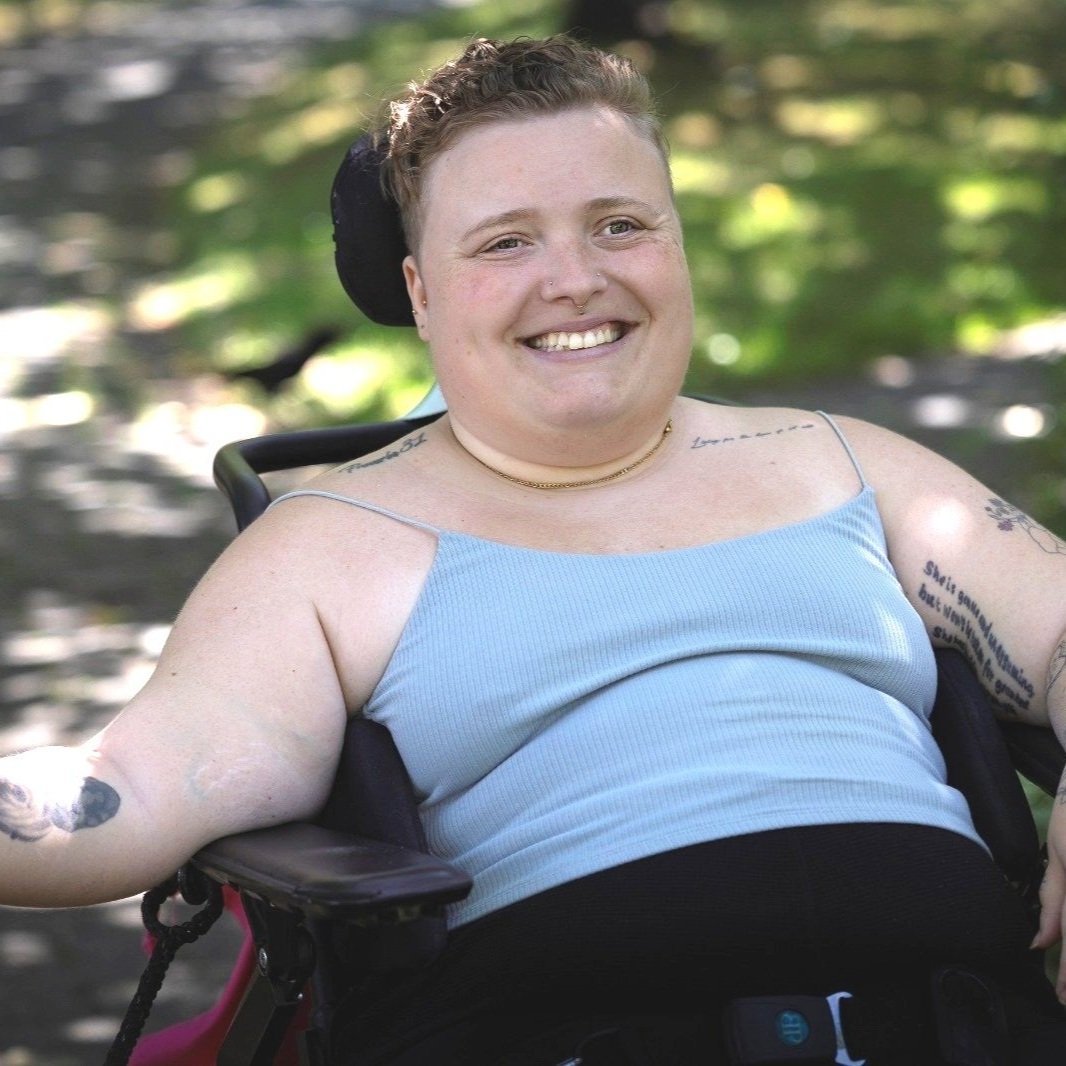
Gillian Backlin, NYAC member

Gillian was born with spastic quadriplegic cerebral palsy (CP). “I’m reliant on a wheelchair and assistance for day-to-day things,” she says. From a young age, her parents encouraged her to advocate for herself, and she feels strongly about amplifying the voices of others:

“We live in a world that doesn't always give people like me the opportunity to speak for themselves.”

Gillian joined the NYAC in 2019, after hearing about CHILD-BRIGHT from her volunteering supervisor at Sunny Hill Health Centre, BC Children's Hospital. She was delighted to find a group of people who share her interest in self-advocacy. “And we all have different lived experiences and skills,” she says. “It’s very cool to see!” 

Since then, she’s been highly active within the network. In addition to providing feedback on several research projects through our Lived & Living Experience Consultation Service, Gillian joined the Knowledge Mobilization (KM) Committee and Policy Hub, as well as the Network Steering Committee. This March, she was also a panelist on a KM Family Hub webinar, “Pathways through Partnership: Knowledge Mobilization with Families of Children with Disabilities.” Currently, Gillian is a youth research partner on the CHILD-BRIGHT Social Network Analysis study, which aims to understand the social networks within and outside the network. 

Living with CP comes with its share of challenges, but in Gillian’s experience, the hardest part isn't the disability itself—it’s how the outside world interacts with it. “Society isn’t set up for other abilities,” she says. For instance, navigating her studies hasn’t been straightforward: “Figuring out accommodations is a lot of work. And if the instructor doesn't want to do things differently for one student, that puts me at a disadvantage.” 

Outside of school and the NYAC, Gillian loves writing, blogging, and spending time on social media. She has her own blog and online store called Spastic & Fantastic, where she opens up about her experiences to help destigmatize living with a disability. 

Meet the other NYAC members

Lived & Living Experience Leaders: Meet Tommy Akinnawonu

FRANÇAIS

Tommy is a first-year Biomedical Sciences student at Toronto Metropolitan University. At 19, he’s the youngest member of the NYAC!

Tommy Akinnawonu, NYAC member

Despite being relatively new to the council, he has already participated in several NYAC group consultations for research projects external to CHILD-BRIGHT, including one that explored virtual reality therapies for children with attention-deficit/hyperactivity disorder (ADHD).

He was also a youth research partner with One Child Every Child, a research initiative with a vision for all children to be healthy, empowered, and thriving.

Tommy, who is Black and queer, lives with ADHD and autism. “My lived experience with brain-based disabilities is very different due to my Blackness,” says Tommy. “It's also difficult with the added layer of my queerness.” 

His younger brother, for whom he helps care for, is also on the autism spectrum. Tommy has seen how people react to him and his brother when they’re out in public together, especially if they’re talking or stimming. (‘Stims’ are self-stimulatory behaviours that involve repetitive movements or sounds, like humming or rocking back and forth). “I’ve noticed a much crueller response to us,” says Tommy. “Especially towards my brother.” 

One symptom of Tommy’s autism is alexithymia, or difficulty experiencing, identifying, and expressing emotions. He explains how masking, or suppressing his natural autistic traits, fuelled his alexithymia: “I didn't know what I wanted or didn't want, when I was being appreciated or disrespected.”  

Because of these experiences, Tommy feels strongly about being open about his identity. “To me, self-advocacy is about demasking,” he says. “Being unapologetically myself allows other marginalized people to identify me as a safe person, which means I can help advocate on their behalf.” Outside of his studies and research, he’s passionate about disability justice and crisis intervention, and does harm reduction outreach in Toronto. 

An enthusiastic student, Tommy is hoping to minor in Disability Studies. His favourite course this semester is on tangible human-computer interactions. He’s currently prototyping a tool to help people with genetic medical complexities and disabilities better understand their conditions. 

Meet the other NYAC members

Lived & Living Experience Leaders: Meet Claire Dawe-McCord

FRANÇAIS

Claire, a final-year medical student and longtime NYAC member, is a passionate advocate of patient-oriented research (POR), which seeks to meaningfully engage partners with lived and living experience (PWLEs) at every stage of research.

Claire Dawe-McCord, NYAC member

“I think of it like a business model,” she says. “You wouldn't create a product without consulting with consumers. We’ve been making these research products that didn't involve the end users.” 

Claire joined the NYAC in 2019 while pursuing a Bachelor of Health Sciences at McMaster University.

“I reached out to Jan Willem Gorter [Co-Principal Investigator of CHILD-BRIGHT's READYorNot™ Brain-Based Disabilities Project], because I really wanted to work with him,” she says. Jan encouraged her to become a youth research partner with READYorNot™. From there, she was recommended for the NYAC. 

Since then, Claire has been an active youth research partner on the READYorNOT™ project. She was also a speaker at the 2023 CHILD-BRIGHT Conference and helped shape a study about youth mental health during COVID-19. She even ran her undergraduate thesis project, which explored transitions between pediatric and adult health care, through the network. 

Being a youth research partner has cemented her belief that people with lived and living experience should be involved in research from the ground up. “It’s the future of health care,” she says. “Plus, it’s beneficial to individuals living with a disability to see good come out of their own experiences.” 

Claire is living with a very rare neuromuscular disorder that affects her brain and muscle functioning. But like many of her NYAC peers, it took years for her to receive a diagnosis. "My symptoms were dismissed,” she says. “I was told that I was just anxious.” When she was 15, she went into multi-organ failure. Finally, doctors began to take her symptoms seriously and provide her with the care she needed. Claire also lives with attention-deficit/hyperactivity disorder and dyscalculia. 

When asked how her brain-based disabilities have affected her life, Claire is pensive. “I think I’m a very resilient and adaptable person. Outside of acute flares, I don’t think about my disabilities.” Despite her symptoms, she’s incredibly active. She’s an avid skier and has been looking into adaptive rock climbing. “And I’m a really good cook,” she says with a smile. “I cook a lot for friends!” 

Meet the other NYAC members

Lived & Living Experience Leaders: Meet Shafniya Kanagaratnam

FRANÇAIS

Shafniya, a recent college graduate, joined the NYAC in 2021 after seeing a recruitment ad. She was looking for a way to get involved in brain-based developmental disability (BDD) research as a youth volunteer, and the term ‘patient-oriented research’ (POR) was brand-new to her.

“When I first joined at 24, it was for self-advocacy reasons,” says Shafniya.

Two years earlier, during her undergraduate degree, she’d been diagnosed with attention-deficit/hyperactivity disorder (ADHD). The NYAC gave her the opportunity to better understand her condition and share her experiences in a meaningful way. 

Since joining the council, Shafniya has completed peer reviews for CHILD-BRIGHT Phase 2 projects, advised key groups on how to provide accommodations for youth during the research process, and been a consultant on the importance of equity, diversity, and inclusion in POR. She’s currently a youth research partner on the CHILD-BRIGHT project CEE YOU!: Critical Ethical Engagement of YOUth in patient-oriented research, supported by our Training Innovation Fund and led by Sakiko Yamaguchi. 

Through her involvement in health research, Shafniya has seen the value of her lived experience first-hand. “On the CEE YOU! project, I interviewed the youth participants,” she says. “Since I also have a brain-based disability, I found it easy to develop a relationship with them.” 

Shafniya has also noticed that more research is needed on BDD in adults. “From what I’ve seen, ADHD research participants are generally 18 and under,” she says. “But neurodevelopmental disability goes beyond childhood.” In the past few years, she’s met many other children of immigrants who were diagnosed with ADHD in adulthood: “It’s easy to fall through the cracks." 

She points out that navigating ADHD as an adult is a unique experience, because you’re accountable for yourself. “I had to drop out of school for a while,” she recalls. “I couldn’t work. I couldn’t afford my medication.” 

In the future, Shafniya hopes to see more studies looking at BDD that consider the various forms of inequality that a person may experience. “For example, gender affects how you’re screened for ADHD,” she says. “I think it’s important to look at brain and mental health using an intersectional lens.” 

Meet the other NYAC members