
Two heads are better than one for CHILD-BRIGHT’s National Youth Advisory Panel 

In a first for our network, not one but two of our youth members are taking the helm of the CHILD-BRIGHT National Youth Advisory Panel (NYAP). Current chairperson Logan Wong will be joined by long-time NYAP member Hans Dupuis as co-chair for the panel’s next term, which runs from 2022 to 2024. 
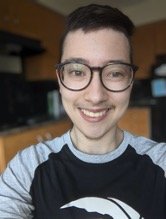
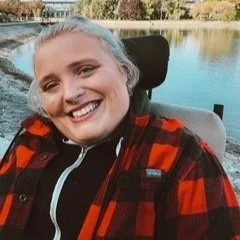
A smiling selfie of Logan Wong

In addition to his work as NYAP co-chair, Logan Wong is a social worker with a particular interest in health care policy, working with youth and within the equity, anti-oppression, and anti-racism sector.

The past two years have been a whirlwind for the NYAP, and especially so for Logan: “As chairperson, I have been able to represent the NYAP on more projects than ever, including as part of the network's steering committee and at a collaboration with Autism Canada, formally the Canadian Autism Spectrum Disorder Alliance,” he shared. Early in his mandate, the NYAP launched its consultation service, in which the youth members provide advice to Canadian researchers working on childhood disability research projects. 

At the same time, our youth members were contending with the many impacts of the COVID-19 pandemic. “The pandemic taught us all how to adapt to the adversity that comes with uncertainty,” Logan said.  “That’s the lesson I will bring with me intothis next mandate as co-chair. I am incredibly proud of the panel for how they adjusted to a new way of working and a new way of life, all while remaining passionate about advocating for people like ourselves with brain-based developmental disabilities.” 
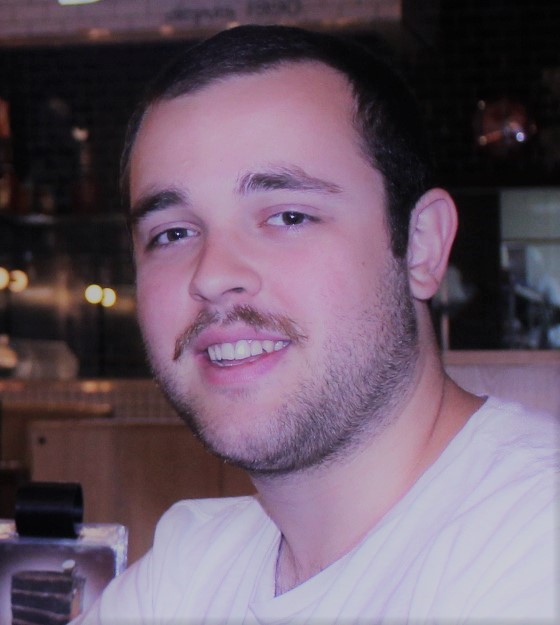
Hans Dupuis smiles for the camera.

NYAP Co-Chair Hans Dupuis, who lives in Montreal, has worked for Air Canada since 2017. He is an avid manga and graphic novel reader and enjoys live-action role playing.

This shift in the NYAP governance structure will allow the co-chairs to share responsibilities and workload and provide a second perspective to decision-making within the panel. “After over four years as part of the NYAP, I’m excited to take on a more active role and do my part in the network to help others with brain-based developmental disabilities or autism,” explained Hans. “As co-chair, I will be able to better guide our monthly meetings and support Logan during this mandate.” As a bilingual francophone youth member, Hans will also bring some linguistic diversity to this new role as co-chair. 

Together, Hans and Logan will guide the NYAP and its members as the network moves into its Phase 2. The panel will retain its focus of advising CHILD-BRIGHT’s research teams on how to optimize youth engagement. With this in mind, the youth members have started developing a toolkit on best practices in patient engagement and patient-oriented research for teams to incorporate at the start of their implementation science research projects.  

“I am proud of the work we have done so far within the network and beyond and I look forward to sharing this role with Hans for the next two years to see how much more we can accomplish as a panel in the future!” Logan concluded. 
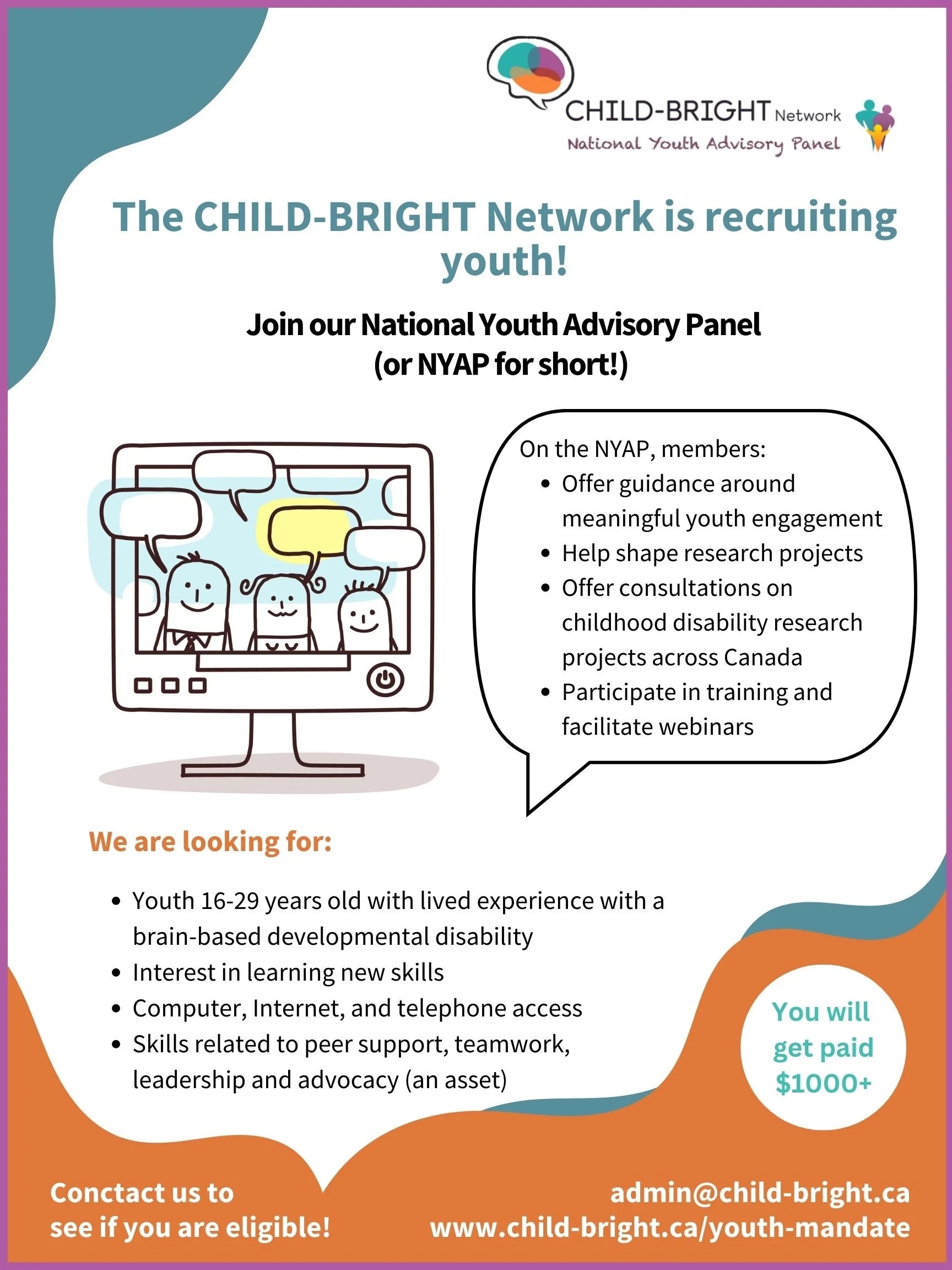
Are you a Canadian youth with a brain-based developmental disability? The NYAP is recruiting!

Reach out to our Citizen Engagement team to know more

CHILD-BRIGHT youth helps make Project 2050 accessible for all

In November 2021, we announced that our Jooay App research project had teamed up with the Earth Rangers organization to launch Project 2050: Climate-friendly habits to change the world!

Jooay and Earth Rangers reached out to CHILD-BRIGHT’s National Youth Advisory Panel (NYAP), which offers an innovative consultation service to Canadian researchers working on childhood disability research projects, to help ensure Project 2050 is accessible to, and inclusive of, children with disabilities. NYAP member Gillian Backlin worked with the team to provide an accessibility review of the Project 2050 website.

A national movement powered by Earth Rangers in partnership with Jooay, Project 2050 empowers children with the knowledge and skills needed to tackle climate change. It teaches children and youth that our habits can have a big impact on the planet, and that by working together, we can build a more climate-resilient future. It was therefore important to the project team that its website be accessible to all children and youth, including those with disabilities.

Photo of Gillian Backlin

Gillian, who has completed a previous NYAP consultation, was a natural fit for this particular project. “I’m trained in technical writing and therefore have knowledge in information architecture and how things might make more sense to the end user,” she explained.

The nature of each NYAP consultation can vary depending on specific research project needs. For Project 2050, Gillian met with the team via Zoom, where they requested she review a list of items on the website. She went through them with CHILD-BRIGHT Citizen Engagement Coordinator Corinne Lalonde and submitted their feedback. They then had a follow-up meeting with the project team to discuss their findings. “It was a great experience!” Gillian shared. “I felt that my feedback was valued and incorporated into the results.”

Corinne also had the opportunity to explore the website with her son: “My almost six-year-old was delighted to receive his very own official Earth Rangers card in the mail! We looked at the website and he was immediately drawn in by the challenges and rewards. He found them fun and learned a lot about healthy habits (which made his mom very happy too!).” 

“It was a really great experience working with Gillian and the team on this project,” Corinne added. “It was interactive and interesting, and we felt that we were well supported throughout.”

The Jooay team couldn’t have agreed more: “Gillian provided valuable feedback on our accessibility project,” they emphasized.

“We’re partnering with Earth Rangers to advise on accessibility and the inclusion of children with disabilities in Project 2050, and to make sure that their website is accessible for children with disabilities. Project 2050 encourages kids across Canada to make climate-friendly habits part of their life,” the team wrote to us. “With her professional and lived experiences, Gillian assessed the Earth Rangers website carefully and sent us her detailed feedback.”

You (and your kids!) are invited to check out the results of the NYAP consultation by viewing the Project 2050 website.

INTERESTED IN CONSULTING WITH THE NYAP? LEARN MORE AND SUBMIT A REQUEST HERE!

How the NYAP shaped a study about youth mental health during COVID-19

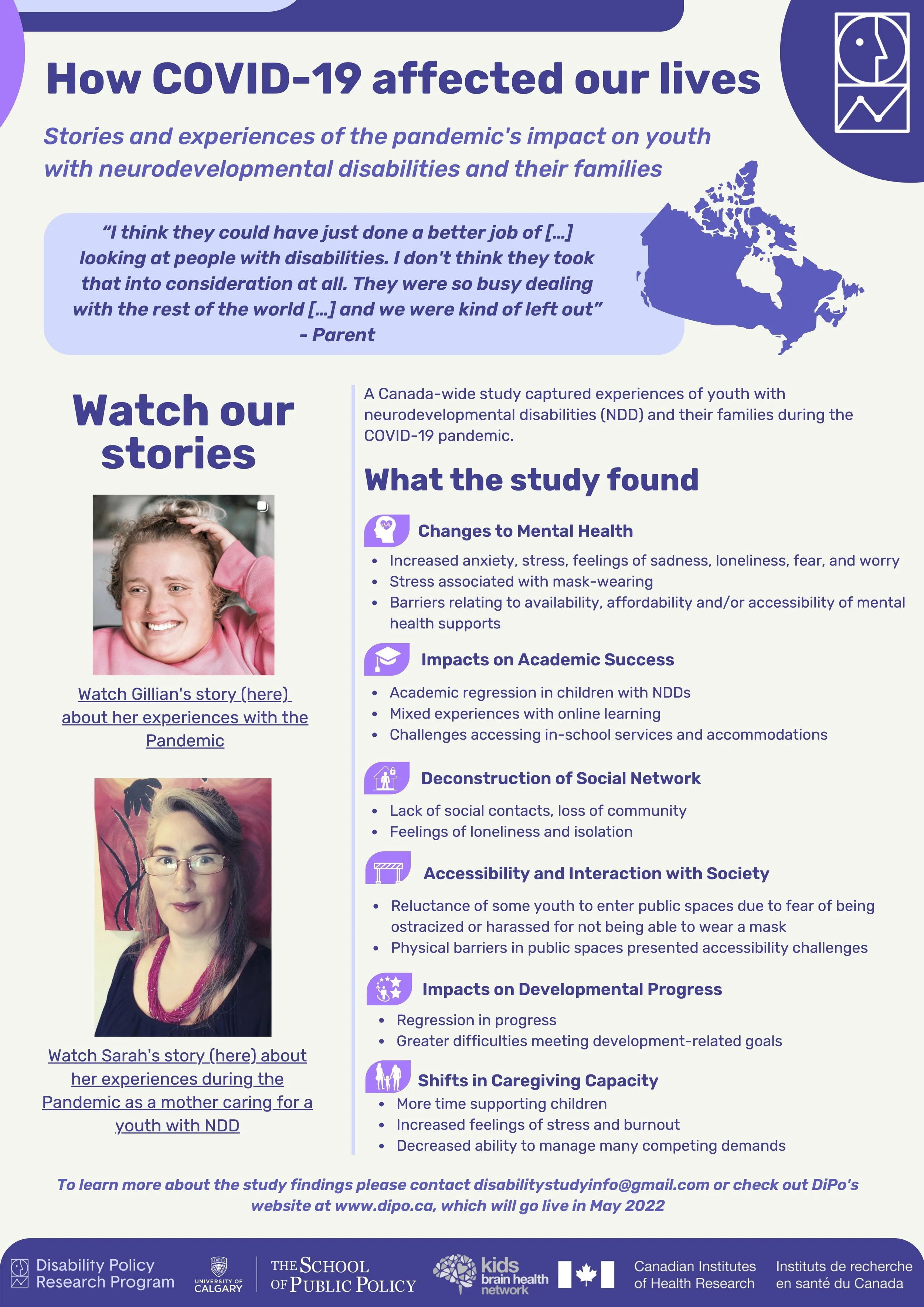
In October 2020, CHILD-BRIGHT’s National Youth Advisory Panel (NYAP) launched an innovative youth consultation service, offered to Canadian researchers working on childhood disability research projects. NYAP members Gillian Backlin, Claire Dawe-McCord, Logan Wong and Hans Dupuis consulted with the “Nothing without us: COVID-19 policy responses to improve mental health of youth with disabilities and their families” study team between March and December 2021. Gillian Backlin served on the project’s advisory council as a youth representative.

The “Nothing without us” project, co-led by CHILD-BRIGHT members Keiko Shikako and Jennifer Zwicker, and affiliated with the University of Calgary, was designed to identify COVID-19 policy responses that are inclusive, equitable, and evidence-informed to meet the mental health needs and promote well-being for Canadian youth with disabilities and their families.

To do so, the study team conducted interviews with youth with neurodevelopmental disabilities to understand how the COVID-19 pandemic has impacted their mental health and their experiences accessing services during the pandemic. After filling out a short online screening questionnaire, youth had the option to participate in a follow up phone/Zoom interview or another online survey.

The research team approached the NYAP to consult in this project in two ways: an individual consultation with Gillian, who was on the study’s advisory council, and a group consultation with Logan, Claire, and Hans, who all reviewed the survey.

“I was interested in participating in this project because I believe the COVID-19 pandemic has had serious impacts on youth mental health and that this is an important area of research to develop further,” Claire shared. “Furthermore, I believe that youth involvement in tools for peers is extremely impactful.”

NYAP members gave feedback on a range of survey elements, including the content of the questions, accommodation and accessibility considerations for youth participants, the survey length and design, and the mode of distribution. Gillian participated in a video story about her experiences during the pandemic. And Claire took part in an advisory council workshop in April 2022 to provide feedback on the study findings. 

“The consultation enabled us to get practical feedback on improving the plain language version of the COVID-19 survey and interview guide aimed at determining the experiences of youth with neurodevelopmental disabilities and their families in accessing services and their mental health needs during the COVID-19 pandemic,” the “Nothing without us” team reported. “The NYAP also provided feedback to help us ensure that our survey was as accessible as possible.”

“We’d recommend the NYAP’s consultation service to researchers, given the ease of the consultation process and the members’ helpful advice that reflected the needs and lived experiences of youth with neurodevelopmental disabilities.” 

Visit the project website to learn more about the “Nothing without us” study.

INTERESTED IN CONSULTING WITH THE NYAP? LEARN MORE AND SUBMIT A REQUEST HERE!


Azrieli CHILD-BRIGHT Fellowship Program

In collaboration with the Azrieli Foundation, CHILD-BRIGHT is looking to recruit a cohort of postdoctoral researchers to work on our implementation science research projects, and to help programs mobilize knowledge to action in support of children with brain-based developmental disabilities (BDD) and their families.

We are looking to fill 6 or more postdoctoral positions for up to two years. Ideally, qualified applicants will have strengths in implementation science research and expertise in disseminating research knowledge and supporting the uptake of evidence into practice.

Further, applicants should have a strong interest in patient-oriented research, a passion for supporting children with BDD and their families, as well as practically applying the core principles of equity, diversity, inclusion, decolonization, and Indigenization (EDI-DI) throughout health research.

Read the full details & apply (or share!)

Applications are encouraged by October 17, 2022. However, the application process will remain open until all positions are filled. Applications will be reviewed and assessed on a rolling basis as they are submitted.

Do not hesitate to contact pierre.zwiegers@child-bright.ca for further details as necessary, and please take a moment to share this opportunity within your networks to help us find these candidates.

Getting to know our Phase 2 Programs: Equity, Diversity, Inclusion, Decolonization and Indigenization

As recently announced, the next phase of the CHILD-BRIGHT Network is being made possible thanks to a grant from the Canadian Institutes of Health Research (CIHR) under Canada’s Strategy for Patient-Oriented Research (SPOR), as well as matching funds from our generous partners. This support will allow us to grow from Network to Movement as we realize our mission for 2022-2026: moving our patient-oriented research into action through insight and methods grounded in implementation science and knowledge mobilization that embed the principles of equity, diversity, inclusion, decolonization and Indigenization. 

In order to achieve this vision and become a movement for change for children and youth with brain-based developmental disabilities and their families, we have brought together experts from across Canada to lead our five patient-oriented programs.  

Our Equity, Diversity, Inclusion, Decolonization and Indigenization (EDI-DI) Program will deploy initiatives to ensure that EDI-DI principles are authentically embedded in our four other programs and our governance structure. These efforts will be led by CHILD-BRIGHT’s Director of EDI-DI Nomazulu Dlamini. 

 
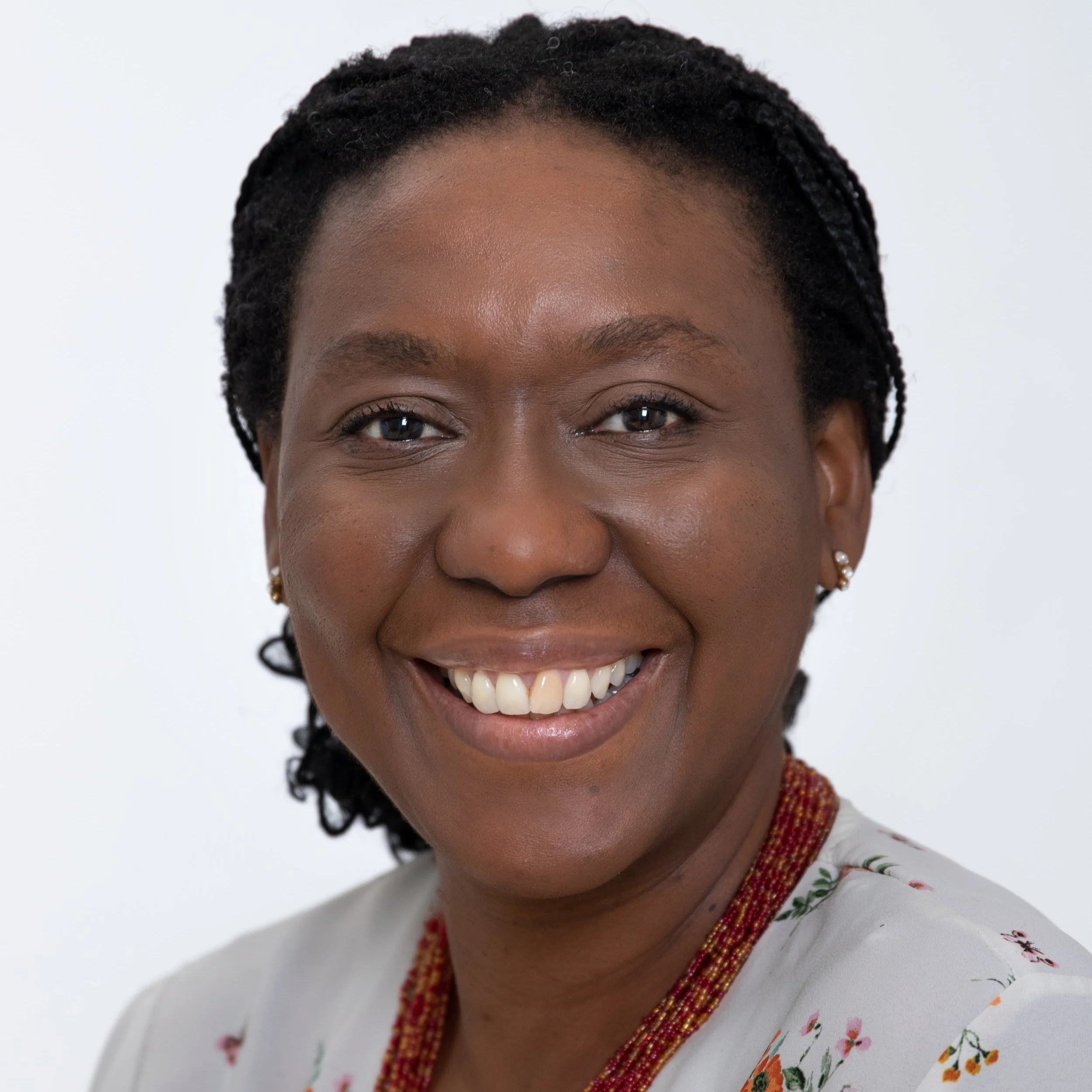
Headshot of Nomazulu Dlamini

Nomazulu Dlamini  
CHILD-BRIGHT Director of EDI-DI 
Staff Neurologist, Division of Neurology, SickKids 
Associate Professor, Department of Paediatrics, University of Toronto


We sat down with Noma to learn more about the EDI-DI Program’s plans for Phase 2: 

WHAT IS YOUR PROGRAM’S MANDATE? 

Nomazulu Dlamini: Our EDI-DI Program looks to ensure all voices, bodies, and experiences are included in all aspects of our network’s work.   

Our primary goal is to establish and maintain equitable, accessible, and inclusive research environments while advancing research excellence through health equity in patient-oriented research (POR) using an intersectional approach with other network collaborators across Canada. 

We will ground the network’s activities in our EDI-DI framework. Our principal objectives for Phase 2 include increasing our representation of equity-deserving groups across our network such as patient-partners, trainees, researchers, and participants, as well as centering the voices of people with lived experience and Indigenous Ways of Knowing & Being. This is essential to address health inequities that persist within these communities. We will also build EDI-DI training capacity into patient-oriented research to impact patient-partner engagement, training, research design, implementation science (IS), and knowledge mobilization (KM).  

HOW DO YOU PLAN TO ACCOMPLISH THIS? WHAT ARE THE MAIN TOOLS (CONCEPTS, FRAMEWORKS) THAT WILL BE USED TO FURTHER THIS MANDATE? 

Nomazulu Dlamini engaged in conversation with another attendee at an event.

ND: In 2021, we developed our EDI-DI framework, which outlines our commitments to shifting the culture of the CHILD-BRIGHT Network and actively taking part in reflective practices throughout our engagement, research, and knowledge mobilization work. In Phase 2, we will integrate the EDI-DI framework, Indigenous Ways of Knowing & Being, and impacts of intersectionality in the conduct of research focused on all children with brain-based developmental disabilities, including children from historically marginalized communities. 

In the early stages of Phase 2, we will form advisory committees to guide our work in Indigenous Health as well as in EDI and health equity. We will be intentional in hiring people with lived experiences and unique professional skills in EDI-DI, Indigenous health, and health equity in relation to POR, IS, and KM. 

Working with our Training & Capacity Building Program, we will ensure the EDI-DI lens is at the forefront within the network’s activities and develop a certificate course on the application of EDI-DI. We have begun to develop a “learning pathway” that prioritizes core training and addresses learning gaps for the entire network.  

HOW WILL YOUR PROGRAM MEANINGFULLY ENGAGE PATIENT-PARTNERS? 

ND: One of our goals as a program is to ensure CHILD-BRIGHT diversifies its representation of equity-deserving groups such as patient-partners, trainees, researchers, and participants across our network. In Phase 2, we will collaborate with our Citizen Engagement team to create and build relationships with people and communities who are currently underrepresented in our network.  

TELL US MORE ABOUT YOU. WHAT MOTIVATED YOU TO TAKE ON THIS LEADERSHIP ROLE WITH CHILD-BRIGHT? 

ND:  Reducing health disparities by improving allyship, agency, access and systems has always been a huge motivator for me. Through my research, I aim to understand the mechanisms of injury, repair and neuroplasticity of the developing brain following stroke. I’m highly committed to ensuring such advances in research translate in a clinically meaningful way and touch the lives of all individuals impacted, including those in marginalized communities, which is why I believe the work we’re doing in the CHILD-BRIGHT EDI-DI Program is so important. I’m highly engaged with patients and families and have taken on multiple EDI-DI leadership roles at SickKids and in the pediatric neurology and stroke research communities at the national and international levels. These activities have been rewarding and motivating. 

My involvement with CHILD-BRIGHT began with the Stimulation for Perinatal Stroke Optimizing Recovery Trajectory (SPORT) research project, where I was a site Principal Investigator. Then, in 2020, I co-led a workshop for the network’s executive and central office teams called “Unlocking the Power of Allyship”, which was followed by a workshop on “Understanding and Unlearning Implicit Bias”, before I accepted the position of Director of EDI-DI. 

WHY IS IT IMPORTANT TO FOCUS ON EDI-DI IN PATIENT-ORIENTED RESEARCH NOW? 

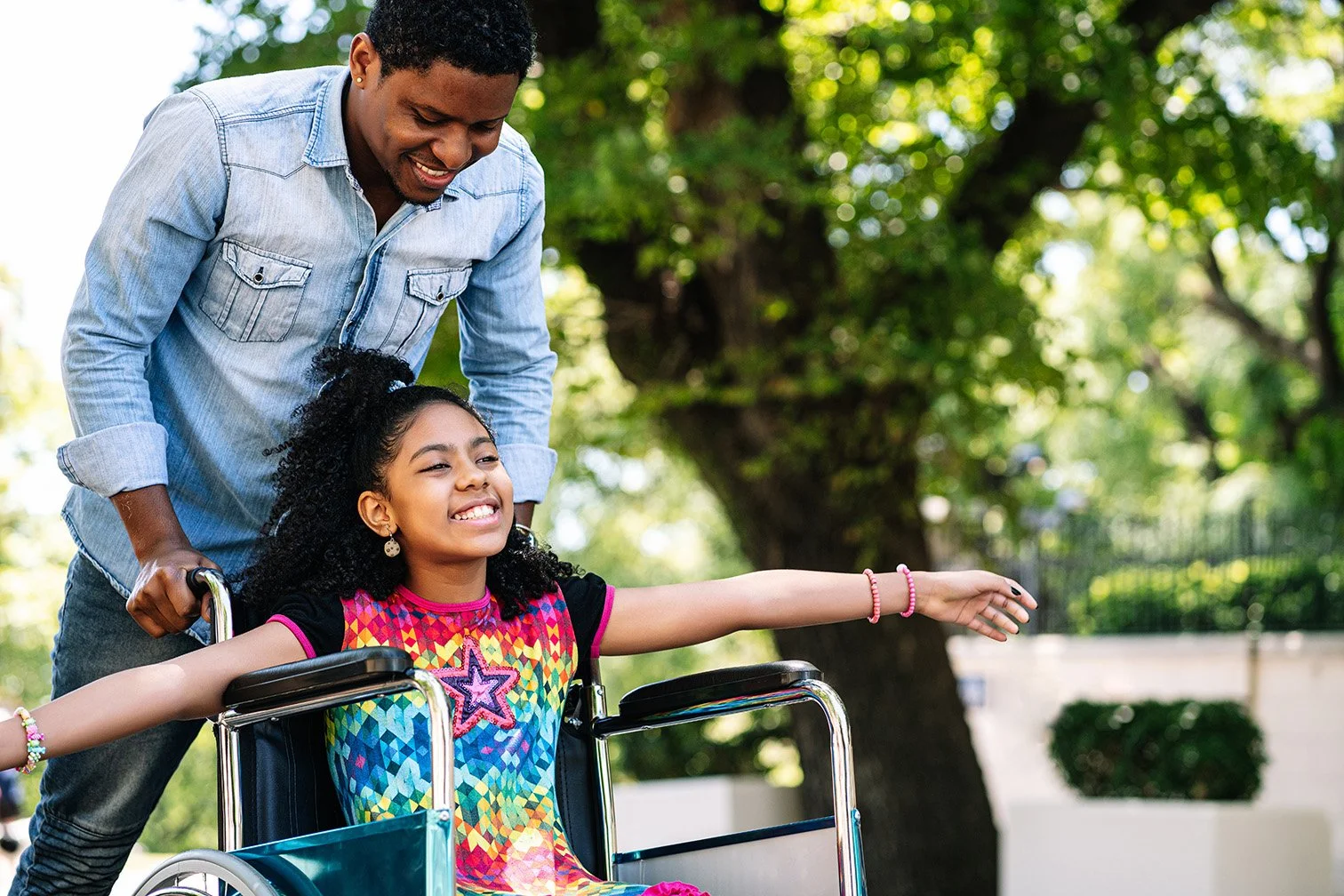
A Black father pushes his child, who is in a wheelchair, as she extends her arms wide and smiles.

ND: Indigenous Peoples, people with disabilities, racialized people, the LGBTQQIA2S+ (Lesbian, Gay, Bisexual, Transgender, Queer and/or Questioning, Intersex, Asexual, Two-Spirit, and other affirmative ways people choose to self-identify) community, and other equity-deserving groups continue to be confronted by the effects of colonialism, systemic racism, biases, and inequities in health care. We know that the effects of health disparities are magnified by the intersection of multiple oppressions, which also exist within research.  

In order for our research to have its fullest impact possible, we need to address these inequities and reach those children, youth, and families who are most affected by the lack of social justice and health equity. We believe that patient-oriented research can offer a path towards ensuring equity by way of ongoing engagement with our patient-partners and Indigenous communities, including supportive and inclusive leadership, dedicated resources, accountability, and transparency. 

WHAT ARE YOU MOST EXCITED TO SEE IN PHASE 2?  

ND: I am excited to see the results of the culture shift we are undertaking. I hope that by creating both “safe” and “brave” spaces for us to learn from one another, we will increase our understanding of each other in a global community sense. This will provide a foundation for the substantial work that we are setting out to do and improve the impact of our patient-oriented research.  

As one of the first steps towards this culture shift, many of our network members completed a four-part EDI-DI workshop this summer. I am already seeing signs of increased knowledge and personal growth. You can see “lightbulb moments” happening by observing people’s faces, their eyes, their tears, by listening to what is said and left unsaid. It’s all very telling and makes me hopeful for the journey we are all embarking on.  

Thank you, Noma, for this insight into the EDI-DI Program!  

If you are interested in learning more about the EDI-DI Program, please reach out to our EDI-DI Program Coordinator at edi-di@child-bright.ca.  

Learn more about our other Phase 2 programs: