
Announcing CHILD-BRIGHT Phase 2!

We are happy to share that CHILD-BRIGHT’s application to the SPOR Networks – Knowledge Mobilization and Implementation Science competition was successful! In total, the CHILD-BRIGHT Network will receive $3.75M from CIHR over four years which, combined with partner matching funds of $5.27M, will finance our work from 2022-2026. This will help us grow from Network to Movement as we realize our mission for Phase 2: moving our patient-oriented research into action through insight and methods grounded in implementation science and knowledge mobilization that embed the principles of equity, diversity, inclusion, decolonization and Indigenization.

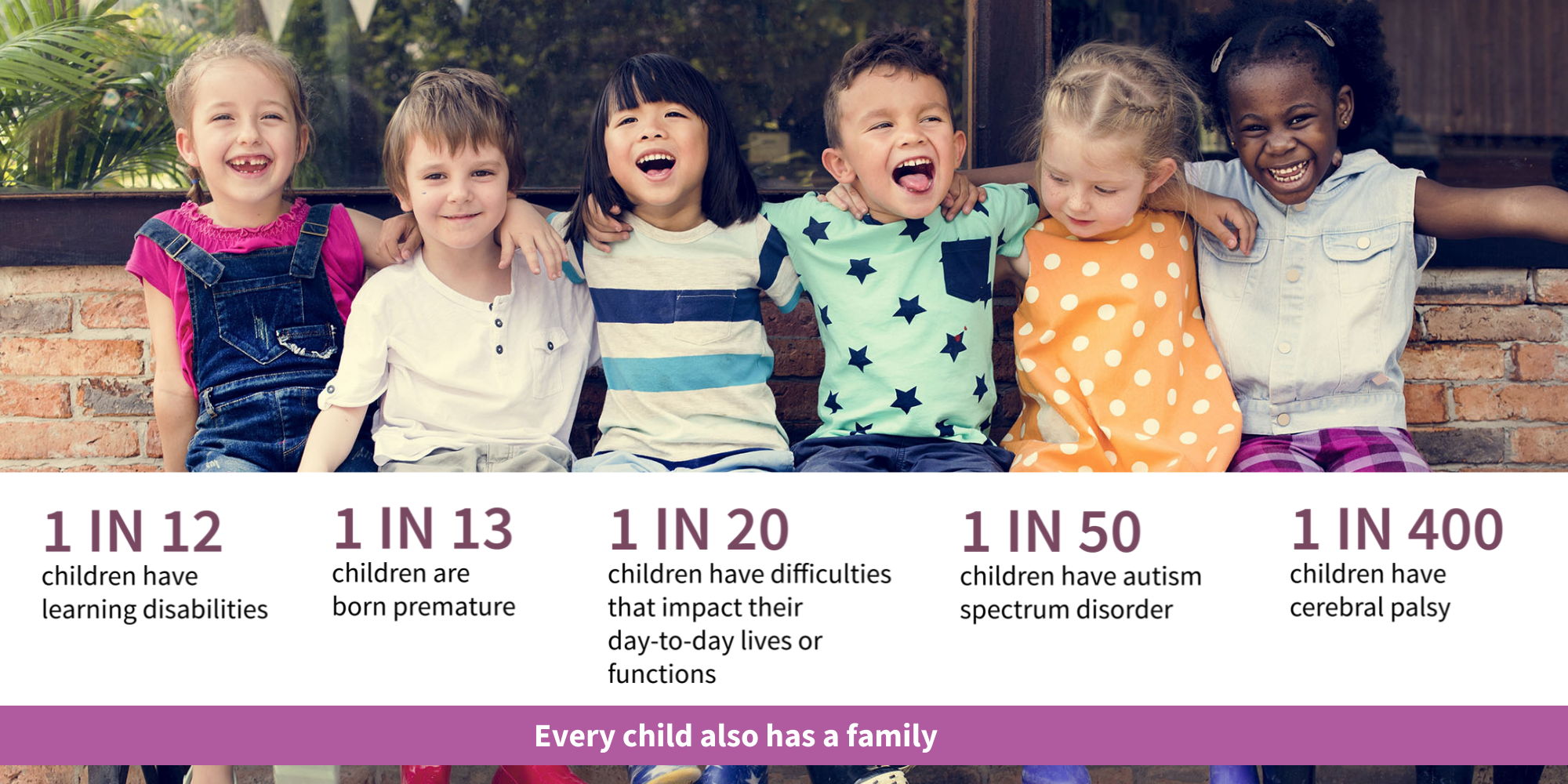
This is great news for the approximate 850,000 children in Canada living with brain-based developmental disabilities and their families, as well as individuals at high risk for a brain-based disability.


How will we achieve our mission? 

During CHILD-BRIGHT Phase 1, from 2016 to 2021, we developed novel interventions to improve the health outcomes of children with brain-based developmental disabilities using child and family-focused approaches. We did this to optimize their development, as well as to identify ways to deliver more responsive and supportive services to them and their families.
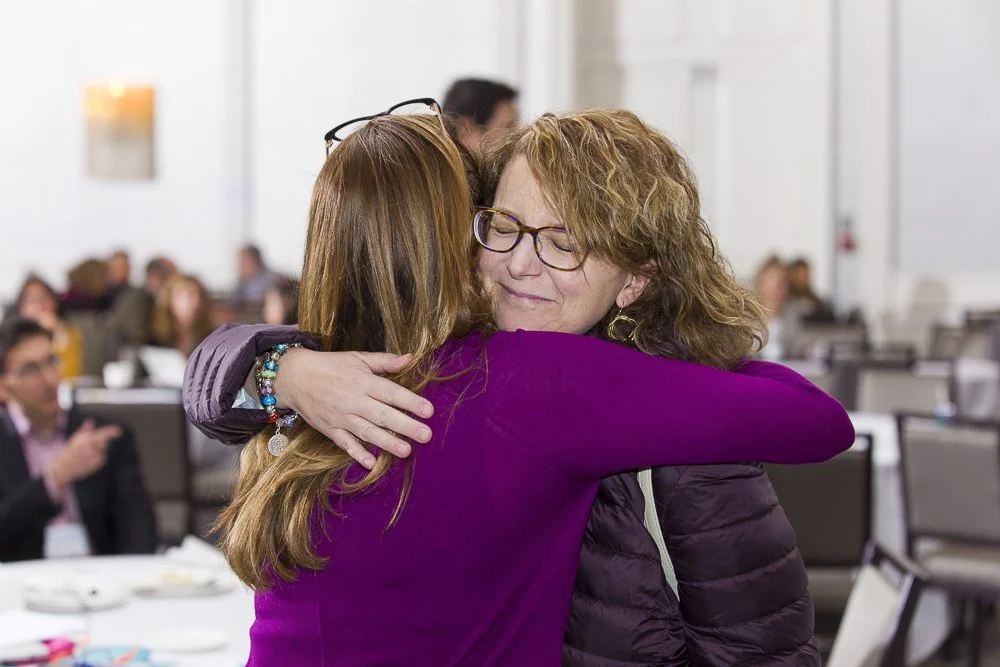
Thanks to our patient-oriented research approach, we made great strides and created positive change for these children and their families in Canada!

In CHILD-BRIGHT Phase 2, from 2022 to 2026, we will focus on equitably mobilizing and implementing this knowledge.

Building on our initial efforts, we intend to augment our emphasis on equity, diversity, inclusion, decolonization and Indigenization (EDI-DI), and further shape our patient-oriented research, implementation science agenda, and knowledge mobilization efforts. We will do so by meaningfully engaging key people, paying careful attention to those who may experience differing health care needs due to socio-demographic factors, or whose voices have been historically excluded.

 
  • Knowledge mobilization refers to getting knowledge to appropriate knowledge users when they need it and in a format that is suitable to them, for uptake.

  • Implementation science is the study of how a novel, evidence-based intervention will interact with real-world settings. The goal is to understand what needs to be in place for the intervention to succeed in practice.

  • Visit our EDI-DI framework for full definitions of equity, diversity, inclusion, decolonization, and indigenization, and to learn more about our commitment to EDI-DI.


What outputs will we generate in Phase 2? 
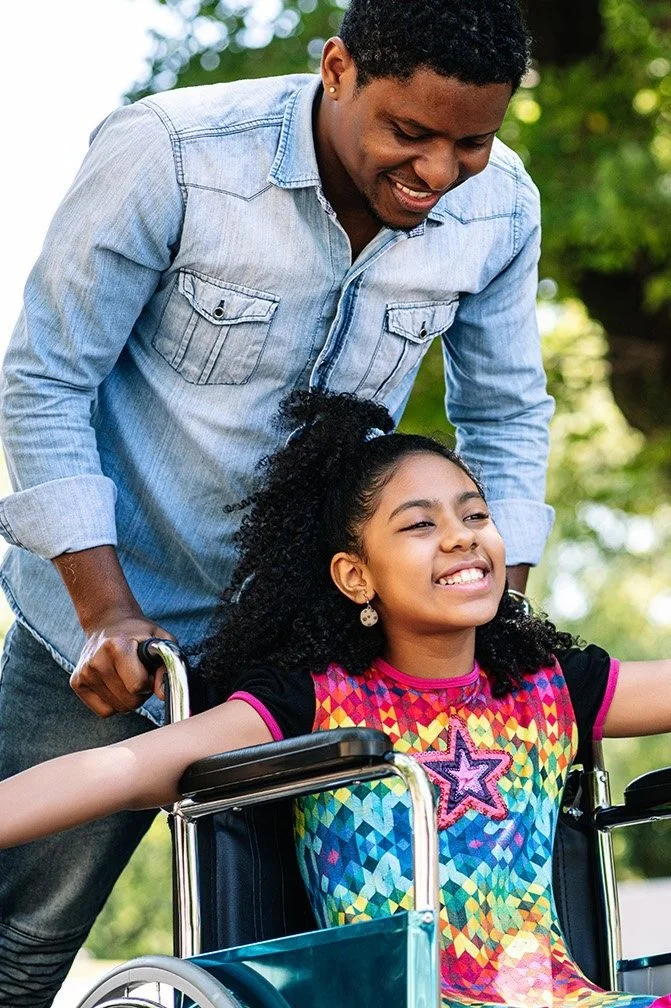
Using our Phase 2 funding, we will:

  1. Study how to bring novel, evidence-informed interventions to the health care and community systems. For this, we will select Phase 1 interventions that can be incorporated into health systems to serve the needs of children, youth, and families.

  2. Co-build the infrastructure to spread relevant knowledge to knowledge users, such as children, youth and families, Indigenous and other equity-deserving communities, health professionals, and decision-makers in a targeted fashion, using tools such as podcasts, videos, policy briefings, dialogues, and champions.

  3. Train patient-oriented research teams to plan for equitable and sustainable health intervention implementation, spread, and scale.

  4. Support ongoing patient engagement in research and governance, and amplify patient voices in decision-making.

  5. Build relationships with individuals and communities, and ensure that diverse and culturally appropriate strategies are embedded across the network.

By expanding our impact, helping to change the child health ecosystem (health care, social services, recreation, education, family and home), and continuing on our current trajectory, 
CHILD-BRIGHT will not only achieve its vision of brighter futures for children with brain-based developmental disabilities and their families, but will also become a movement for change: 

moving patients into research teams, moving research into improved practice and policy, 
and moving children and families forward to brighter futures.
— CHILD-BRIGHT Executive

How will the infrastructure of the network support this? 

In Phase 1, we built the necessary infrastructure and teams to support our four patient-oriented programs in research, training, knowledge translation, and citizen engagement. We will leverage these programs and teams in Phase 2 while channeling our energies towards expanding knowledge mobilization outside the network, integrating implementation science, and embedding principles of equity, diversity, inclusion, decolonization and Indigenization throughout our work.

Our Phase 2 programs are:
  • The Implementation Science (IS) Research Program. The IS Research team, co-led by Janet Curran and Steven Miller, will focus our research to better understand how evidence generated in Phase 1 can be systematically applied in routine practice to improve quality and effectiveness of health services. Read more and meet the IS leads.

  • The Knowledge Mobilization (KM) Program. The KM team, co-led by Keiko Shikako and Stephanie Glegg, will influence practice and policy by building an infrastructure that will direct knowledge to targeted users (patients and families, health care providers, health care decision-makers, policy makers) using tailored, evidence-informed, user-friendly strategies and by carefully evaluating impact. Read more and meet the KM leads.

  • The Training & Capacity Building (T&CB) Program. The T&CB team, co-led by Daniel Goldowitz and Celia Laur, will continue developing capacity in patient-oriented research, with new curricular content that will emphasize topics related to understanding and applying IS and KM methods and EDI-DI principles as they intersect with patient-oriented research. Read more and meet the T&CB leads.

  • The Equity, Diversity, Inclusion, Decolonization and Indigenization (EDI-DI) Program. The EDI-DI team, led by Nomazulu Dlamini, will deploy initiatives to ensure that EDI-DI principles are authentically embedded in our four other programs and our governance structure. Read more and meet the EDI-DI lead.

  • The Citizen Engagement (CE) Program. The CE team, led by Sharon McCarry, will continue to monitor and enhance citizen partnerships and will assume leadership nationally in promoting patient-oriented research in child health research. The CE team will work closely with the EDI-DI Program to engage citizens (patient-partners and other groups) who are underrepresented in the network. This important work will ensure that the rights of children with disabilities of diverse backgrounds and abilities are respected and met. Read more and meet the CE lead.

Our work would not be possible without our funders. Meet them! 

Platinum Partners ($1M +) 


Gold Partners ($500,000 to $999,000)

Silver Partners ($100,000 to $499,000)
Bronze Partners ($1 to $99,999)

Join us as we embark on this new phase of work! Together, we are changing the landscape of patient-oriented research in Canada to better help children and youth with brain-based developmental disabilities, as well as their families.

Subscribe to receive our news

CHILD-BRIGHT members lead submission of report to UN Committee on the Rights of the Child on children with disabilities in Canada

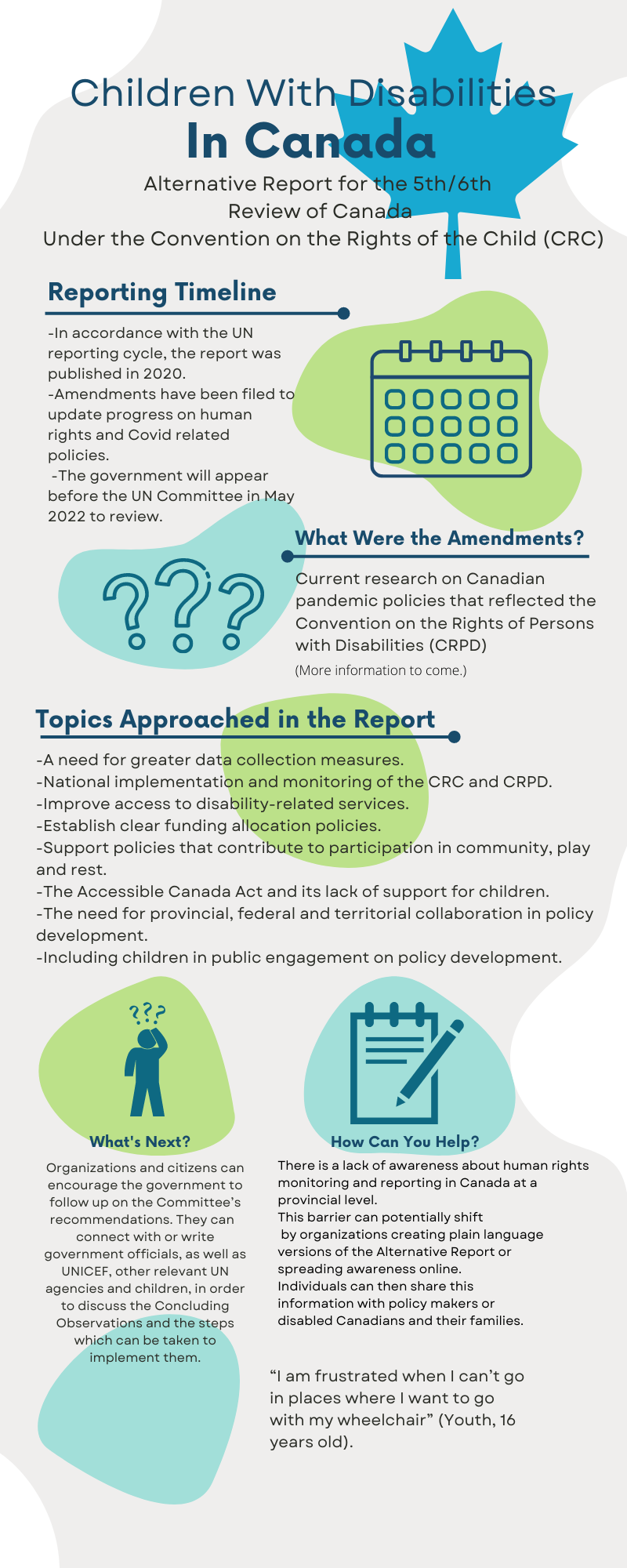
Children with disabilities are often overlooked when discussing disability rights and children’s rights. Having research-based data to inform the gaps and services needs for these children in Canada and having them represented and engaged in the international children’s rights context is a unique chance to raise awareness about the specific needs of children. 

The Participation and Knowledge Translation in Childhood Disability (PAR-KT ) Lab, led by Canada Research Chair in Childhood Disability: Participation and Knowledge Translation and CHILD-BRIGHT KT Co-Lead Keiko Shikako, led the submission of a parallel report and subsequent update on children with disabilities in Canada during COVID to the United Nations Committee on the Rights of the Child (UN CRC Committee).

The report, initially published in 2020, outlines issues faced by children with disabilities in Canada based on research evidence and the lived experiences of parents and youth, areas of opportunity in relation to these issues, and recommendations that can begin to address these problems. It also presents testimonials provided by parents of children with disabilities that highlight positive developments as well as areas of opportunity. Learn more about the reporting process below.

Learn more about how the CRC applies to children with disabilities


Key dates in the reporting timeline

October 2020

Youth from the CHILD-BRIGHT community participate in the UN CRC Committee pre-session where they speak on topics of importance for children with disabilities in the context of children’s rights.

2021

 A UN CRC Committee meeting with the Government of Canada (called a “constructive dialogue”) is planned but is postponed due to the pandemic.

Read our blog post: Celebrating Youth Voices at the United Nations’ Committee on the Rights of the Child


March 2022

Photo of Colm and Sharon McCarry in front of Parliament Hill in Ottawa, Canada

Colm and Sharon McCarry in front of Parliament Hill in Ottawa

The Canadian Civil Society Organizations, led by the Canadian Coalition on the Rights of Children, ask several partners to suggest groups of children and youth who should be engaged in a constructive dialogue with the Government of Canada. Youth from the CHILD-BRIGHT community also participate in these consultations with the Civil Society Organizations, including Colm McCarry.

Colm is 18 years old and identifies as an Autistic person with low vision in one eye and ADHD.  He is a full-time student at the Ontario Virtual School completing grade 12, although he lives in Montreal, Quebec. He said:

This was a very cool experience to be included in a group of young Canadians that were sharing their experiences and I felt heard. I felt we were all listening and so were the organizers. We weren’t just people with a diagnosis being asked to show up as a token group being scrutinized. I felt that there was hope that something positive will come out of our participation and maybe real changes will happen to consider the realness of mental health being an important part of everyone’s overall well-being. Mental health is health care, period.
— Colm McCarry

May 6, 2022

Keiko Shikako takes part in a meeting of a group of Canadian Civil Society Organizations and the UN CRC Committee. “In this meeting we impressed upon the committee that children with disabilities in Canada continue to face discrimination,” Keiko shared. “Data being collected at the federal level only reflects a small part of the reality of children, such as the number of children who have functional limitations, but not the impacts of these limitations on their ability to participate in school, play, and other fundamental areas of development.”

“During the pandemic, these inequalities were highlighted. For instance, in many of our research studies we saw that children with disabilities who receive all their health and rehabilitation services through schools were left with little or no accommodations and services. Considerations were also not taken in the return to school, leaving families and children without essential supports they needed. Mental health services for children with disabilities were also compromised. Families described how the pandemic impacted their child’s levels of anxiety and, in some cases, augmented behaviour issues.”

“Emergency responses should consider the specific needs of children with disabilities and their families. The Government of Canada should take advantage of the efforts being put towards the implementation and monitoring of the Convention on the Rights of Persons with Disabilities along with the Convention on the Rights of Children to maximize opportunities and not duplicate efforts.”


May 17-18, 2022

The UN CRC Committee constructive dialogue with the Government of Canada, which had been postponed due to the pandemic, finally takes place. In this session, the Government of Canada meets with the UN CRC Committee and is asked about concrete actions that they have taken since the last report in 2020. These questions are important, as they will guide the development of a set of “Concluding Observations” for Canada, a document which then comes the reference point for another cycle of implementation of the rights of children. Some of the questions that are presented to the committee members through the PAR-KT lab report and during the session with the committee are asked by committee members to the Canadian government delegation.


How you can engage in the CRC reporting process

As a part of the childhood disability community, here are some steps you can take to engage in the CRC monitoring and reporting process:

  • Watch the Canada review session here;

  • If you hear anything that you think the PAR-KT lab should follow up on, or that misrepresents the particular needs of children and youth with disabilities, you can write to Keiko Shikako, who will be following up with the UN CRC Committee along with the Canadian Coalition for the Rights of Children to address issues that come up during the review session;

  • Commit to reading the Concluding Observations that the UN CRC Committee will make to the Government of Canada after the review. This document can be used as a tool to keep the government accountable to policies that should be implemented to respond to the needs identified. It can also help guide research to respond to the human rights of children with disabilities and can inform clinical practice and community action towards creating a society that respects, promotes, and facilitates the fundamental rights of children with disabilities and their families to live happy, health, playful lives.

How you can learn more about the reporting process and Canada’s contribution

Former CHILD-BRIGHT research assistant headed to World Para Swimming Championships in Madeira

Jessica Tinney swimming at the Canadian Swimming Trials in April 2022.

Jessica Tinney at the Canadian Swimming Trials in April 2022. Photo credit: Scott Grant

We’re proud to share that former CHILD-BRIGHT Research Assistant Jessica Tinney will be representing Canada at the World Para Swimming Championships in Madeira in June!

Jessica qualified for the World Championships following the 2022 Canadian Swimming Trials from April 5 to 10 in Victoria, British Columbia, where she received a bronze medal in the 200m Freestyle and broke a Canadian record in the 200m Individual Medley.

A soon-to-be graduate of the kinesiology program at Queen’s University, Jessica joined our Knowledge Translation (KT) Program team in the summer of 2021 to put together our new KT Library, which is an evolving repository for the wide range of KT products created by our network since its inception in 2016.  The library houses many scientific and plain language publications, books and book chapters, reports, webinars, infographics and much more.

The library was created to further the KT Program’s goal of facilitating exchange and promoting the uptake and dissemination of existing and new knowledge relevant to children with brain-based developmental disabilities and their families—a mission that was a direct inspiration for Jessica when applying to work with CHILD-BRIGHT.

“The [job] description was about disseminating articles to make it so people who the research is actually meant for can read them. I thought that was interesting, based on my background and having a disability and not being able to read or understand the information before I went to school. I thought that'd be really cool,” she said. As part of the KT Library team, Jessica wrote plain language versions of some of the scientific journal articles published by network members and added the various resources and outputs to the library on the CHILD-BRIGHT website.

As a person with cerebral palsy, Jessica’s experiences with medical care have also driven home for her the importance of communicating knowledge in an accessible way to patients. She described going to doctor’s appointments and grappling with complicated explanations provided to her: “I never understood how any of it like related to me or what I needed to get from what they were saying, so I think to have like a resource, something like what we're doing here, would be really helpful to people.”

The time she spent in and out of physiotherapist offices as a youth, in particular, is also how she first found her way to swimming.

“I first started [swimming] because I really, really hated physiotherapy!” Jessica admitted, to the point that as a child she “would refuse to go” to her appointments.

Headshot of Jessica Tinney

Jessica Tinney

“I was originally in swimming lessons and my mom put me on a team. Then, when I went to my doctor’s appointments, they asked if I did physio, and I said no, I swim this many times a week. They said, ‘Great! Keep doing that and then you don’t have to go to physio.’”

She would begin her competitive swimming career in earnest as a teenager, but “my love for the sport grew from there. That's how I first got into it,” she shared.

After graduating from Queen’s this June, Jessica will be taking a year off school, but is actually considering a return to school the following year to study physiotherapy, equipped with her newfound experience in patient-oriented research.

We’re grateful to Jessica for her contributions to our Knowledge Translation team and wish her the best of luck in Madeira. We’ll be rooting for her and we’re excited to see what comes next!

2022 Training Innovation Fund

CHILD-BRIGHT is proud to launch its 2022 Training Innovation Fund!

The Training Innovation Fund will provide a maximum of $10,000 in funds to facilitate innovative training initiatives that will complement ongoing Patient-Oriented Research activities that focus on childhood brain-based developmental disabilities.

With this opportunity we intend to support the development of innovative tools and resources that develop capacity in the areas of Knowledge Mobilization, Implementation Science, or Equity, Diversity, Inclusion, Decolonization & Indigenization.

Applications are due July 15, 2022


Visit our grant competition page for details, eligibility requirements, and application procedure. Good luck!

2022 Training Innovation Fund Details

Meet 2021 Summer Student: Chloe Janse van Rensburg

This summer, CHILD-BRIGHT also welcomed student Chloe Janse van Rensburg. Chloe participated in the studentship training sessions while working with CHILD-BRIGHT Parent Peer Mentor Carrie Costello and PIUO Family Liaison Laesa Kim on their project, which was funded by a CHILD-BRIGHT Collaborative Mentorship Grant. Their project examines the benefits and drawbacks of asking parents to use their personal networks (such as social media, email, and other connections) to recruit for research.

Here’s what Chloe had to say about the experience:

“I had a wonderful experience working on a CHILD-BRIGHT project this summer. Not only has my knowledge about the research process increased, but my eyes have also been opened to the worth of patient engagement in research.

Prior to working on this project, I did not have any research experience, so having the chance to see the ways in which a project progresses, as well as being able to work with an amazing team, was such a great opportunity. I learned many things, including how to thematically code data, how to identify important things to consider when conducting focus groups, and to value the importance of authentic engagement.

I hadn’t really considered a career in research previously, but after this experience it is definitely on my list of potential career goals. If not a career in research, I will most definitely be able to use some of the things that I’ve learned this summer in other careers! ”

Read testimonials from the other 2021 CHILD-BRIGHT summer students