
Postdocs in the Spotlight: Marie-Ève

Welcome to our new blog series highlighting the work of our Azrieli CHILD-BRIGHT postdoctoral fellows!

Within the various research projects underway at the CHILD-BRIGHT Network, postdoctoral fellows play a crucial role. This year, thanks to the generous contribution of the Azrieli Foundation, we’re delighted to welcome a new cohort of up-and-coming scientists who are passionate about patient-oriented research (POR) and its incredible potential in the study of pediatric brain-based developmental disabilities. In the next few weeks, we’ll be showcasing each of our postdocs and the pivotal work they’re doing at CHILD-BRIGHT, across Canada. 

CARE PATHWAYS FOR CHD PROJECT

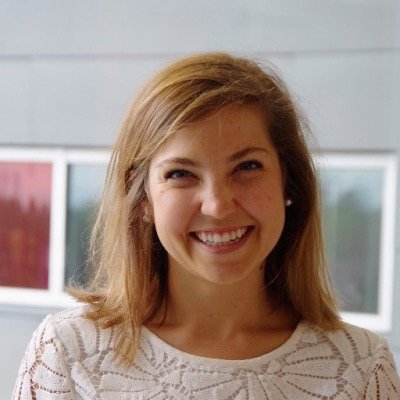
Photo of Marie-Ève Bolduc

Marie-Ève Bolduc (she/her)

Postdoctoral fellow, Centre Hospitalier Universitaire Sainte-Justine 

Assistant professor, School of Physical & Occupational Therapy, McGill University 

Marie-Ève is the postdoctoral fellow on the network’s Care Pathways for CHD project, under the supervision of principal investigators Mike Seed and Andrea Patey. In this Phase 2 CHILD-BRIGHT project, the research team aims to develop recommendations, based on current approaches used around the world, to optimize the identification of developmental delays in children and adolescents with a congenital heart defect (CHD) in Canada. 

Marie-Ève oversees all aspects of coordinating the Care Pathways for CHD project. “My responsibilities include liaising with family partners, conducting comprehensive literature reviews, and leading our consensus groups,” she says. In this multifaceted role, Marie-Ève ensures that all voices are heard, that research is progressing well, and that the project is contributing to the advancement of neurodevelopmental care for children and adolescents with a CHD.

Marie-Ève has been interested in patient-oriented research (POR) since her first collaboration with a parent partner during her PhD. “I realized how important their feedback was,” she recalls. “But later, I realized that the project could’ve benefitted even more from their input.” She wished she’d had a deeper understanding of POR and the strategic integration of partner feedback throughout various project stages. “That’s when I decided to enroll in a patient-oriented research course.”

Marie-Ève believes that incorporating the perspectives of partners with lived experience (PWLE) in research has profound implications for the improvement of outcomes in our health care system. “Patient-generated research questions are instrumental,” she says. “They reflect the unique challenges faced by the individuals we’re trying to help.” While she knows she still has a lot to learn, Marie-Ève is optimistic that her ongoing collaboration with current research partners will help her learn and hone her expertise over time.  

By actively involving users in shaping research agendas, projects become more relevant, resonant, and aligned with the lived experiences of patients. This not only enhances the design of robust research initiatives, but also ensures that patients’ needs and expectations are at the forefront.
— Marie-Ève

Marie-Ève is thrilled to be an Azrieli-CHILD-BRIGHT postdoctoral fellow and knows that the scholarship is an invaluable opportunity to build on the knowledge acquired during her graduate and PhD studies. “Engaging in patient-oriented research and implementation science will not only enhance my skillset, but also significantly elevate the quality of my future projects,” she says happily. Being part of a collaborative network is also allowing her to learn from diverse expertise and make connections with researchers across North America. “This scholarship is a gateway to knowledge exchange, skill refinement, and collaborative opportunities,” says Marie-Ève. “I have no doubt that it will shape the trajectory of my research career.”
Postdocs in the Spotlight: Sharon

Welcome to our new blog series highlighting the work of our Azrieli CHILD-BRIGHT postdoctoral fellows!

Within the various research projects underway at the CHILD-BRIGHT Network, postdoctoral fellows play a crucial role. This year, thanks to the generous contribution of the Azrieli Foundation, we’re delighted to welcome a new cohort of up-and-coming scientists who are passionate about patient-oriented research (POR) and its incredible potential in the study of pediatric brain-based developmental disabilities. In the next few weeks, we’ll be showcasing each of our postdocs and the pivotal work they’re doing at CHILD-BRIGHT, across Canada. 

PAIN PATHWAY PROJECT

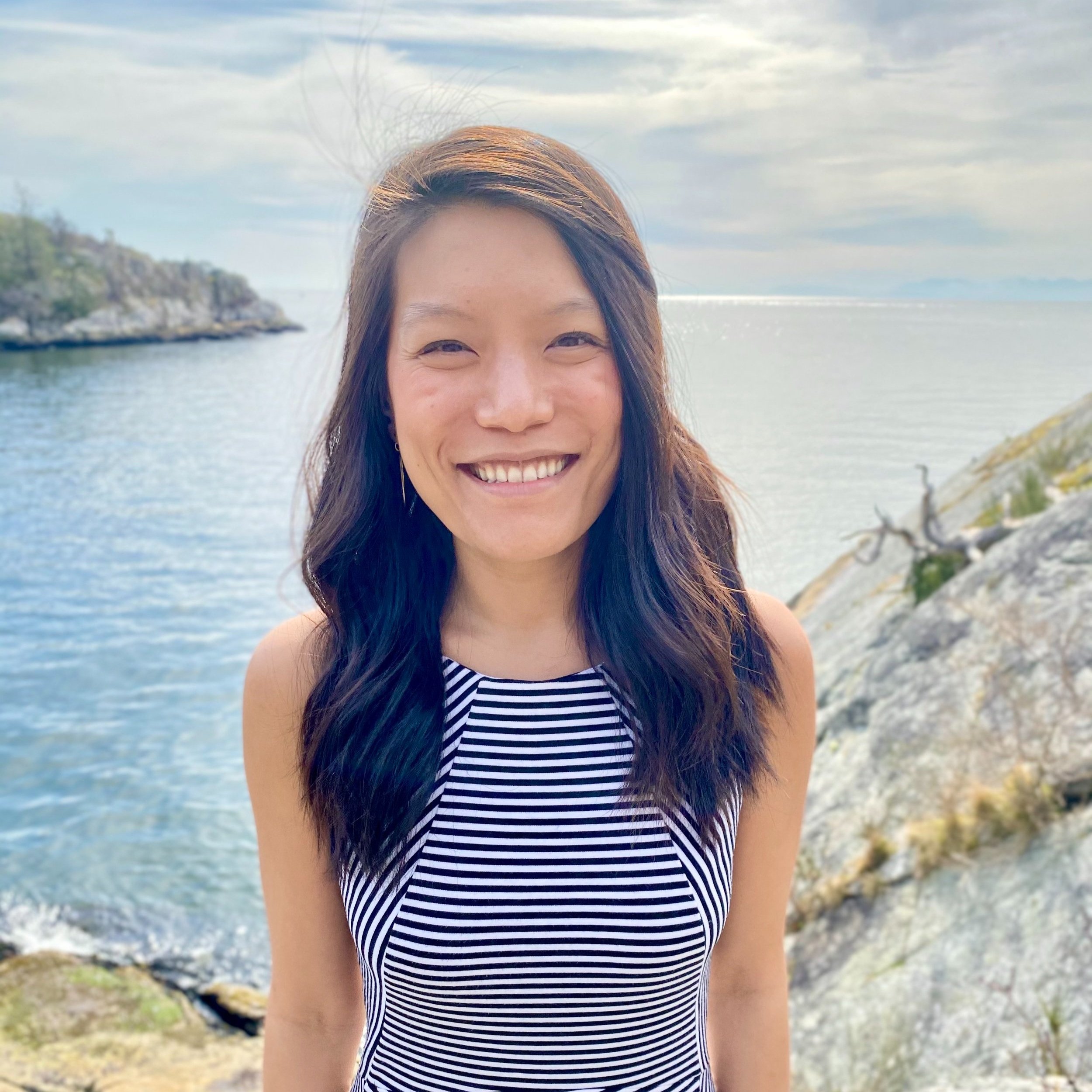
Sharon Hou (she/her)

Postdoctoral fellow, Department of Pediatrics, Faculty of Medicine, University of British Columbia

Registered psychologist, BC Children’s Hospital 

Under the supervision of co-principal investigators (PIs) Hal Siden and Stephanie Glegg, Sharon is contributing to the CHILD-BRIGHT Pain Pathway project, a study on pain and irritability of unknown origin (PIUO) among children with severe neurological impairments. In Phase 1, the research team designed and tested a clinical pathway to streamline the assessment and management of PIUO (the Studying PIUO project). Now in Phase 2, the team is studying how to implement the clinical pathway in community pediatric practices with pediatricians across British Columbia.

Sharon is taking a lead role in carrying out the Pain Pathway project, from study design, recruitment, data collection and analysis, and dissemination of results. But none of her tasks are carried out solo: “I work closely with our multidisciplinary study team, including our parent partners and clinician partners” says Sharon, who is delighted to be working towards a collective goal of improving children’s health and well-being. 

Even before working with CHILD-BRIGHT, Sharon was a strong proponent of patient-oriented research (POR). Early on in her academic career, she happened to be mentored by researchers who use a POR approach, which allowed her to see its value first-hand. “Since then, I’ve been consistently working with partners who have lived and living experiences,” says Sharon. Incorporating lived experience perspectives has become a necessary foundation for her own research; it allows her to ask research questions that are relevant and meaningful to the children and families she works with. “What is most exciting and meaningful for me is being able to collaborate with people who bring diverse experiences and perspectives to the project,” says the postdoc.

I want to make sure that my study findings are useful, informative, and accessible to children and families navigating the health care system.”
— Sharon

Sharon knows that this fellowship is an incredible opportunity to gain advanced training in patient-oriented pediatric health research. She’s not only learning how to conduct studies involving children with a high degree of health complexity and their families, but also strengthening her research methodologies in implementation science and knowledge mobilization. She’s also excited to be engaging with the broader CHILD-BRIGHT network of researchers, clinicians, and partners with lived experience, and can already see how it will lead to collaborations and opportunities in her future. “I believe this fellowship will help me build my program of research as I work towards becoming an independent researcher,” she says.

KM webinar for families of children with brain-based developmental disabilities

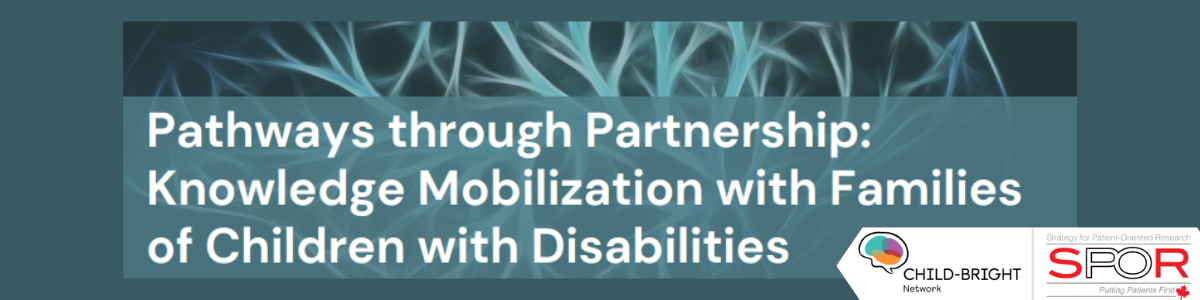
Illustration of neurons. Text reads: Knowledge Mobilization Webinar. Pathways through Partnership: Knowledge Mobilization with Families of Children with Disabilities.

Join the CHILD-BRIGHT Network's Knowledge Mobilization (KM) Family Hub for an engaging KM-focused webinar!

This virtual event has been tailored to family members of children with brain-based developmental disabilities. Attendees will gain a foundational understanding of KM principles and their relevance in childhood disability research, learn how to foster fruitful collaborations with researchers, and more.

This webinar will be led by partners with lived experience and researchers from CHILD-BRIGHT.

Date: Wednesday, March 20, 2024
Time: 12:00-1:30 p.m. ET / 9:00-10:30 a.m. PT / 11:00 a.m.-12:30 p.m. CT

FULL DETAILS & REGISTRATION

2024 Frank Gavin Patient Engagement Leadership Awards

Now Accepting Applications!

The CHILD-BRIGHT Network is proud to launch the third iteration of the Frank Gavin Patient Engagement Leadership Award, which recognizes exceptional patient engagement leadership in pediatric brain-based disability research. Established in 2021, the award was named in honour of Frank Gavin, our former Director of Citizen Engagement, for his vital contributions to the network’s impressive growth as a SPOR entity. 

This year, we are pleased to announce that we will be granting a Frank Gavin award to not one, but two patient-partners: a parent, caregiver, or family member with lived experience, as well as a youth or former pediatric patient with lived experience. 
 
Do you know a patient-partner with considerable experience participating in patient-oriented research activities, and with proven leadership in patient engagement? Would you like to put your own name forward? We’re accepting nominations as of today!

Nominations are due by March 28, 2024

Visit the competition page for all the details, including the eligibility requirements and application guidelines. Good luck! 

Eligibility requirements & application guidelines

Postdocs in the Spotlight: Alicia

Welcome to our new blog series highlighting the work of our Azrieli CHILD-BRIGHT postdoctoral fellows!

Within the various research projects underway at the CHILD-BRIGHT Network, postdoctoral fellows play a crucial role. This year, thanks to the generous contribution of the Azrieli Foundation, we’re delighted to welcome a new cohort of up-and-coming scientists who are passionate about patient-oriented research (POR) and its incredible potential in the study of pediatric brain-based developmental disabilities. In the next few weeks, we’ll be showcasing each of our postdocs and the pivotal work they’re doing at CHILD-BRIGHT, across Canada. 

INTERPLAY PROJECT

Alicia Hilderley (she/her)

Postdoctoral fellow | Department of Rehabilitation Science, University of Calgary 

Alicia is joining CHILD-BRIGHT as a member of the pre-implementation project INTERPLAY: Implementation of iNtensive Therapy for Early Reach through PLAY. Led by principal investigators (PI) Adam Kirton, Darcy Fehlings, and John Andersen, the research team is gathering information on why early hand therapy for young children with cerebral palsy is or isn’t being implemented. The goal is to then use this information to identify strategies to support implementation across Canada.

“I’m involved in seeing the project through four consecutive phases,” says Alicia. The project team includes both parent partners and knowledge-user partners (namely, occupational therapists and health care administrators) with whom Alicia works closely to find solutions and integrate feedback. 

I’m firm in my belief that the only way to advance rehabilitation practice is to design patient-oriented research that engages children and families as partners.
— Alicia

Alicia has always been keen to learn from and with people with lived experience—an interest that has played a major role in steering her research career. “Partnerships provide opportunities for in-depth conversations and knowledge exchange with children and families,” she says. “This helps us design research that’s pertinent to them.” 

Alicia points out that learning from those with lived experience can facilitate and improve the quality of research across all stages, often in unexpected ways. “By aligning with patient priorities, we can improve the meaningfulness of our projects and have a greater impact, which I believe should be a goal for all clinical researchers.” 

Alicia is certain that this fellowship will help shape her future as an emerging research partner and advocate. “The skills I’m acquiring will help me effectively integrate patient perspectives to co-build high-calibre research.” Alicia is also delighted to be gaining valuable experience in implementation science, a field that she believes is essential in bridging the gap between research findings and clinical practice.