
Celebrating Children with Disabilities on National Child Day

Français

by Keiko Shikako, Roberta Cardoso, and Miriam Gonzalez

In honour of National Child Day on November 20, CHILD-BRIGHT is celebrating the 30th anniversary of Canada’s ratification of the Convention of the Rights of the Child (CRC) and digging deeper into the CRC and its importance for children with disabilities, including brain-based developmental disabilities.
Promotional graphic for National Child Day

National Child Day has been celebrated on November 20 in Canada since 1993 to commemorate the United Nation’s (UN) adoption of the CRC four years earlier. That means the document is 32 years old—no longer a “child” but a fully fledged “adult”! The CRC recognizes “the inherent dignity and of the equal and inalienable rights of all members of the human family is the foundation of freedom, justice and peace in the world”. By ratifying the convention, Canada made a commitment to treat children with dignity and respect and ensure all their rights are respected. The convention makes clear that children require special protections to have these rights be guaranteed. National Child Day reminds us that children are also human beings worth celebrating!


How does the Convention of the Rights of the Child apply to children with disabilities?

Children with disabilities are part of two seldom-heard groups: “children” and “persons with disabilities”. This means that children with disabilities are “doubly marginalized” and therefore in need of “double protection”. At the international human rights level, they are entitled to the rights that are afforded to children, which include the right to family, to play, to education that meets their needs, to health services that are designed for them, to participate in society as contributors in decisions that matter to them and in communities that are built for them. They also have rights that protect persons with disabilities, covered by Article 7 in the UN Convention on the Rights of Persons with Disabilities which is dedicated to children. They have the right to inclusive education, rehabilitation, and meaningful engagement in all aspects of society.

As a society, we have an obligation to apply these two conventions in daily life to protect children from abuse and neglect, create services like health and education, and structures like public spaces, transportation, buildings that meet their needs and support the full development of children with disabilities. It also means that we must give children opportunities to participate in society, articulate their own ideas and priorities, and give them opportunities to reach their full potential.


How does CHILD-BRIGHT work to uphold the Convention of the Rights of the Child?

Using family and child-focused approaches, CHILD-BRIGHT works to create novel interventions to optimize development, promote health outcomes, and deliver responsive and supportive services for children with brain-based developmental disabilities and their families. We collaborate and partner with other organizations that have a mission to improve and health and wellbeing of children and children with disabilities to put them front and centre in our activities and ensure their rights are upheld. In the past year, some of these activities have included:

  • Collaborating to identify priorities for children in Canada through the “We Can for Kids” initiative led by Children’s Healthcare Canada and UNICEF.

  • Partnering with the Canada Research Chair in Childhood Disabilities and Kids Brain Health Network to create a side event at the 13th United Nations Conference of the States Parties for the Convention on the Rights of Persons with Disabilities.

  • Participating in literature reviews and evaluating policies on mental health.

  • Listing online leisure activities for children with disabilities and their families through the Jooay App and studying how we can make online activities more accessible for children with disabilities.

  • Listing COVID-19 resources for Canadian youth with disabilities, their families & support teams on the CHILD-BRIGHT website.

  • Providing expert responses to questions from youth with disabilities and their families about COVID-19 through the MyCOVIDDisabilityQ campaign.

  • Conducting a survey to assess the impact of the pandemic on engagement of network members, including caregivers and youth with developmental disabilities, and identify recommendations that can be used to facilitate engagement during public health crises (to be published soon).

  • Speaking to families and youth with developmental disabilities about how they experienced the pandemic, what aspects of their daily lives were most impacted and what we could do to create better communities as we emerge from the pandemic into “the new normal”. These contributions were also presented in the Children First Canada “Raising Canada” report.


Given this difficult pandemic year, we believe it is especially important to celebrate children with disabilities on this National Child Day. Here are some of the ways we celebrate children with disabilities at CHILD-BRIGHT every day:
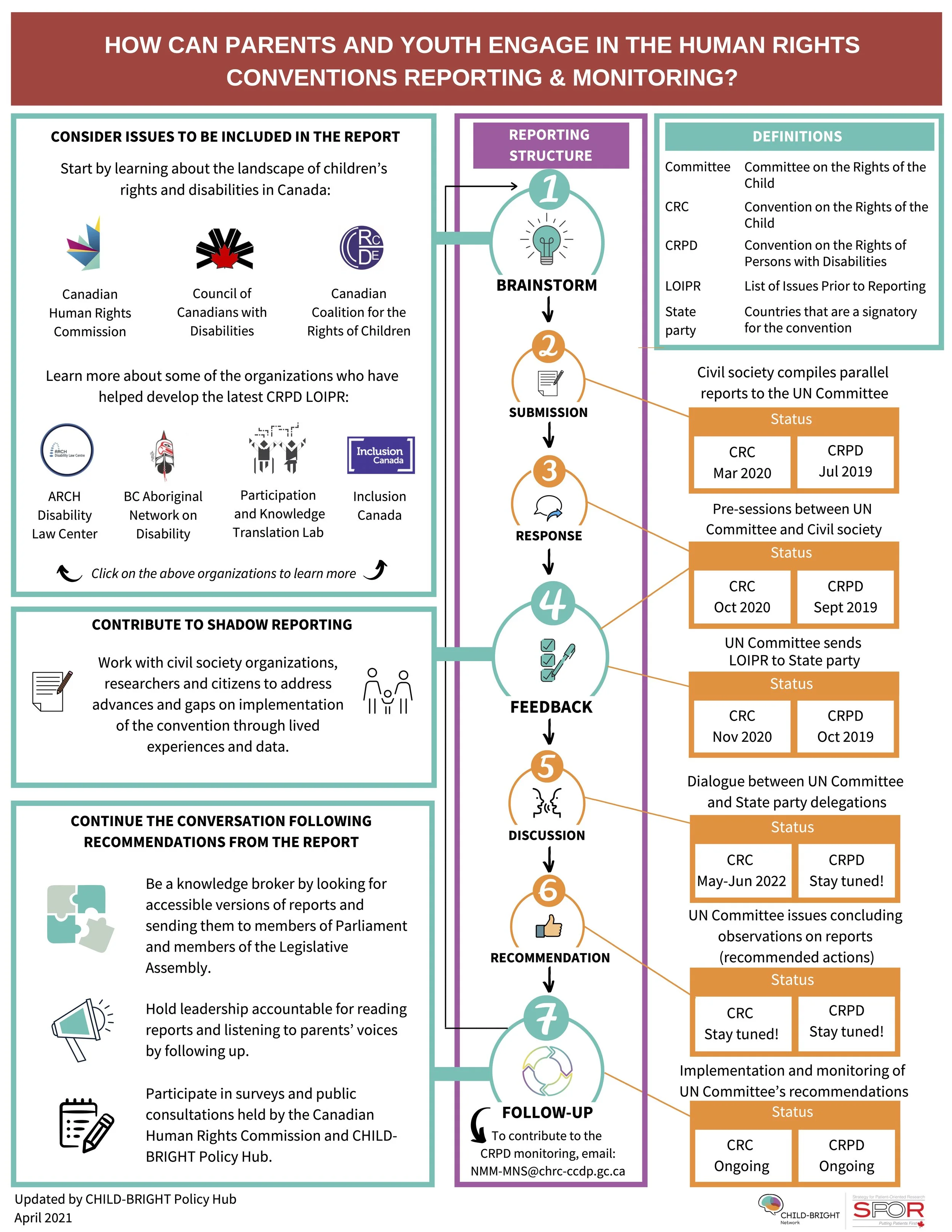
The CHILD-BRIGHT infographic about how to participate in the human rights conventions reporting and monitoring

Learn more about how parent and youth can engage in the human rights conventions reporting and monitoring

  • Promoting greater awareness of their human rights and how they can be enacted

  • Identifying priorities based on their needs and creating programs, activities, and products to respond to them.

  • Creating opportunities for meaningful participation in research, civic, and community events that empower children and model for society the role that children can play.

Here are some ways you can celebrate children every day too:

What are you doing to mark this National Child Day? Let us know in the comments!
Jooay & Earth Rangers partner to launch Project 2050: Climate-friendly habits to change the world!

Français

We are excited to announce that our Jooay App team is partnering to launch Project 2050: Climate-friendly habits to change the world! This national movement, powered by Earth Rangers in partnership with Jooay, is about empowering children with the knowledge and skills needed to tackle climate change. Project 2050 teaches children and youth that our habits can have a big impact on the planet, and that by working together, we can build a more climate-resilient future.

The Jooay team is partnering with Earth Rangers advising on accessibility and inclusion of children with disabilities in the challenges, and making sure that actions that are good for children are inclusive and good for all children.

Canada is one of over 120 countries that has committed to achieving carbon neutrality by 2050! This commitment is crucial for the well-being of present and future generations. Achieving this goal requires action from everyone. This means that all levels of government as well as civil society organizations, businesses, and individuals, just like you, can work together!

Jooay invites children across the country to contribute to Canada’s climate-resilient future by participating in Project 2050. Learn more about Project 2050 here.

Today’s children will be the country’s political, business, cultural, and philanthropic leaders during the critical years of implementing Canada’s plan to reach net-zero emissions by 2050. Igniting their passion, creativity, and optimism is critical to ensuring they’re ready to meet the challenge. I can’t wait to see what we can accomplish together!
— Tovah Barocas, President of Earth Rangers

CHILD-BRIGHT welcomes new members of our Citizen Engagement Council!

Français

As CHILD-BRIGHT continues to evolve, we are increasingly working to ensure many voices are represented and heard on our Citizen Engagement Council (CEC), the body overseeing the network’s citizen engagement activities.  

With that in mind, we are thrilled to welcome three new members to the CEC, each bringing their own lived experiences and expertise to the table.  

Chaired by Sharon McCarry, CHILD-BRIGHT’s Director of Citizen Engagement, the CEC provides guidance to researchers on how to engage patient-partners, including parents of children and youth with brain-based developmental disabilities, in their work, and how to share information with them. In addition, the council advises the network on the development and implementation of evidence-informed practices, policies, services, and programs to improve patient outcomes, access to care and quality, efficiency, and effectiveness of health care.  

“I am delighted to welcome new and returning members to the Citizen Engagement Council,” said Sharon.  

“Our council brings together individuals with a range of experiences and perspectives around the same goal of making research more patient-oriented. I am excited about the change we will bring through our shared commitment.” 

The new members commenced their term in September 2021. Get to know them a little better below.  


Symbia Barnaby 

20210314_190911 (1).jpg

Symbia Barnaby is an Indigenous woman of Haida and Mi’kmaq descent living in northern British Columbia. Her traditional Haida name is Guu Gang Jung and her spirit name is Warrior Woman. She is a single mother of six children, five of whom have special needs. She is trained as a practical nurse, a birth and postpartum doula, and a Reiki Level 3 Practitioner. She is also a storyteller, a filmmaker, and a Wisdom Translator.  

She has consulted, developed, and run many workshops on anti-racism, disability, inclusive education, intersectionality, and health equity through an Indigenous lens.  

Symbia also volunteers as the Co-Lead of the Health Advocacy Team with Moms Against Racism Canada, a national non-profit organization.  


Samadhi Mora Severino 

Samadhi (1).jpeg

As the parent of two children, one who has severe disabilities, Samadhi Mora Severino has been a parent-partner and Parent Advisory Committee member with the Strongest Families Neurodevelopmental Program since its beginnings. She is also an emerging equity researcher in the areas of health and disability services and policy. 

A community advocate working with families of children with a neurodevelopmental disability and other disabilities, Samadhi is dedicated to making relevant and important changes in disability services and policies through equity, diversity, and inclusion. 

Samadhi’s experience includes research with children with complex disabilities, adults with disabilities, and Indigenous people with disabilities living in Ontario. As a Ph.D. student at York University, she uses mixed methods and participatory action research in relation to medical assistance in dying (MAiD), home care access, and palliative care access for people with disabilities in Canada.  

Samadhi has served as a member of the technical working group of Ministry of Health and Long-Term Care in Ontario to develop a provincial program for self-directed funding for children with medical complexity. She was previously a community board member for the research ethics board at Public Health Ontario. 


Phil Snarr 

Phil Snarr is from Winnipeg, Manitoba. He and his wife Marilyn have two children, their daughter Julia (aged seven) and their son Jack (aged five). 

Jack lives with cystic fibrosis (CF), and Phil and his family are actively involved in the CF community, both in Winnipeg and across Canada. In their down time, Phil and his family enjoy playing board games, going fishing, and swimming.  

Phil holds a Science degree in Microbiology and Chemistry from the University of Manitoba. Today, Phil works at the Medical School at the University of Manitoba, where his interests include pediatric research, patient-oriented research, and knowledge translation.  

“I think that citizen engagement is incredibly important in both the clinical health setting and in health research,” Phil says. “I am excited to join the Citizen Engagement Council and to share my experiences with the group.” 


Welcoming Carrie Costello as Vice-Chairperson of the CEC 

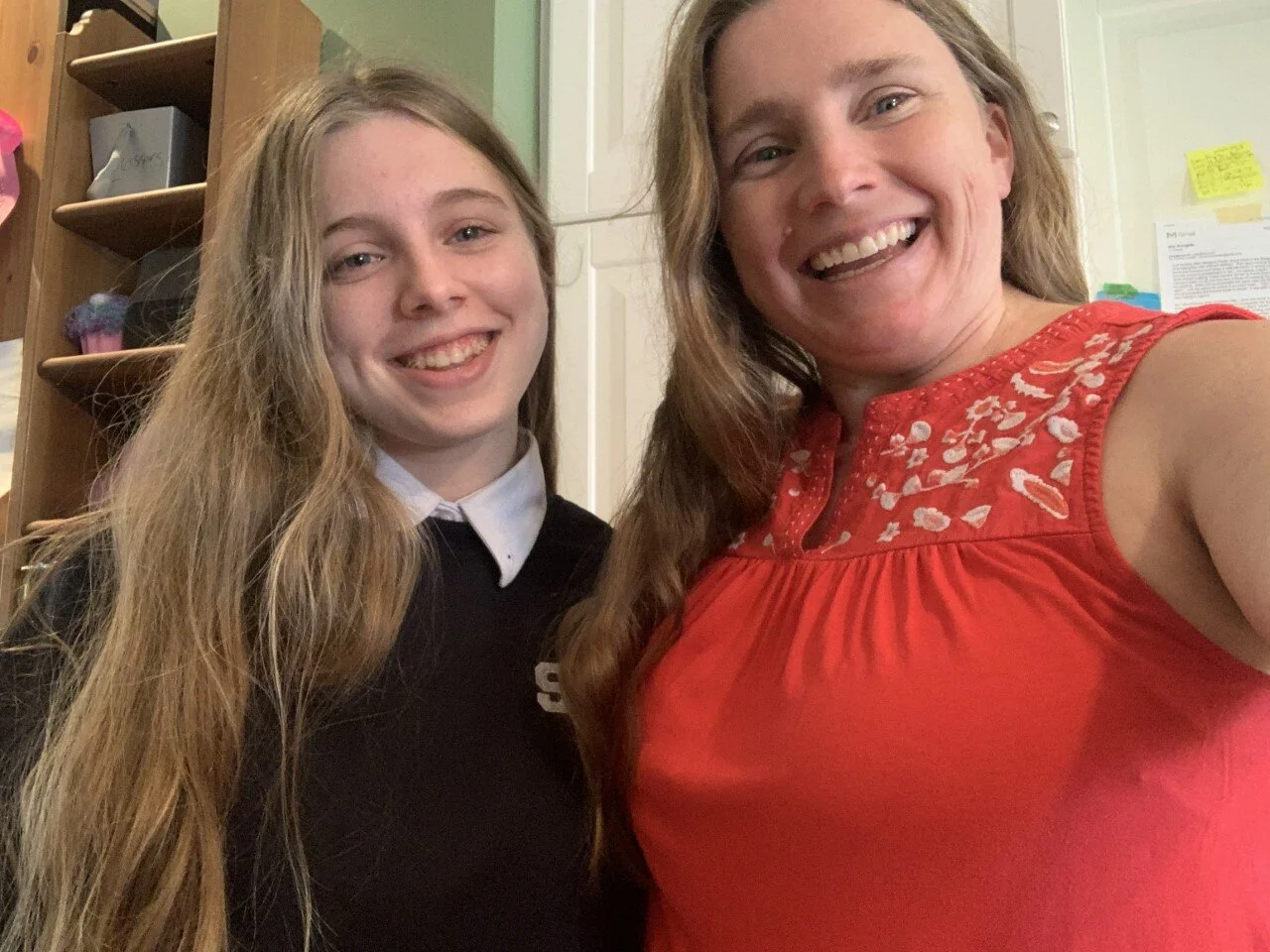
Carrie Costello (right) with daughter Emma

Carrie Costello (right) with daughter Emma

Alongside our new members, we are also delighted to welcome Carrie Costello as Vice-Chairperson of the CEC. 

Based in Winnipeg, Carrie is a mom to three daughters, one of whom has global developmental delays and a seizure disorder with Todd’s paresis. As CHILD-BRIGHT's Parent Peer Mentor, Carrie has already made invaluable contributions to the work of the council and the entire network. You can read more about Carrie and her work as a parent-partner in this blog post

View the full membership of the council

The Evolution of Stakeholder Engagement at CHILD-BRIGHT from 2018 to 2020, Part 1

Français

As a patient-oriented research network, we’re always looking for ways to improve our level of engagement and collaboration with patient-partners.

To better understand how patient engagement has unfolded across our network between 2018 and 2020, we asked our members to fill out a series of online surveys. Thanks to the input of hundreds, we can now share our preliminary findings from these surveys in a new report entitled Stakeholder Engagement in the CHILD-BRIGHT Network, 2018-2020. This constitutes Part 1 of a three-part series on patient engagement prepared by the CHILD-BRIGHT Network's Measuring Patient Engagement Working Group, a collaborative group of members from our Knowledge Translation and Citizen Engagement programs.  


Download the full report
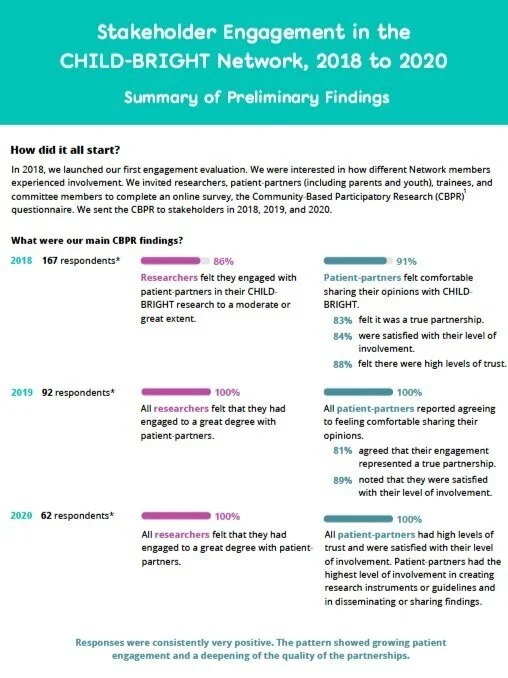
Download a visual summary of the findings
 

In Part 2 and 3 of this series, we will share the results of our survey about engagement during the COVID-19 pandemic and of a series of interviews with our network members about patient engagement, respectively.

Here are some key findings:

In 2018, 2019, and 2020, researchers, patient-partners (including parents and youth), trainees, and committee members completed the Community-Based Participatory Research (CBPR) online questionnaire.

  • In 2018, based on the responses of 167 network members, we found:

    • Eighty-six percent of researchers felt that they engaged with patient-partners in their CHILD-BRIGHT research to a moderate or great extent

    • Almost all patient-partners said they felt comfortable sharing their opinions with CHILD-BRIGHT (91%)

    • Most patient-partners felt they had a true partnership with the research project or committee with which they were involved (83%), that they were satisfied with their level of involvement (84%), and that there were high levels of trust (88%)

    • The highest levels of involvement occurred in areas of developing research questions or deciding on issues to research.

  • In 2019, based on the responses of 92 network members, we found:

    • All researchers felt that they had engaged to a great degree with patient-partners.

All patient-partners said they felt comfortable sharing their opinions. For instance, 81% agreed that their engagement represented a true partnership, and 89% noted that they were satisfied with their level of involvement. The highest level of involvement was in developing research questions.

  • In 2020, based on the responses of 62 members, we found:

    • All patient-partners reported high levels of trust and noted being satisfied with their level of involvement, with the highest level of patient-partner involvement occurring in the areas of creating research instruments or guidelines, and in disseminating or sharing findings.

Looking at the responses over the years, results were consistently very positive. The pattern showed growing patient engagement and a deepening of the quality of the partnerships.

Even though the research questions and ideas were set four years ago, patients still feel like they are providing input into the project as it evolves. And some projects are making changes based on that patient input!  The fact that every single patient-partner surveyed in 2019 felt comfortable sharing their opinion goes a long way to showing the trust that has been built in the CHILD-BRIGHT projects.
— Carrie Costello, CHILD-BRIGHT Parent Peer Mentor

In 2020, we also introduced a new online survey, the Public and Patient Engagement Evaluation Tool (PPEET) to further enrich our understanding of patient engagement. A total of 105 network members responded to this survey. Overall, they rated patient engagement and its impacts highly, especially within research project teams. Researchers, committee members, and patient-partners all reported high levels of satisfaction with patient engagement in the network.

In particular, patient-partners noted that early involvement helped enable greater impact on the research project and its advancement, and that regular and detailed communication kept them engaged. Several said that their engagement had deepened over time.  

On the other hand, we found that greater diversity (e.g. more fathers and people from a greater range of ethnic and racial backgrounds) is needed. In some instances, greater role clarity for patient-partners would be beneficial.

In brief, our findings to date suggest that we are effectively implementing strategies for authentic and impactful patient-oriented research. Overall, patient-partners are satisfied with their level of engagement in the network’s research and governance.

To gain more insight on what we learned from these surveys, consult the preliminary report; take a look at the infographic summarizing these key findings; or familiarize yourself with the patient engagement best practices we recommend for researchers and patient-partners.

 
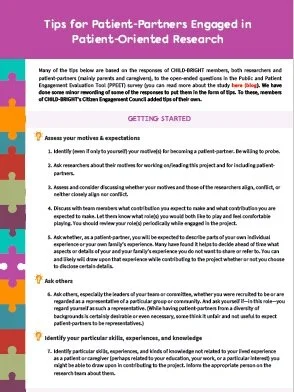
Download Tips for Patient-Partners
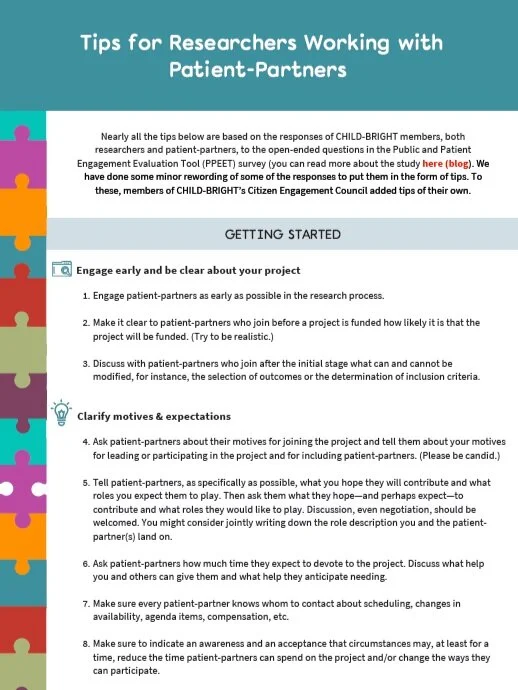
Download Tips for Researchers
 

 Want to learn more about the evolution of stakeholder engagement at CHILD-BRIGHT? Read Part 2 and Part 3 of this series now.

Frank Gavin Patient Engagement Leadership Award

Français
IMG_2590.JPG

CHILD-BRIGHT is proud to establish the Frank Gavin Patient Engagement Leadership Award. This award honours Frank Gavin, CHILD-BRIGHT’s inaugural Director of Citizen Engagement, for his important and vital contributions to our Network’s growth and development as a SPOR entity. It also provides us with an opportunity to recognize other leaders in patient engagement in research related to children with brain-based developmental disabilities and their families. 

Do you know a patient-partner with considerable experience participating in patient-oriented research activities, and with a track record of leadership in patient engagement? Or would you like to put your own name forward?

Nominations are due by October 13, 2021

Visit the competition page below for full details, including eligibility requirements and the application procedure. Good luck!

Learn more & nominate a patient-partner